Starbucks Korea to Close Stores Early for Mandatory History Training After Marketing Row
Starbucks Korea to close stores early – Starbucks Korea has announced plans to close all its stores across the country early on June 22, with employees required to attend mandatory training sessions on history and social sensitivity. This decision comes in response to widespread backlash against a recent marketing campaign that sparked controversy by linking the brand to a historical event of national significance. The campaign, which centered on stainless-steel tumblers branded as “SS Tank,” was perceived by many as a mockery of the victims of the 1980 Gwangju Uprising, a pivotal moment in South Korea’s struggle for democracy.
The Controversial Campaign
The uproar began when Starbucks Korea promoted its “SS Tank” line by declaring May 18 as “Tank Day.” This date commemorates the 1980 pro-democracy protests in Gwangju, where thousands of civilians were violently suppressed by Seoul’s military government. At the time, troops, tanks, and helicopters were deployed to quell the demonstrations, resulting in hundreds of casualties. The campaign’s timing and messaging were seen as insensitive, with critics arguing that the brand’s playful approach overshadowed the trauma of the event.
Adding to the public’s discontent was the slogan “Thwack it on the table!” used in the campaign. This phrase drew comparisons to a notorious 1987 police statement that attempted to downplay the brutality of a crackdown on student activists. The statement claimed that a student named Park Jong-chol had died after being “hit the desk with a thwack,” a description that many interpreted as a euphemism for torture. The slogan’s resonance with this historical reference deepened the criticism, with some accusing Starbucks of trivializing the suffering of past victims.
Immediate Reactions and Corporate Actions
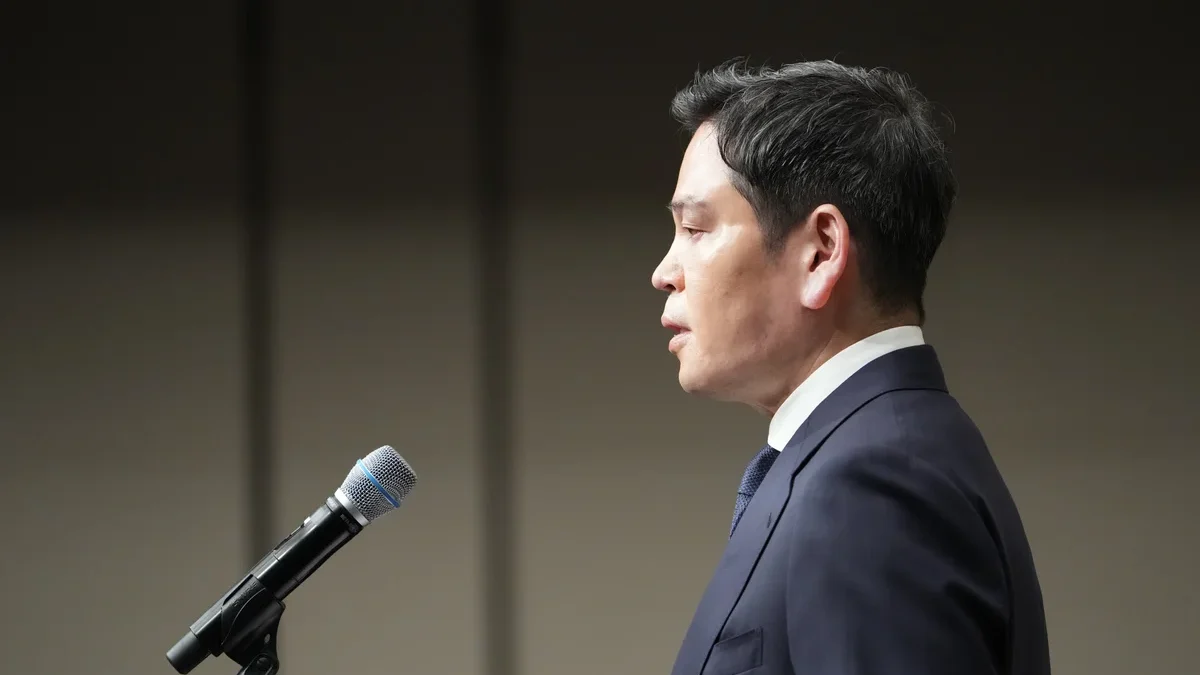
Following the backlash, Shinsegae Group, the majority shareholder of Starbucks Korea, swiftly took corrective measures. The company canceled the campaign within hours of its launch and relieved the CEO of Starbucks Korea of his duties. A nationally televised apology was later issued by Shinsegae Chairman Chung Yong-jin, who expressed regret for the offense caused. This apology followed complaints from the families of Gwangju Uprising victims, prompting police to open an investigation into the incident.
Shinsegae Group emphasized that the decision to close all Starbucks stores early for the first time since the chain’s 1999 launch in South Korea reflects its “seriousness in addressing the marketing controversy” and its commitment to “preventing a recurrence.” Employees at the headquarters will participate in training sessions led by history and sociology professors on June 23, while all store staff will watch a recorded version of the session at 3 p.m. on June 22. This companywide initiative aims to reinforce the importance of historical awareness and sensitivity in corporate communication.
Historical Context of the Gwangju Uprising
The Gwangju Uprising, which occurred in May 1980, was a defining moment in South Korea’s fight for democracy. The protests, initially sparked by a military coup that brought General Chun Doo-hwan to power in December 1979, gained momentum as citizens demanded political reform. Chun’s regime, under the banner of restoring order, imposed a curfew and deployed armed forces to Gwangju, resulting in a violent crackdown. Government records estimate that 200 people were killed during the event, though activists argue the actual death toll may have been significantly higher. Tens of thousands were also imprisoned, accused of supporting “social evils” such as dissent and corruption.
The suppression of the Gwangju protests marked a turning point in South Korea’s political landscape. The events of May 18 became a symbol of resistance against authoritarian rule, with survivors and advocates later commemorating the day as a reminder of the sacrifices made for freedom. The 1987 protests, which erupted months later, were a direct response to Chun’s dictatorship. These demonstrations, fueled by public anger over the Gwangju Uprising, led to his resignation and the introduction of constitutional reforms that established direct presidential elections. This change is widely regarded as the catalyst for South Korea’s democratic transition.
Starbucks’ Response and Broader Implications
Shinsegae Group’s decision to implement training for its employees underscores the company’s recognition of the historical significance of the events it inadvertently associated with its branding. The training will focus on the socio-political context of the Gwangju Uprising and its enduring impact on Korean identity. By requiring staff to engage with this history, the group hopes to foster a deeper understanding of the cultural sensitivities tied to the date and the event.
Chung Yong-jin’s apology and the subsequent training sessions highlight the growing importance of historical accuracy in corporate messaging. The incident has sparked broader discussions about the role of multinational companies in South Korea’s cultural narrative. Critics argue that such campaigns can inadvertently perpetuate historical amnesia, while supporters view the initiative as a positive step toward reconciliation. The timing of the training—just days before the anniversary of the 1980 uprising—has also been seen as a symbolic gesture, aiming to align the brand with the values of the nation it operates in.
Meanwhile, the Gwangju Uprising continues to serve as a powerful reminder of the struggles for democracy. Its legacy is preserved through annual commemorations, educational programs, and public discourse. For Starbucks Korea, the controversy has served as a wake-up call, forcing the company to confront the weight of its marketing choices. The decision to close stores early and prioritize training reflects an acknowledgment of the importance of historical context in shaping public perception.
As the company moves forward, it faces the challenge of rebuilding trust with the community. The incident underscores the delicate balance between commercial promotion and cultural respect. In an era where brands are increasingly scrutinized for their social impact, Starbucks Korea’s actions may set a precedent for how corporations engage with history in their marketing strategies. The training sessions, while a response to immediate criticism, also represent a long-term effort to ensure that such controversies are avoided in the future.
“Hit the desk with a thwack,” the police statement claimed, as they attempted to justify the death of student activist Park Jong-chol during a 1987 crackdown. This phrase became synonymous with the era’s brutality, fueling the outrage that Starbucks Korea’s campaign inadvertently reignited.
The company’s decision to halt the campaign and hold training sessions demonstrates its willingness to take responsibility. However, the question remains whether this measure will be sufficient to mend the relationship with the Korean public. As the training unfolds, employees will be tasked with reflecting on the historical events that inspired the Gwangju Uprising and the legacy of those who fought for democracy during that turbulent period.
For now, the focus is on ensuring that the lessons of history are not forgotten in the pursuit of profit. Starbucks Korea’s actions have highlighted the significance of May 18, not only as a day of remembrance but also as a catalyst for corporate accountability. The early closures and training sessions may serve as a reminder of the power of historical narratives in shaping public sentiment and the responsibilities that come with them.