Paris Unveils Immersive Art Project with JR and Daft Punk’s Input
Paris teams up with French Banksy – Paris has transformed its iconic Pont Neuf bridge into a temporary, sensory-rich installation that redefines how visitors engage with the city’s historic landmarks. For weeks, a towering black mass has stood over the Seine, casting a shadow over the 17th-century structure. This week, the mysterious shape finally revealed its purpose: an immersive art project blending street art, technology, and olfactory design to create an unforgettable experience.
A Submerged World Beneath the River
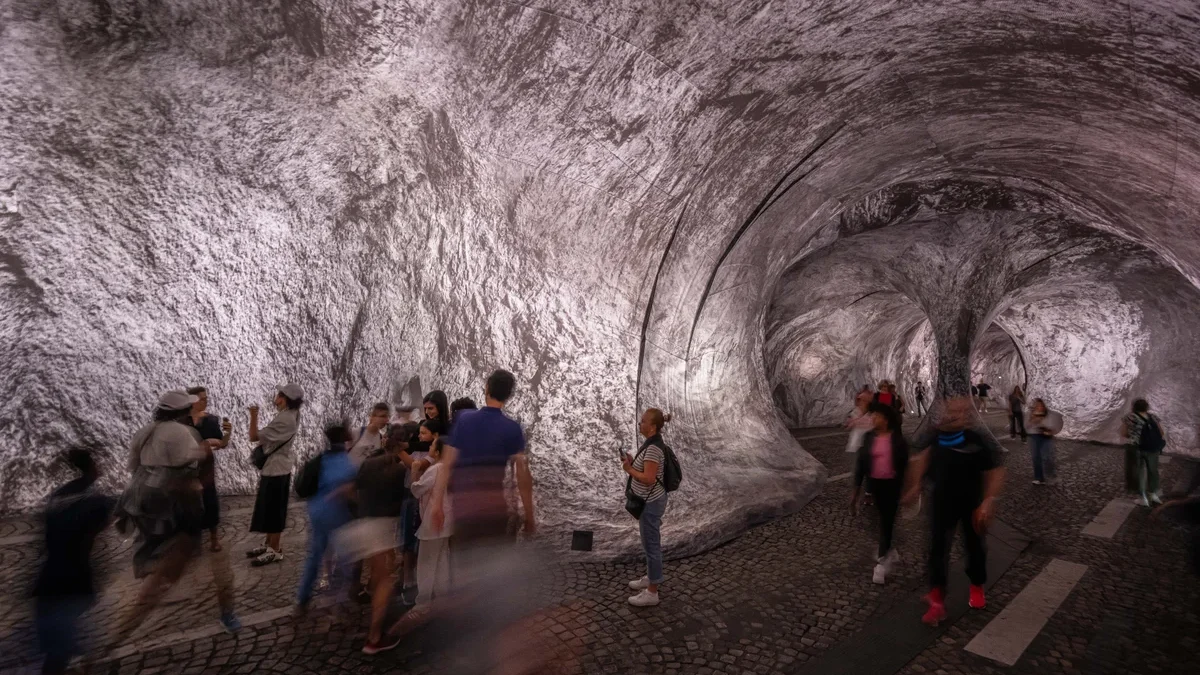
The installation, known as the Pont Neuf Cavern, invites pedestrians into a darkened passage that mimics the feel of an underground cave. As visitors step away from the bustling riverfront, they are enveloped in an atmosphere that feels both ancient and futuristic. The space is filled with a low hum of electronic sound, as if the bridge itself is breathing, while the scent of damp earth and mineral-rich air wafts through the air. This olfactory layer adds depth to the visual and auditory elements, making the journey through the cavern feel like stepping into a forgotten world.
What makes the experience unique is the subtle interplay of textures and sounds. The cobblestones of the Pont Neuf, which have carried footsteps for centuries, now rise and fall beneath the visitor’s feet, evoking a tactile connection to the bridge’s history. This design choice, according to organizers, is meant to draw attention to the physicality of the space and the way it has shaped Parisian life over time.
Artists Collaborate to Create a Multisensory Experience
The project is the brainchild of French street artist JR, a figure often compared to the UK’s Banksy for his provocative public installations. Working alongside olfactory expert Sarah Bouasse and electronic musician Thomas Bangalter—better known as a founding member of Daft Punk—the artist has crafted a multisensory journey that challenges perceptions of reality. The installation uses printed fabric and air to sculpt a cavernous space that stretches 18 meters above the river, reimagining the bridge as a gateway to a subterranean realm.
Bouasse’s contribution to the project is particularly striking. She developed two shifting scents that evolve as visitors traverse the passage: the first evokes the freshness of rain-soaked earth, while the second introduces a warmer, smoky aroma with faint traces of animal musk. These olfactory cues are designed to deepen the sense of immersion, making the space feel alive with the memories of a bygone era.
Thomas Bangalter’s sound installation complements the visual and sensory elements, filling the cavern with low-frequency rumbles and echoing pulses. The effect is subtle but powerful, creating a rhythm that guides visitors through the space. At certain points, the sound design seems to respond to movement, as if the cavern is reacting to its inhabitants. The augmented-reality component, developed in partnership with Snap, further enhances the experience, with digital bats flitting through the air and ghostly traces of movement left behind as visitors walk.
Historical and Philosophical Layers
The Pont Neuf, despite its name meaning “New Bridge” in French, is actually the oldest bridge in Paris. Completed in 1607, it has stood for over four centuries, bearing witness to the city’s evolution. JR’s installation pays homage to this legacy, while also drawing parallels to historical and philosophical contexts. He has linked the project to Plato’s allegory of the cave, suggesting that modern society, much like the prisoners in the allegory, often mistakes the digital world for reality.
“You enter into the darkness and emerge into the light on the other side,” JR has said, capturing the essence of the transformation. This phrase resonates with the experience of walking through the cavern, where the familiar bridge becomes an abstract space that blurs the line between the physical and the imagined. The installation also nods to Christo and Jeanne-Claude’s 1985 project, which wrapped the bridge in golden fabric and drew millions of visitors. JR’s work, while different in medium, shares the goal of inviting people to see the city in a new light.
For many visitors, the experience is a stark departure from their usual routines. Léa Martin, a 22-year-old art student from Lyon, described the sensation as transporting. “It feels like the city has disappeared,” she said, adding that for a moment, the river’s presence is felt but not the immediate surroundings. Michel Dupré, a 67-year-old retiree, echoed this sentiment, noting that the installation made him “walk like a child again.” His comment highlights the way the project strips away the mundane, encouraging a deeper connection to the space.
The project’s accessibility is another key aspect. The Pont Neuf Cavern is open 24 hours a day through June 28, offering free entry to all. This decision reflects the city’s commitment to making art and culture available to everyone, regardless of budget or time constraints. As the installation begins to dissolve, Parisians and tourists alike will have the chance to revisit the bridge with fresh eyes, as if rediscovering a hidden chapter of the city’s history.
Engaging the Senses Beyond the Visual
While the installation’s visuals are striking, its true impact lies in its ability to engage the senses in unexpected ways. The scent of damp earth and mineral-rich air, combined with the rhythmic sound of the cavern, creates a holistic experience that is more than just a spectacle. Visitors are encouraged to close their eyes and listen, to feel the stones beneath their feet, and to smell the air as if it were part of a natural landscape.
JR’s vision for the project is both playful and profound. By using materials like fabric and air, he challenges the notion of permanence, emphasizing that the bridge’s new identity is temporary. This concept aligns with Plato’s allegory, where the cave’s shadows are illusions that fade once the prisoners emerge. Similarly, the Pont Neuf Cavern invites reflection on how technology and art shape our perception of the world around us.
Nadia Benali, a 34-year-old visitor, described the installation as “completely strange,” highlighting its ability to disrupt routine. “Paris needs things that make people stop,” she added, suggesting that such projects are essential for rekindling wonder in everyday environments. As the installation prepares to vanish, it leaves behind a lingering question: how do we see the familiar once we’ve been given a new way to experience it?
The transformation of the Pont Neuf is a testament to Paris’s ongoing efforts to blend tradition with innovation. By partnering with artists and technologists, the city has created a space that not only honors its past but also invites exploration of its future. As visitors step back into the light, the bridge remains a symbol of both history and imagination, a reminder that even the most ordinary places can become extraordinary when viewed through a different lens.