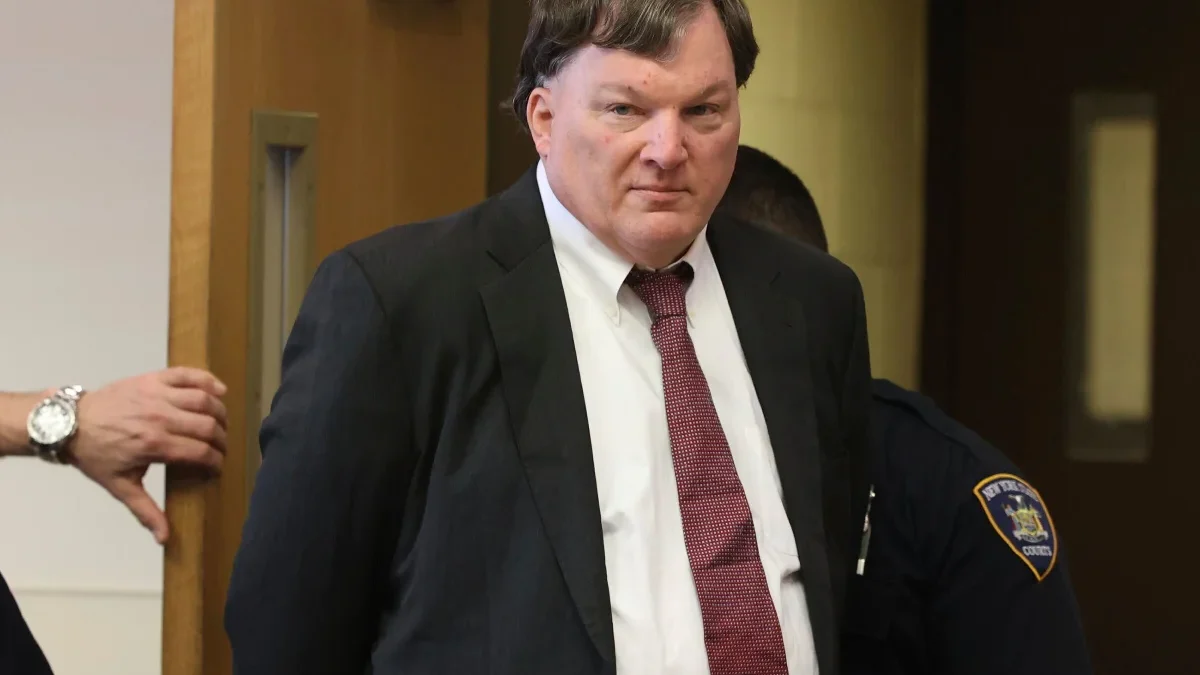
Serial Killer’s Admit to Eight Murders
Long Island architect turned serial killer – Rex Heuermann, a Long Island architect accused of living a dual life as the Gilgo Beach serial killer, is preparing to face sentencing on Wednesday. The 62-year-old man has confessed to the deaths of eight women in court, marking the end of a prolonged investigation into one of New York’s most chilling cold cases. His guilty plea in April confirmed the murders of Megan Waterman, Melissa Barthelemy, Amber Lynn Costello, Maureen Brainard-Barnes, Valerie Mack, Jessica Taylor, and Sandra Costilla. Although not formally charged in the initial case, Heuermann also admitted to the killing of Karen Vergata, bringing the total to eight victims.
The Case That Unraveled
The investigation into the Gilgo Beach killings began in 2010 after the disappearance of Shannan Gilbert, a sex worker whose death was initially ruled an accidental drowning. However, her case led to the discovery of additional remains, reigniting interest in the mystery. For years, the case remained unsolved until 2022, when detectives reconnected the dots and identified Heuermann as a prime suspect. The breakthrough came through a combination of clues, including a pickup truck spotted near one of the crime scenes and DNA evidence from a discarded pizza crust that matched fragments found on the victims.
Heuermann’s guilt was further solidified by cellphone and location data showing his interactions with some of the women shortly before their disappearances. Prosecutors highlighted that he methodically strangled his victims and dismembered their bodies, often leaving behind evidence that pointed directly to him. His computer files, recovered after his arrest, contained detailed checklists outlining steps to evade detection, revealing a calculated mindset.
Now, as he prepares to stand before a judge in Riverhead, New York, Heuermann’s family members have opted to remain absent from the proceedings. His ex-wife, Asa Ellerup, and their two adult children have stated through legal representatives that they will not attend the hearing, expressing respect for the victims’ families. This decision underscores the emotional weight of the case, which has left communities in Long Island grappling with the reality of a man who once built structures but now constructed a legacy of terror.
The Victims and Their Stories
The eight women Heuermann admitted to killing disappeared between 2000 and 2010, with their remains later found along Ocean Parkway near Gilgo Beach, approximately 50 miles from Manhattan. The area, known for its serene coastal setting, became a grim site for a series of unsolved murders that captivated the public’s imagination. Two of the victims, Sandra Costilla and Karen Vergata, were discovered earlier—Costilla’s body was found in the Hamptons in 1993, and Vergata’s remains were recovered on Fire Island in 1996. These early cases laid the groundwork for the larger investigation that followed.
Most of the victims were sex workers, a detail that has fueled speculation about the motive behind the crimes. Prosecutors argued that Heuermann’s methodical approach to murder—strangling his victims and cutting their bodies into pieces—revealed a chilling combination of control and violence. The gruesome nature of the killings, paired with their remote locations, added to the sense of isolation and mystery that defined the case for over a decade.
The Journey to Justice
After the 2010 discovery of Gilbert’s body, the case remained dormant for years. It wasn’t until 2022 that investigators reignited their efforts, linking Heuermann to the crime scenes through forensic and digital evidence. The DNA found on a pizza crust, which matched hair samples from the victims, was a pivotal piece of the puzzle. This evidence, combined with Heuermann’s own admissions, has led to the sentencing that is set to take place this week.
During his trial, Heuermann remained mostly silent, a stark contrast to the detailed confessions he made when pleading guilty. His attorneys have yet to comment on the proceedings, leaving the possibility of his final statement at sentencing uncertain. The courtroom has become a stage for the victims’ families to express their grief and demand justice, as the long-awaited conclusion to the case finally arrives.
Heuermann’s arrest in 2023 marked the beginning of his detention at Suffolk County Jail in Riverhead. Since then, he has been held in a segregated unit, with limited contact allowed for visitors. This isolation reflects the severity of his crimes and the cautious approach taken by authorities to prevent any potential escape or further harm. The transition from jail to state prison will follow his sentencing, a step that symbolizes the start of his permanent confinement.
A Legacy of Fear and Revelation
Throughout the years, the Gilgo Beach case has inspired a wave of media attention, with documentaries, books, and podcasts delving into the lives of the victims and the enigma of their killer. The public’s fascination with the case has only deepened as new evidence emerged, connecting Heuermann to the unsolved murders that had baffled investigators for over two decades.
While the exact method of each murder remains under scrutiny, prosecutors have detailed a pattern of violence that has left a lasting impact. The confession process, which began in April, provided clarity to a mystery that had haunted New York’s criminal justice system. For the families of the victims, the guilty plea has offered a measure of closure, though the emotional scars will take time to heal.
Rex Heuermann’s journey from a respected architect to a convicted serial killer serves as a stark reminder of how individuals can conceal dark secrets within their public lives. The case, which spanned nearly 20 years, has now reached its conclusion, with Heuermann facing the full weight of his actions. As he prepares to stand before a judge, the focus remains on the eight women whose lives were tragically taken and the justice that will finally be served.
“Heuermann’s calculated approach to murder demonstrates a level of premeditation that is both disturbing and methodical. The evidence we uncovered, from DNA samples to digital records, paints a clear picture of a man who was not just a killer, but a master of deception,” said a prosecutor during the trial.
The sentencing hearing on Wednesday will be a pivotal moment for the victims’ families, who have endured years of uncertainty. It will also mark the final chapter in a story that began with the quiet disappearance of young women and culminated in the arrest of a man who had lived under the radar for over two decades. As the legal process moves forward, the legacy of the Gilgo Beach murders will continue to resonate, a testament to the power of persistence in solving even the most elusive crimes.