Scientists Have Developed a Breakthrough in Ultra-Black Automotive Coatings
Scientists have a new way to make – For decades, the pursuit of the deepest black in automotive design has relied on traditional methods, but a recent innovation is pushing the boundaries of what’s possible. Researchers have unveiled a novel technique to create car finishes that absorb nearly all visible light, achieving an unprecedented level of darkness. This advancement, detailed in a recent report, promises to redefine luxury vehicle aesthetics while maintaining technical precision.
How Structural Absorption Transforms Light Absorption Efficiency
Conventional black coatings depend on carbon black dispersions—mixtures containing soot—to trap light. However, these methods have inherent limitations, as they can only absorb a finite range of wavelengths. The new approach leverages a concept called “structural absorption,” which enhances light capture through the material’s surface geometry rather than relying solely on pigment.
“Current techniques for ultra-black coatings are constrained by the properties of carbon black dispersions, which limit the depth of darkness achievable. Our method introduces structural absorption, allowing materials to absorb more wavelengths of light,” explained a statement from Cell Press, the journal reporting the breakthrough.
This innovation enables the material to absorb approximately 99.9% of visible light, surpassing previous standards. Structural absorption works by designing surfaces with micro- or nano-scale structures that trap light more effectively. Unlike traditional coatings, which depend on pigments to absorb light, this method uses the physical arrangement of materials to maximize absorption.
A New Era for Luxury Car Aesthetics
The development aligns with the enduring appeal of deep black finishes in high-end vehicles. As Zhiwei Liu, a research chemist at the Nipsea Group’s Color Technology division, noted, “Ultra-black coatings are not just about appearance—they’re about creating a visual experience that feels almost otherworldly.”
“Deep black has long been the hallmark of luxury cars, offering an elegant and powerful visual statement. This new coating allows manufacturers to achieve that look with even greater intensity,” Liu said.
Automotive companies have been striving to perfect ultra-black finishes for years, aiming to create coatings that are both visually striking and practical. The breakthrough could open doors for mass production, making extreme blackness accessible to a broader range of consumers. However, the process is not without challenges. Liu emphasized that while the technology shows promise, further refinement is needed to ensure durability and consistency.
Testing and Validation: The Road Ahead
According to Liu, the next phase of development will focus on verifying the coating’s performance under real-world conditions. “We need to confirm the application window for this material and conduct rigorous testing of its film properties,” he stated. This includes assessing how the coating withstands environmental factors such as UV exposure, temperature fluctuations, and mechanical stress.
Scientists are also exploring ways to optimize the composite structure of the coating, which combines carbon black pigments with carbon nanotubules. This hybrid approach is believed to enhance the material’s ability to trap light, but its long-term stability remains a key concern. Researchers are working to address these issues, ensuring the coating can meet automotive industry standards for quality and longevity.
From Concept to Reality: The BMW X6 Vantablack Case Study
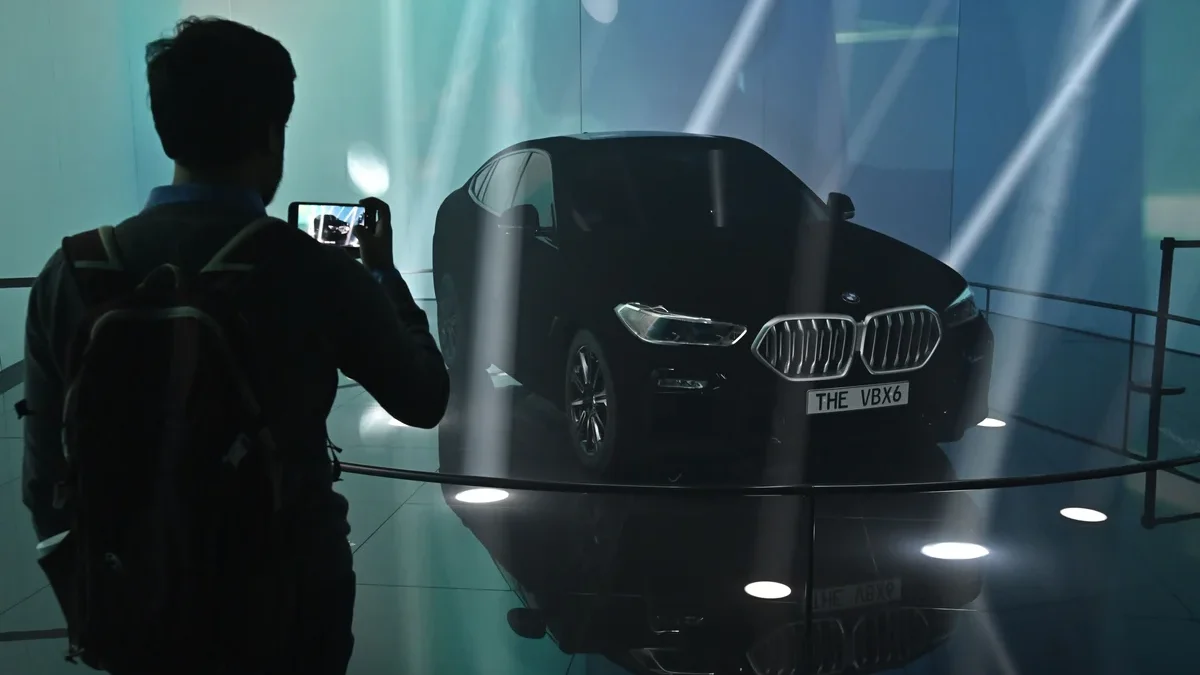
One of the earliest applications of this technology was seen in the 2019 conceptual BMW X6 Vantablack, a vehicle designed with an ultra-black finish that absorbed over 99% of visible light. The project, showcased by BMWBlog, demonstrated the potential of structural absorption in automotive design. However, the coating’s performance was affected by environmental conditions, leading to some degradation of its properties over time.
“The X6 Vantablack was a one-of-a-kind showpiece, but its pigment-based formulation had limitations. It was stunning, yet not fully resistant to the wear and tear of everyday use,” noted a report on the project.
Despite these challenges, the BMW example highlights the growing interest in ultra-black finishes. Automakers are eager to incorporate such innovations into production models, as they can elevate the perceived value of vehicles. For luxury brands, the ability to offer an almost completely black exterior could become a new selling point, blending aesthetic appeal with technological sophistication.
Implications for the Future of Automotive Design
The new coating technology has the potential to revolutionize not only the appearance of vehicles but also their functional properties. By reducing light reflection, ultra-black finishes may improve a car’s ability to absorb heat, which could be beneficial in high-performance or energy-efficient models. Additionally, the material’s properties might influence design choices, such as the use of reflective surfaces or the integration of light-dimming features.
Liu’s team is also exploring applications beyond the automotive industry. The same principles could be used in aerospace, architecture, or even consumer electronics to create surfaces with extreme light absorption. However, the focus remains on automotive use, where the demand for darker, more premium finishes is strongest.
While the technology is still in the testing phase, the implications are significant. If successful, ultra-black coatings could become a standard in luxury car manufacturing, offering a level of depth and intensity previously thought impossible. As Liu remarked, “This is just the beginning. The future of color technology is about pushing the limits of what we can achieve with light and material.”
With continued refinement, the innovation may soon transition from concept to reality. The next steps involve scaling production, ensuring cost-effectiveness, and proving the coating’s resilience under prolonged use. Once these hurdles are overcome, the automotive industry could witness a new era of design, where cars are not just painted black—but made black through science.