Dragon Boat Festival Unites Modern China with Ancient Traditions
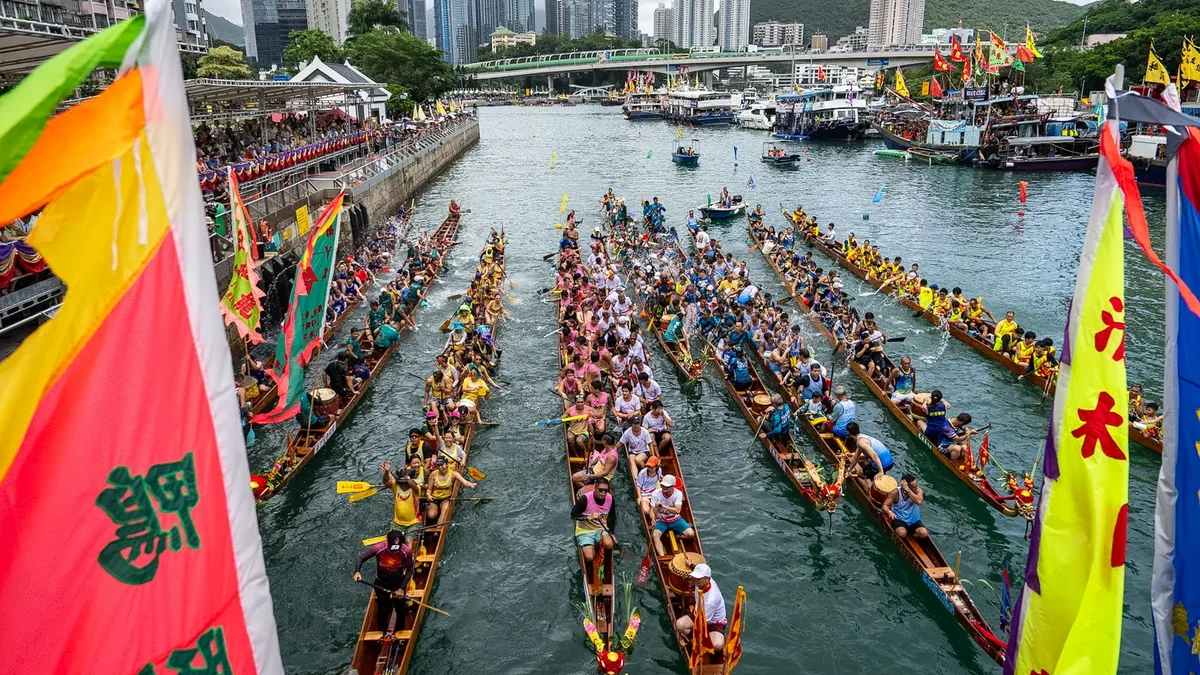
Dragon Boat Festival links modern China – This year’s Dragon Boat Festival marked a vibrant celebration across mainland China, Hong Kong, and Taiwan, showcasing the enduring cultural ties between contemporary society and practices that trace back over two millennia. With its iconic boat races, lion dances, and a variety of customs, the event drew participants and spectators alike, offering a window into both historical heritage and modern enthusiasm.
Cultural Significance and Historical Foundations
The festival, steeped in centuries-old traditions, is not only a time for joyous gatherings but also a reflection of ancient Chinese beliefs about health, protection, and the natural rhythms of life. While its most visible aspect is the competitive spirit of dragon boat racing, the origins of the holiday are deeply rooted in the cultural and historical fabric of China. For instance, the legend of Qu Yuan, a revered ancient poet, is central to its narrative, intertwining the event with stories of sacrifice and remembrance.
“The Dragon Boat Festival represents a unique blend of historical continuity and regional adaptation,” noted Liu Xiaofeng, a history professor at Tsinghua University. “Each community has infused its own interpretations into the traditions, yet the core themes of harmony, health, and honoring ancestors remain universal.”
Qu Yuan’s tale, set against the backdrop of the summer solstice, is believed to have inspired the festival’s rituals. According to the legend, the poet, who was exiled for his loyalty to the state of Chu, drowned himself in the Miluo River over 2,000 years ago. In response, locals raced their boats to retrieve his body and cast rice into the water to deter fish from feasting on his remains. These actions evolved into the symbolic dragon boat races and the consumption of zongzi, sticky rice dumplings wrapped in bamboo leaves.
Regional Variations and Modern Adaptations
Across China, the Dragon Boat Festival manifests in diverse ways, influenced by local customs and historical narratives. In Beijing, for example, the event featured a three-day competition that highlighted the sport’s growing popularity. Athletes from Beijing, Tianjin, Hebei, Shanxi, and Guangdong participated in races spanning 100, 200, and 500 meters, demonstrating the unity of regional teams under a shared cultural banner.
The races, guided by the rhythmic beats of drummers, were a spectacle of synchronized effort and tradition. Spectators gathered along the shores of the Grand Canal, their cheers echoing as the boats surged forward. Meanwhile, others enjoyed the festival from home, savoring the iconic zongzi as a staple of the celebration. This dish, made from glutinous rice and filled with ingredients like beans, meat, or dates, symbolizes the community’s connection to its past and the seasonal abundance of summer.
Back in Hong Kong, the festival took on a distinct flavor with participants donning creative costumes, including a playful depiction of the Taoist deity Ne Zha. These vibrant outfits, blending historical reverence with contemporary flair, underscored the festival’s ability to evolve while retaining its essence. The inclusion of Ne Zha, a figure known for his mischievous yet heroic traits, added a layer of cultural symbolism, linking the event to both mythological and folk traditions.
Community and Spirit of Competition
For many, the festival is more than a display of athleticism—it’s a celebration of community and collective identity. Li Maoshan, a participant in Friday’s races, emphasized the role of the event in fostering teamwork and resilience. “Competing in dragon boat races requires unwavering dedication,” he said. “It’s not just about speed or technique; it’s about trust and unity among the crew. The festival reminds us of the value of perseverance, even in the face of challenges.”
As the festival’s legacy continues to thrive, it serves as a bridge between ancient customs and modern expressions of cultural pride. From the rhythmic paddling of teams to the communal act of preparing zongzi, the Dragon Boat Festival encapsulates the duality of tradition and innovation. In cities like Beijing, where the event is now a major annual attraction, the festival’s historical roots remain evident, even as it adapts to contemporary interests and global audiences.
Furthermore, the festival’s enduring relevance is evident in its ability to bring together diverse groups, from professional athletes to amateur enthusiasts. The regional competitions, held across various locations, not only highlight the sport’s competitive nature but also its role in strengthening regional bonds. In Hebei, for example, the event coincided with a local focus on historical landmarks, while in Shanxi, organizers incorporated elements of traditional music and dance into the festivities.
A Global Perspective on Local Tradition
As the Dragon Boat Festival gains international recognition, its significance extends beyond China’s borders. The Associated Press reported on the event, with contributors Liu Zheng in Beijing and Kanis Leung in Hong Kong capturing the essence of the celebrations. Their accounts, supported by The Conversation US through the AP’s collaboration with the Lilly Endowment Inc., provided a broader context for the festival’s cultural impact.
While the festival is deeply rooted in Chinese history, its global appeal has prompted discussions about its role in promoting cultural exchange. In recent years, the event has seen participation from international teams, with some countries adapting the traditions to their own contexts. This cross-cultural engagement not only enriches the festival’s narrative but also underscores its universal themes of celebration, remembrance, and communal spirit.
As the festival continues to evolve, it remains a powerful reminder of the interplay between past and present. Whether through the spirited races on the Grand Canal or the quiet act of eating zongzi, the Dragon Boat Festival invites people to reflect on the traditions that have shaped their heritage. In a world that often prioritizes modernity, the festival’s ability to preserve ancient customs while embracing contemporary expressions is a testament to its enduring significance.
For those who partake in the celebrations, the festival offers more than entertainment—it’s a living history lesson. The story of Qu Yuan, though ancient, continues to inspire, while the collaborative efforts of the teams highlight the importance of unity and determination. As the sun set over the festival grounds, the echoes of drumbeats and the laughter of participants reminded all that this centuries-old tradition is as relevant today as it was in the days of the poet’s exile.
Looking ahead, the 2026 Dragon Boat Festival in Beijing is set to continue its role as a cultural landmark, with events planned to run until June 21. As organizers prepare for the next chapter, they aim to balance the preservation of traditional practices with new, engaging formats that appeal to younger generations. This dual focus ensures that the festival remains a vibrant and meaningful celebration for years to come.