
The ‘back door’ migrant route into Britain: Immigration crackdown as people smuggling gangs exploit soft border between UK and Ireland
The ‘back door’ migrant route into Britain: Immigration crackdown as people smuggling gangs exploit soft border between UK and Ireland
While small boat arrivals from France dominate discussions on unauthorized entry, law enforcement now targets a different pathway: the Common Travel Area (CTA) shared between the UK and Ireland. This informal border allows citizens of both nations to move freely, but it has become a tool for criminal networks to smuggle migrants into the UK.
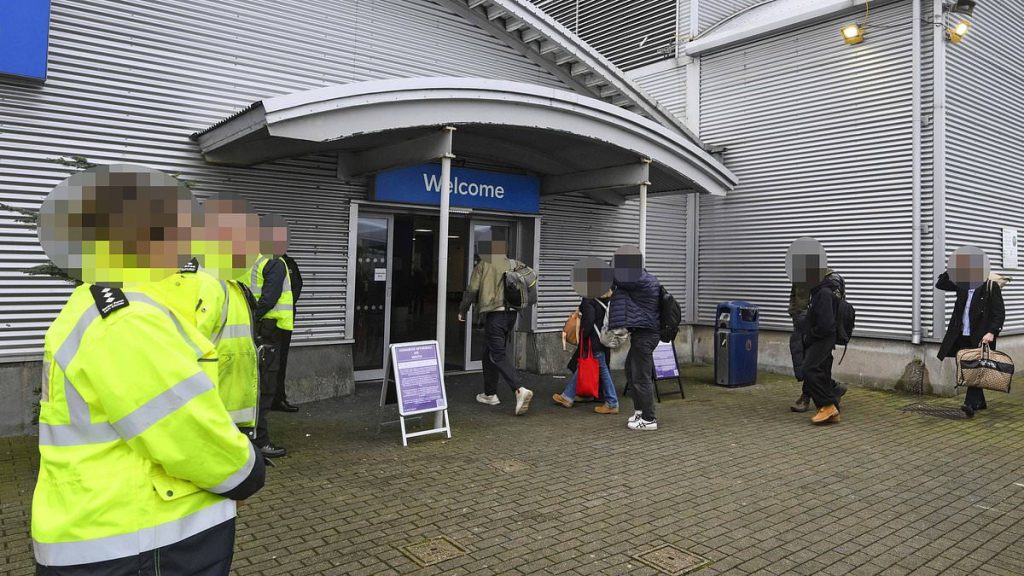
Authorities note that the CTA is being abused by gangs as a secondary method for illegal immigration. To address this, police and immigration agencies executed a coordinated operation, resulting in 32 arrests at UK-Ireland ports and airports. The effort highlights the growing emphasis on securing all border access points, not just the most visible ones.
Operation at Holyhead
During the crackdown, Holyhead’s ferry terminal became a focal point. Passengers were scanned using live facial recognition technology to identify known immigration offenders. Additionally, lorries entering the port were inspected for hidden travelers and illicit goods, with checks also conducted near a nearby motorway.
“The Common Travel Area is exploited by criminal gangs as a back-entry route into the UK, so our operation is about making our borders as robust as they can be,” said DCC Wendy Gunney, head of the Domestic Organised Immigration Crime taskforce. She emphasized that the taskforce’s intelligence-gathering efforts are critical to tackling organized crime in this context.
Gunney also revealed that smugglers use the CTA to transport drugs and black market items alongside migrants. While there’s no formal passport control, travelers are required to present photo ID, and officials conduct regular spot checks to monitor compliance.
Facial recognition technology plays a key role in the operation. Vans equipped with cameras capture facial features and compare them against a database of suspects. When matches are flagged, officers investigate further, ensuring both efficiency and accuracy in identifying individuals of interest.
“Creating a visible presence at the border is a good deterrent,” Gunney added. “Live facial recognition is a tried-and-tested method, and those not on a watchlist have nothing to fear.”
The crackdown extended to multiple locations, including Loch Ryan in Scotland, Heysham in Lancashire, and Birkenhead on Merseyside. At Holyhead, an Indian man was detained after a traffic stop on the A55 in North Wales. He was found to have overstayed his visa and failed an asylum application, with the Home Office preparing to deport him and potentially fine his employer.
One notable case involved a Lesotho national arrested at Holyhead. He lacked valid UK entry documents and was wanted by Irish authorities for a domestic violence charge. The individual was promptly returned to Ireland. Similarly, four Pakistani men arriving at Birmingham Airport from Belfast were discovered to have invalid visas and unresolved asylum claims, leading to the cancellation of their applications for breaching reporting requirements.
In 2024, 14 Albanians were found concealed within a livestock wagon that had crossed from Northern Ireland to the UK mainland. These incidents underscore the diverse ways smugglers exploit the CTA, from hidden stowaways to clandestine cargo shipments. The taskforce continues to prioritize intelligence-led operations to strengthen border security across the region.
