
The Greens’ Gorton and Denton by-election win was about inclusion — not sectarianism
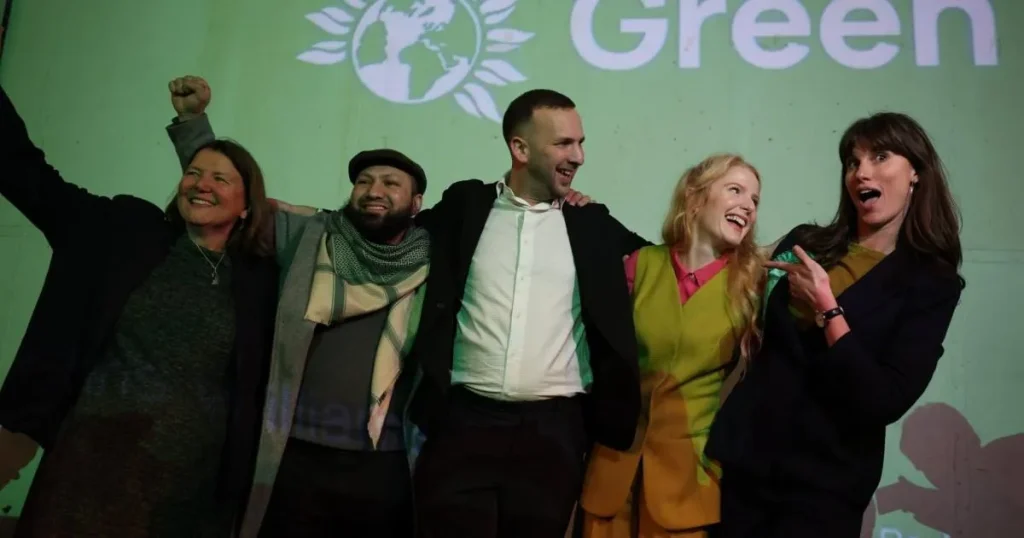
Green Party’s Gorton and Denton victory signifies a shift toward inclusive politics
Last night’s outcome in Gorton and Denton was more than a political milestone. It represented a turning point, proving that British politics can evolve beyond traditional divides. The Green Party’s first parliamentary by-election win in the region shattered a Labour stronghold that had previously maintained a majority of over 13,000 votes. This wasn’t just a win for the Greens—it was a statement that inclusivity, not exclusion, can drive electoral success.
For the first time, the North of England saw a Green MP elected, but the implications stretch further. The victory showcased a broader vision: a politics rooted in hope, unity, and representation. It was a message that resonated deeply with voters who felt overlooked by mainstream parties. In communities where nearly 40% of residents are Muslim and many grow up speaking languages like Urdu or Bangla, the campaign’s approach was vital in bridging gaps.
A language of connection
UK politics has long relied on a one-way dialogue, often using a narrow, Westminster-centric English. This was evident in the strategies of Reform’s defeated candidate, Matt Goodwin, from Kent. Yet, in Gorton and Denton, the Greens adapted their message to reflect the local voices. By communicating in languages that resonate with everyday experiences, they created a bridge between policy and people.
“You can’t put a price on that – even as the sore losers in Labour and Reform try and invalidate our inclusive campaign as something sinister.”
The Greens didn’t just produce materials in multiple languages; they embedded it into their strategy. A viral Urdu video was not a gimmick but a sincere effort to ensure every voter felt seen. It was a reminder that language should never be a barrier—it should be a tool for connection and understanding.
Challenging the narrative
Some critics, including those who lost the election, accused the Greens of fostering division. They framed their multilingual outreach as a sectarian move. However, this overlooks the campaign’s core message: inclusivity as a strength, not a weakness. The approach was designed to invite participation, not alienate.
International examples, like Zohran Mamdani’s success in New York, demonstrate that speaking to people in their native tongues expands political discourse. His campaign, which featured Arabic, Spanish, and Urdu videos, helped engage communities often sidelined by mainstream narratives. Labour, which once championed such methods, now questions their effectiveness, highlighting a shift in perception.
Issues like housing costs, healthcare access, racial tensions, and peace are universal. Whether spoken in English, Punjabi, Somali, or any other language, these concerns unite people. The Greens’ campaign acknowledged that reality, reinforcing the message: your voice matters, and your experience is valid in shaping the future.
A foundation for change
The 26.5% swing toward the Greens underscores a growing appetite for a new political model. This victory isn’t just about numbers—it’s about creating a democracy where diverse communities feel empowered. By representing Gorton and Denton’s unique identity, the Greens laid the groundwork for a more equitable political landscape.
Ultimately, the success of this campaign proves that inclusion is a powerful force. When people see their stories reflected in the political conversation, they regain faith in the system. That’s the essence of hope in action.
The site is protected by reCAPTCHA. Google’s Privacy Policy and Terms of Service apply. Your information will be used in line with our Privacy Policy.
To view this video please enable JavaScript, and consider upgrading to a web browser that supports HTML5 video.
Metro’s senior politics reporter Craig Munro breaks down all the chaos into easy to follow insight, in Metro’s politics newsletter Alright, Gov? Sent every Wednesday. Sign up here.
