
Huge venomous ‘flying’ spiders are beginning to swarm the US
Huge venomous ‘flying’ spiders are beginning to swarm the US
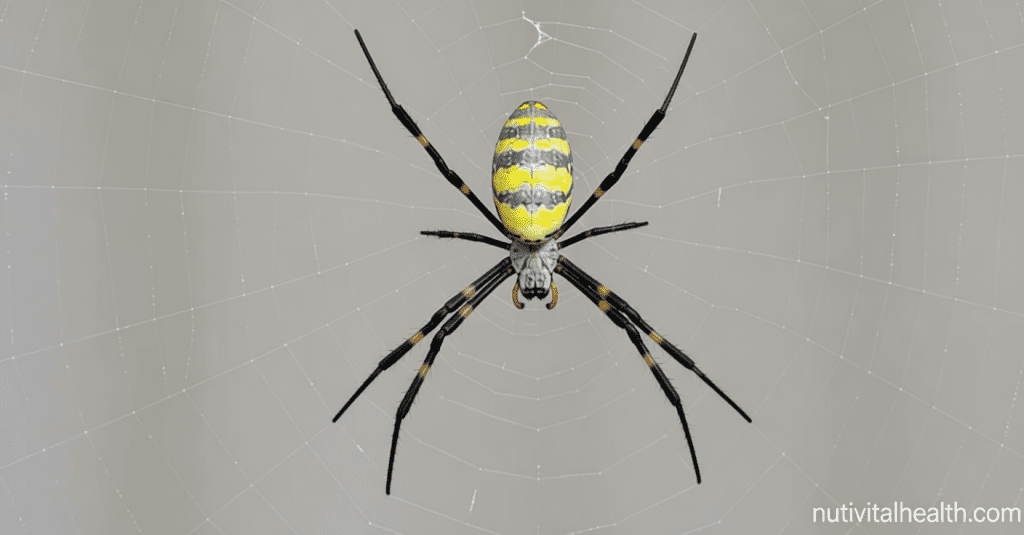
Those with a fear of spiders should take notice. A surge of large, bright yellow flying spiders is gaining momentum across the United States.
The Joro spider, a non-native species, has been spreading rapidly as the new season approaches. This year, its presence is expected to extend beyond its current range, reaching new regions with greater intensity than before.
Native to parts of East Asia, including Japan, China, South Korea, and Taiwan, the Joro spider arrived in America over a decade ago. Scientists believe it likely hitched a ride on shipping containers entering the state of Georgia.
Since then, the species has quietly colonized new areas, with fresh reports emerging from locations previously untouched. A fresh wave of activity is now underway as a new generation prepares to emerge from eggs.
Spiders typically hatch between May and June, followed by a swift growth period. By late summer, they reach maturity and begin reproducing, marking the start of peak activity from August through October.
At this stage, the spiders become more conspicuous. Female Joro spiders stand out with their striking yellow bodies adorned by blue stripes and red accents. Males, in contrast, are smaller and more subdued in color, blending into the background.
Their golden webs, which can appear overnight, are designed to snare prey effectively. As populations rise, these intricate structures are becoming increasingly common. A sudden encounter might leave you with a lasting memory of their presence.
Some individuals can grow as large as a human palm. Intriguingly, females have been observed consuming males in certain instances, challenging traditional notions of gender roles in the animal kingdom.
Reports now span Georgia, Tennessee, North and South Carolina, Virginia, Maryland, and Pennsylvania. The species has even ventured westward, with sightings in California, and its spread is anticipated to continue.
One key factor in their rapid expansion is their unique method of dispersal. Ballooning allows Joro spiders to glide through the air, using silk strands that function like miniature sails. This technique enables them to travel several feet in a single drift.
Though not technically flight, this method of aerial movement makes long-distance travel effortless. Spiders can be carried unexpectedly by vehicles or gusts of wind, facilitating quick spread across regions.
“There have been no documented fatalities, nor any notable medically significant bites,” said José R. Ramírez-Garofalo, an ecologist based on Staten Island, speaking to the Daily Mail.
He added, “Considering their reluctance to bite and the available scientific evidence, these spiders pose little threat to humans or their pets.”
Despite their size, Joro spiders are generally docile, preferring to avoid conflict. If they do interact with humans, it’s usually in a non-aggressive manner, much like most people’s approach to social situations.
Unlike many other spiders, Joros thrive in proximity to human settlements. Cities and urban areas seem to have no adverse effect on their survival.
Researchers at the University of Georgia have studied this adaptability, using tuning forks to simulate traffic vibrations. While other spiders reacted strongly, Joros remained largely unaffected, showing no signs of distress.
Andy Davis, a researcher from the University of Georgia, noted, “These Joro webs are everywhere in the fall, even near busy roads. The spiders appear to be thriving in such environments.”
Their resilience extends to cold climates. Studies show over 75% survive freezing conditions, an ability that aids their colonization of new habitats. Combined with a high metabolism and rapid heart rate, this adaptability contributes to their swift spread across diverse regions.
According to the journal Arthropoda, the Joro spider’s success stems from a blend of biological advantages. These traits enable them to dominate emerging ecosystems, outpacing native species in their growth and expansion.
