
Von der Leyen clinches Australia trade deal
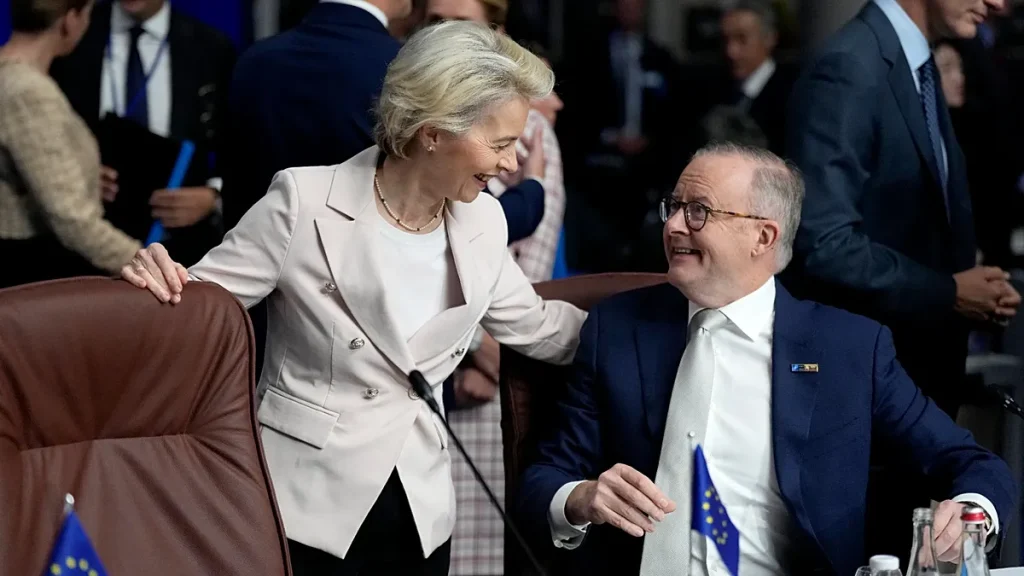
Von der Leyen clinches Australia trade deal
On Tuesday, Ursula von der Leyen, President of the European Commission, finalized a trade pact with Australian Prime Minister Anthony Albanese, significantly reducing tariffs on EU agricultural and manufactured products. This agreement positions Brussels as a key player in expanding its trade network and securing strategic alliances amid escalating global uncertainties.
Economic Impact and Trade Projections
The deal is expected to generate annual savings of €1 billion for the EU through reduced import duties, according to the Commission. Over the next ten years, exports to Australia could increase by up to 33%, with particular gains anticipated in dairy, motor vehicles, and chemicals sectors.
Agricultural Challenges and Compromises
Disputes over agricultural exports emerged as a central issue, with EU farmers previously opposing the Mercosur trade deal. A legal challenge from MEPs delayed its ratification. Under the new agreement, tariffs on cheese, wine, certain fruits and vegetables, chocolate, and processed foods will gradually disappear within three years. However, beef and sheep exports remain contentious, with Australia agreeing to annual quotas of 30,600 and 25,000 tonnes respectively. A safeguard clause will enable the EU to protect vulnerable industries if a surge in Australian imports disrupts domestic markets.
Strategic Partnerships and Geopolitical Shifts
Beyond trade, the agreement solidifies a broader collaboration with Australia, including access to critical raw materials such as aluminium, lithium, and manganese. The EU also secured partial exemptions for its electric vehicles from Australia’s luxury car tax, with 75% of models now eligible. Meanwhile, a security and defence partnership with Canberra was announced, signaling a deepening alignment between the two nations.
“The EU and Australia may be geographically far apart but we couldn’t be closer in terms of how we see the world,” von der Leyen remarked. “With these dynamic new partnerships on security and defence, as well as trade, we are moving even closer together.”
Recent geopolitical developments have heightened the EU’s focus on trade agreements as tools for strategic influence. Since Donald Trump reclaimed the U.S. presidency in 2025, the bloc has accelerated its efforts to diversify markets. In addition to Australia, Brussels has concluded pacts with Mexico, Switzerland, and Indonesia, while the Mercosur agreement—subject to a legal challenge—will be provisionally implemented from May 1. Ongoing negotiations with the Philippines, Thailand, Malaysia, the United Arab Emirates, and African nations suggest further progress in the region.
