
Denmark’s Frederiksen bruised in election, as voters put Trump’s Greenland ambitions to the side
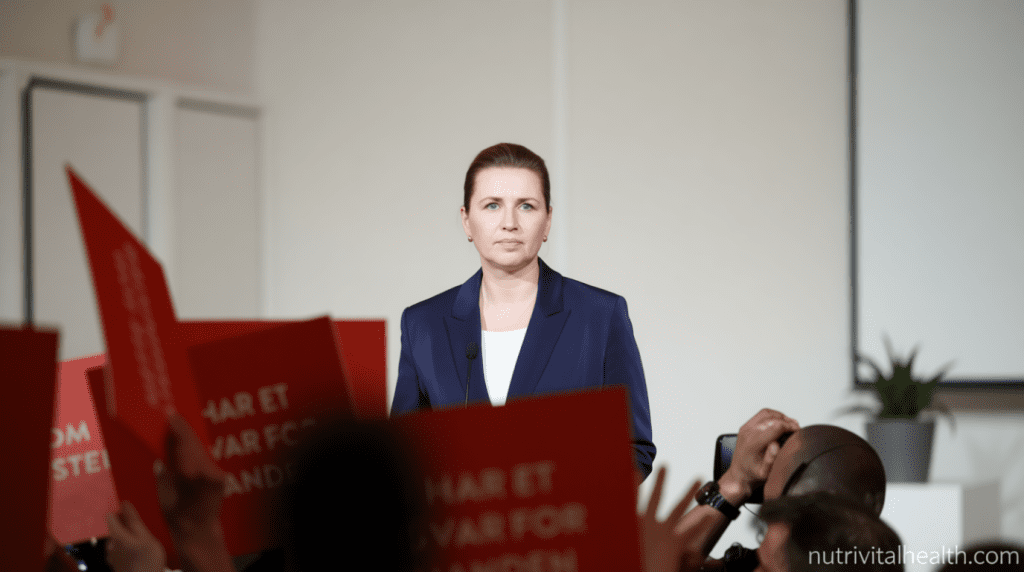
Denmark’s Frederiksen bruised in election, as voters put Trump’s Greenland ambitions to the side
The recent election in Denmark left the outcome uncertain, casting doubt on the prime minister’s continued leadership. While the campaign centered on practical concerns, it shifted focus away from her handling of the dispute over U.S. President Donald Trump’s claims to Greenland. Official tallies revealed that Prime Minister Mette Frederiksen’s center-left Social Democrats saw a drop in support compared to 2022, as did her coalition partners. Neither the left-leaning nor right-leaning factions secured enough seats to govern alone, placing former prime minister Lars Løkke Rasmussen in a pivotal role.
Rasmussen’s Moderate party, which holds 14 seats in the 179-member Folketing, could decide Frederiksen’s fate. The 48-year-old leader insisted she was prepared to continue as head of government, emphasizing stability amid global turmoil. “The world is unsettled. There are strong winds around us,” she stated. “Denmark needs a stable government, a competent one. We are ready to take the lead.”
Rasmussen urged opponents to soften their positions, framing Denmark as a small nation in a turbulent world. “We are one tribe. We must come together. We must not be divided,” he said, highlighting shared goals despite political divides. Though Trump and Greenland were prominent in the race, voters prioritized domestic matters like living costs, pensions, and a potential wealth tax.
Frederiksen’s coalition, the Social Democrats, remained the largest party but fell short of the 27.5% they received in 2022, securing only 21.9% of the vote. Defense Minister Troels Lund Poulsen, the leading center-right contender, vowed not to rejoin her government. The party’s traditional support for Ukraine and strict immigration policies, key themes in Danish politics, may have cost them some domestic traction.
Frederiksen had called the election months early, hoping her firm stance against Trump’s Greenland ambitions would bolster her appeal. She acknowledged a four percentage point decline in her party’s support over nearly seven years, citing challenges like the pandemic and war. “We have weathered the pandemic; we have had to deal with war,” she reflected. “The American president’s threats were a significant factor, but the crisis has since eased.”
Greenland, which had consumed much of the government’s attention, no longer dominated the discourse. While Frederiksen warned in January that U.S. control of the territory would signal the end of NATO, recent talks between Denmark, Greenland, and the U.S. on an Arctic security pact have softened tensions. With no party expected to secure a majority, Denmark’s proportional voting system will likely necessitate coalition-building, a process that has historically involved alliances within the left or right blocs.
“Our government has had a lot of focus on Ukraine, and I think we have lost a little in domestic votes for that,” said Social Democrat Morten Klessen. He argued that Frederiksen’s presence in Europe is vital for maintaining solidarity. Despite the setback, the prime minister maintained that her party’s performance aligns with expectations for a third term.
Denmark’s single-chamber parliament, the Folketing, is elected every four years. It comprises 175 Danish representatives, with two seats each allocated to Greenland and the Faroe Islands. The election’s result underscores a shift in priorities, with voters placing greater emphasis on immediate economic challenges than on geopolitical maneuvering.
“We need Mette Frederiksen in Europe for solidarity,” said Klessen, while Frederiksen noted, “It was normal for a party seeking a third term to lose ground.”
The uncertain outcome highlights the fragility of Denmark’s political landscape, where coalition negotiations will shape the next chapter of governance.
