Australian Woman and Daughter to Return from Syrian Camp for IS Families Under Strict Conditions
Australian woman and daughter to return – Home Affairs Minister Tony Burke announced on Thursday that the final Australian woman detained in a Syrian camp housing families of Islamic State (IS) fighters has received approval to return to the country, albeit under stringent conditions. This marks the end of a prolonged period of detention for the 29-year-old former Sydney resident, who had been held in the Roj camp in northern Syria. The move comes after her legal team successfully petitioned for a permit to repatriate her, prompting the government to reassess its stance on the exclusion order that had previously barred her departure.
The woman and her nine-year-old daughter were among a group of Australian women and children planned to leave Syria in February. However, the temporary exclusion order, issued under national security concerns, delayed their return. This order, established in 2019, was designed to prevent IS affiliates from re-entering Australia for up to two years. It is the first instance where such a measure has been applied to a female individual, highlighting the government’s focus on monitoring potential threats from the Islamic State group.
Burke explained that the government had reached its legal limit in restricting the woman’s movement, citing the necessity of maintaining a high level of oversight. “Even if you want to use a public phone, it’s 24 hours notice. Any social media, 24 hours notice on everything has to be given so that there will be a very high level of scrutiny and surveillance,” he emphasized in a statement to the Australian Broadcasting Corp. The conditions include mandatory reporting to authorities about her residence, employment, education, and travel plans. Additionally, she must provide 24 hours’ advance notice before using any form of telecommunications, such as mobile phones or internet services.
“We have gone absolutely to the legal limit that we’re able to,” Burke told the Australian Broadcasting Corp.
The opposition has accused the government of failing to update its legislation to fully block the woman’s return. Critics argue that the exclusion order, while effective in detaining individuals, lacks the flexibility needed to address evolving security threats. Despite the government’s assertion that the woman was held on national security grounds, it did not specify the exact reasons for her detention. Moustafa Kheir, her legal representative, has yet to comment on the matter, leaving questions about her circumstances unanswered.
Australia’s Federal Police have been investigating the activities of Australians linked to IS since 2015, focusing on those who traveled to the territories where the group established its caliphate in Iraq and Syria. The current case is part of a broader effort to track and monitor individuals who may pose risks to domestic security. While the woman’s return was approved, the government remains cautious, given the precedent set by the arrest of three out of four women and nine children who arrived in Australia on May 7. Those detainees were charged with terrorism and slavery offenses and have been denied bail, raising concerns about the potential for similar actions against the returning mother and daughter.
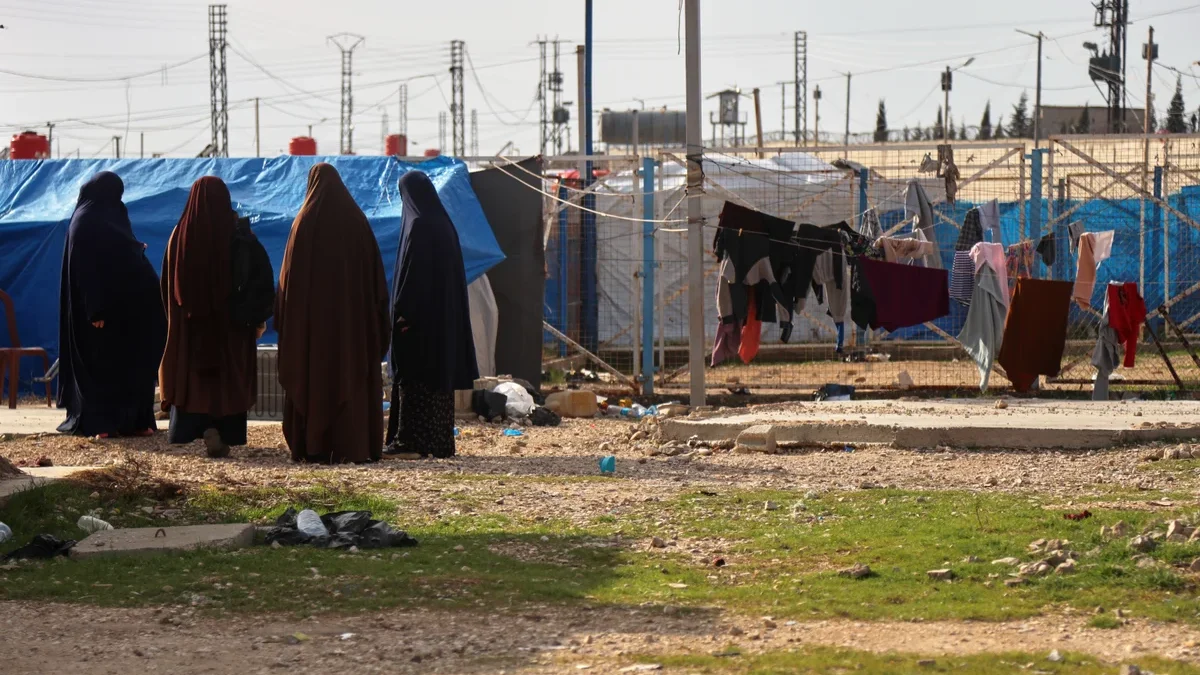
The Roj camp, located in the Jazeera region of Syria, has served as a detention center for IS families since the group’s territorial losses in 2014. Over 500 Australians have been held there, many of whom were separated from their families. The woman’s case underscores the ongoing debate over balancing individual rights with national security measures. While her return signifies a victory for her legal team, it also highlights the strict controls the government has imposed on former IS affiliates, even those who have no direct ties to combat roles.
Burke’s decision to lift the exclusion order follows a legal review of the woman’s case, which was submitted by her lawyers. The minister acknowledged the challenges of enforcing such measures, noting that the two-year period of exclusion had been extended beyond its initial scope. “This individual has been held for a significant period, and we have determined that the current legal framework allows for sufficient oversight to ensure Australia’s safety,” he stated. The conditions for her return are intended to keep her under constant surveillance, with police and security agencies tasked with monitoring her activities.
Despite the government’s assurances, some lawmakers have raised concerns about the lack of transparency in the exclusion order’s application. They argue that the decision to release the woman could be seen as a leniency in the face of potential risks. However, the minister defended the measure, emphasizing its legal validity and the necessity of preventing any resurgence of IS influence within Australia. The case also serves as a reminder of the broader impact of the group’s ideology on communities abroad, with many Australians drawn to its extremist rhetoric and practices.
As the woman prepares for her return, the focus shifts to how she will be reintegrated into Australian society. Her adherence to the strict conditions will be critical in determining whether her presence poses a threat. Meanwhile, the government continues to monitor the situation, with the possibility of further legal actions or adjustments to its policy. The case highlights the complexities of managing individuals with ties to terrorist groups, where the line between security and personal freedom is often tested.
Public reaction to the woman’s release has been mixed. While some applaud the government’s decision to prioritize legal procedures, others question whether the conditions are sufficient to prevent any potential radicalization. The exclusion order’s temporary nature allows for flexibility, but it also raises the question of whether the government will impose more permanent restrictions on future cases. With the Islamic State still active in various regions and its influence persisting through online networks, the woman’s return represents both a legal milestone and a strategic choice to manage risk through surveillance rather than indefinite detention.
The Australian Federal Police’s ongoing investigations into IS-linked activities have uncovered numerous cases of individuals using the group’s networks to recruit or plot attacks. The woman’s case adds to this body of work, illustrating the multifaceted approach required to counter terrorism. As she steps onto Australian soil, the conditions she must follow will be closely watched, not only as a measure of her individual compliance but also as a test of the government’s broader strategy in dealing with former IS affiliates. Whether this marks a new phase in Australia’s counter-terrorism efforts or a temporary concession remains to be seen.
With the woman’s release, the spotlight turns to the legal and security frameworks that govern her return. The temporary exclusion order, while effective in its original intent, now serves as a tool for maintaining control over individuals deemed a threat. The government’s stance reflects a commitment to national security, even as it navigates the challenges of balancing that with humanitarian considerations. As she begins her life in Australia again, the focus will be on how her compliance with these conditions will shape the future of similar cases and the broader perception of Australia’s approach to counterterrorism.