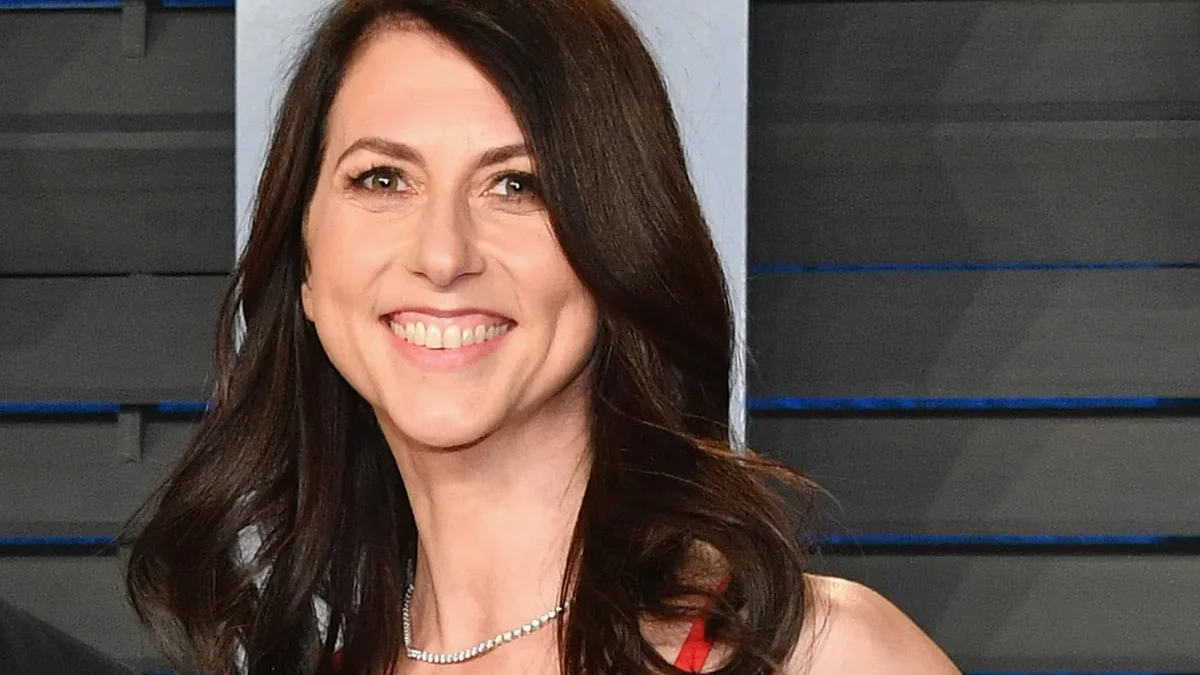
Ex-Wife of Amazon Founder Leads in Charitable Giving with Record Donations
MacKenzie Scott’s Philanthropy Surpasses Major Donors in 2023
Ex wife of Amazon boss Jeff – MacKenzie Scott, the former spouse of Jeff Bezos, the founder of Amazon, has emerged as a dominant force in U.S. charitable giving. A recent analysis reveals that Scott accounted for one-third of all “megagift” donations to nonprofit organizations in 2023, according to a report published by Fortune. These megagifts are defined as contributions exceeding 0.1% of the total annual giving in the country, highlighting Scott’s significant impact on the philanthropy landscape.
The report, which draws on data from Giving USA and the Indiana University Lilly Family School of Philanthropy, states that the cumulative value of megagifts in 2023 reached $19.2 billion. Scott’s contributions alone amounted to nearly $7 billion, surpassing the combined totals of many high-profile donors. This marks the fifth consecutive year she has been recognized as one of the leading contributors to major charitable causes, with her overall giving over the past five years totaling $26.2 billion.
Other notable figures in the megagift category included former New York City Mayor Michael Bloomberg, investor Warren Buffett, and Microsoft co-founder Bill Gates. However, Scott’s individual donations dwarfed those of her peers, underscoring her role as a key player in large-scale philanthropy. Her generosity has been attributed to a strategic approach that prioritizes impactful, long-term initiatives rather than traditional charitable methods.
“The year proved to be a strong one for charitable contributions, with most sectors of nonprofit organizations experiencing robust growth,” said Gabe Cooper, Vice Chair of the Giving USA Foundation. “This trend reflects a broader commitment to addressing critical issues through significant financial support.”
Scott’s Journey from Amazon to Independent Philanthropy
MacKenzie Scott’s path to philanthropy began with her marriage to Jeff Bezos in 1993, just a year prior to the founding of Amazon in their Bellevue, Washington, garage. The couple met during their time at D.E. Shaw, a prominent New York-based hedge fund, before moving to Seattle to establish the tech giant. Their union produced three children, and they remained together until their separation in 2019.
Following their divorce, Scott transitioned from her role as a spouse to a full-time donor, leveraging her financial resources to support a wide range of causes. Her focus has shifted toward identifying and funding organizations that address systemic challenges, particularly in underserved communities. This approach has been central to her decision-making process, as outlined in her 2019 statement.
“Each of us receives the gifts we possess through a series of influences and fortunate circumstances we may never fully grasp,” Scott wrote in a 2019 letter. “In addition to the resources life has provided, I have a substantial amount of wealth to share. My commitment to philanthropy will remain deliberate, requiring time, effort, and care. I will not delay in taking action.”
Yield Giving’s Strategic Philanthropy Model
Since her divorce, Scott has established Yield Giving, a philanthropic initiative designed to maximize the effectiveness of her donations. The organization operates with a focus on “quiet research,” aiming to uncover nonprofits that demonstrate exceptional impact while minimizing administrative burdens. This method allows Scott to evaluate potential recipients discreetly, ensuring their work remains undisturbed by the donation process.
Yield Giving’s 2023 donations included several high-profile contributions. The organization awarded $60 million to the Hive Fund for Climate and Gender Justice, an initiative dedicated to advancing clean energy solutions and promoting gender equity. Additionally, $63 million was directed to Howard University, a historically Black university in Washington, D.C., to support its educational programs and research efforts. A further $90 million went to Forests, People, Climate, a nonprofit working to combat deforestation and protect biodiversity.
Scott’s strategy emphasizes scalability and sustainability, targeting issues that require substantial investment. Her approach has been described as both methodical and visionary, with a clear emphasis on long-term societal benefits. By prioritizing anonymity and efficiency, Yield Giving ensures that its contributions are aligned with the needs of the organizations it supports, rather than the donor’s personal preferences or public visibility.
Comparing Scott’s Impact to Traditional Philanthropy
While major donors such as Bill Gates and Warren Buffett have long been associated with large-scale giving, Scott’s contributions represent a new paradigm in charitable philanthropy. Her megagifts not only exceed the annual donations of many legacy philanthropists but also reflect a shift toward more targeted and data-driven approaches. This has allowed her to influence specific causes with unprecedented precision, including climate action, gender equality, and educational equity.
According to the report, the total megagift donations in 2023 underscore a growing trend in charitable giving. Donors are increasingly favoring large, one-time contributions over recurring donations, which can be more challenging to manage. This strategy enables organizations to receive transformative funding, often equivalent to a decade or more of regular giving, according to Giving USA’s analysis. Scott’s ability to generate such massive donations has made her a pivotal figure in this evolving landscape.
Her success is attributed to a combination of financial acumen, personal motivation, and a well-structured giving framework. By focusing on underrepresented communities and systemic challenges, Scott has carved a unique niche in philanthropy. Her work has also sparked discussions about the role of individual wealth in addressing global issues, with critics and supporters alike acknowledging the scale of her impact.
As Yield Giving continues to grow, its influence on the nonprofit sector is expected to expand. The organization’s emphasis on quiet research and anonymity has set a precedent for how high-net-worth individuals can contribute to social causes without drawing excessive public attention. Scott’s commitment to this model has not only reshaped her own philanthropy but also inspired a new generation of donors to prioritize efficiency and impact in their giving.
The report highlights that Scott’s contributions have the potential to reshape entire industries, from education to environmental conservation. Her ability to allocate billions of dollars to specific causes with minimal oversight has allowed nonprofits to scale their operations and achieve measurable outcomes. This has led to increased collaboration between donors and recipients, fostering a more dynamic and responsive philanthropy ecosystem.
A Legacy of Giving Beyond the Spotlight
Scott’s approach to philanthropy has often been described as both personal and principled. By maintaining a low profile, she ensures that her donations are used to support initiatives that may not receive traditional funding. This has enabled organizations such as Forests, People, Climate to secure critical resources for their programs, despite operating in niche or underfunded areas.
The report also notes that Scott’s donations have created a ripple effect, encouraging other high-profile individuals to adopt similar strategies. Her success has demonstrated that large-scale charitable giving is not only possible but also increasingly common among the wealthy. As the philanthropy sector evolves, Scott’s model is likely to serve as a blueprint for future donations, emphasizing the importance of strategic and scalable giving.
With over $26 billion in total donations since 2019, Scott’s impact on U.S. philanthropy is undeniable. Her work with Yield Giving continues to shape the way charities receive and utilize large gifts, ensuring that the most pressing issues receive the attention they deserve. As the year progresses, her contributions remain a testament to the power of individual generosity in driving collective change.