Humans and Apes Laugh in Similar Ways, Study Finds
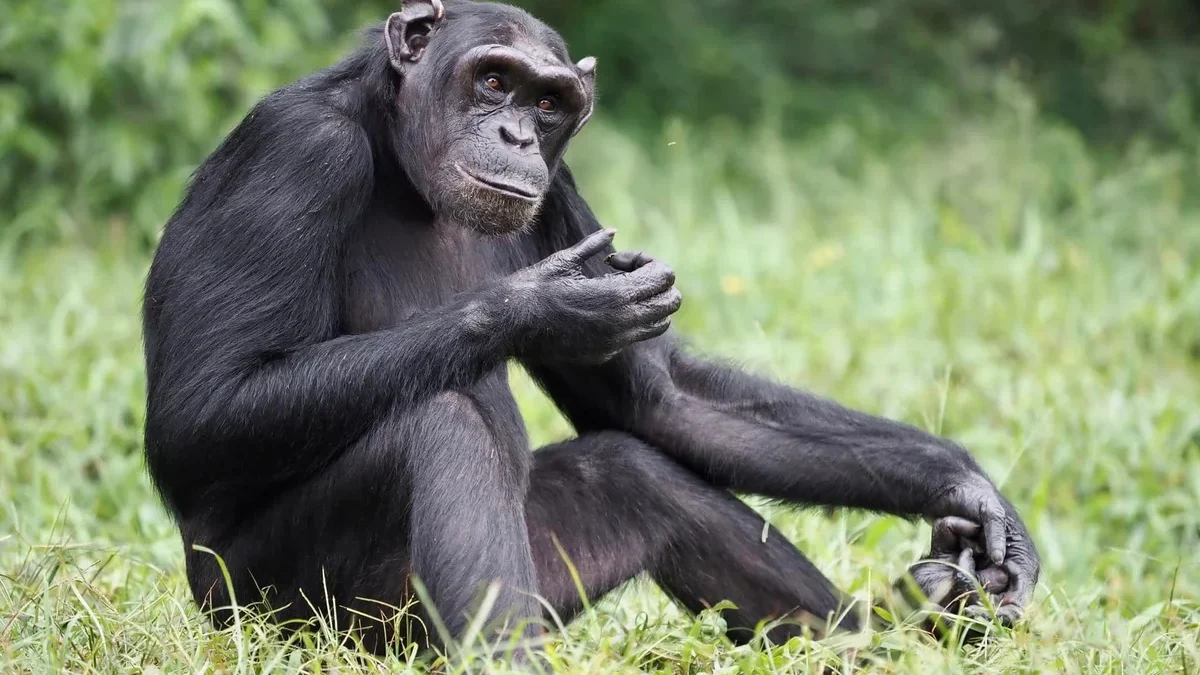
Humans and apes laugh in similar – A groundbreaking study published this week reveals that the laughter of humans and great apes shares strikingly similar characteristics, challenging previous assumptions about the uniqueness of human vocalizations. Researchers have long been fascinated by the evolutionary origins of laughter, but this new research adds a compelling layer to the discussion by demonstrating that the rhythmic and temporal patterns of laughter in both species are remarkably comparable. The findings suggest that the shared evolutionary history between humans and apes may extend further than previously thought, with laughter serving as a potential link to their common ancestry.
Comparative Analysis of Laughter Patterns
Scientists examined decades-old audio recordings of 13 captive apes, including gorillas, orangutans, chimpanzees, and bonobos, all of whom had been tickled in controlled environments. These recordings were then contrasted with fresh data collected from four young children, whose giggles were captured during playful interactions at home. The analysis focused on the acoustic features of laughter, such as its duration, frequency, and the intervals between consecutive bursts. The results indicated that both humans and apes exhibit similar rhythmic structures in their laughter, with consistent timing and overlapping patterns that defy the notion of human laughter being entirely distinct.
The study’s authors propose that these similarities are not coincidental but rather a reflection of deep evolutionary ties. Laughter, they argue, may have evolved as a social signal, allowing early primates to communicate pleasure and ease during interactions. This theory is supported by the observation that the laughter of great apes and humans aligns in ways that mirror the development of other shared traits, such as tool use and facial expressions. The research also highlights how laughter functions as a nonverbal form of communication, conveying emotions like joy and playfulness without the need for words.
Evolutionary Insights from Primatologist Chiara De Gregorio
“In a way, we are very similar to other great apes because we’ve been laughing in a similar way for 15 million years,” said Chiara De Gregorio, a primatologist at the University of Warwick in England. Her team’s work underscores how laughter has evolved alongside complex social behaviors, making it a critical tool for understanding the development of human communication. The study’s findings, published in the journal Communications Biology, suggest that the roots of laughter stretch back to a common ancestor, with both species refining their vocalizations over time to suit their unique environments.”
De Gregorio’s research delves into the nuances of laughter, noting that while apes and humans share foundational similarities, human laughter has diverged in complexity. For instance, the tone and intensity of a human laugh can vary dramatically depending on context—ranging from a soft, polite chuckle in professional settings to a full-bodied, unrestrained guffaw among close friends. This adaptability, she argues, reflects the broader evolution of human language and social interaction. Yet, the study also emphasizes that the core mechanics of laughter remain unchanged, preserving a primitive yet essential function.
Expert Perspectives on the Study’s Implications
Brittany Florkiewicz, a researcher specializing in animal communication at Lyon College, praised the study’s approach but noted the need for further exploration. “These giggles evolved to best suit animals’ different social lives,” she explained. “The study’s findings make sense, but they also highlight how much we still have to learn about the role of laughter in shaping social bonds across species.” Florkiewicz suggested that future research should investigate similar vocal patterns in other animals, such as dogs, horses, and cats, which are known for their expressive behaviors.
By analyzing the acoustic properties of laughter, scientists hope to uncover the evolutionary pathways that led to human speech. While physical remains of ancient laughter do not fossilize, the study of modern vocalizations provides a window into the past. The research team’s work on apes and children is part of a broader effort to trace the development of complex communication systems, linking laughter to the emergence of language. This could offer insights into how early humans used sounds to build relationships, navigate social hierarchies, and express emotions.
Connecting Laughter to Human Evolution
Studying the origins of laughter may seem whimsical, but its significance in human evolution is profound. Laughter acts as a bridge between instinct and cognition, enabling primates to convey mirth and foster group cohesion. While rats respond to tickling with ultrasonic squeaks, and other animals have their own forms of vocal play, the structure of human laughter remains distinct in its variability and complexity. This duality—shared roots and divergent development—raises intriguing questions about what sets humans apart in the animal kingdom.
The study’s methodology involved comparing recordings of ape laughter with those of children, revealing that both groups exhibit rhythmic consistency in their vocalizations. For example, the timing between bursts of laughter and the frequency of sounds were found to align in ways that suggest a universal mechanism for social communication. De Gregorio emphasized that these similarities are not just coincidental but are rooted in the evolutionary history of primates, who have relied on vocal cues to navigate their environments for millions of years.
As scientists continue to explore the nuances of laughter, they are uncovering its role as a fundamental aspect of social behavior. The research on apes and humans not only sheds light on the shared traits of our species but also invites a deeper investigation into how laughter has shaped human culture. By examining these patterns, researchers aim to understand the origins of our capacity for complex communication, offering a new perspective on what makes us uniquely human while recognizing the common threads that connect us to our primate relatives.