Iran-US War Updates: Israel Threatens to Counter Iranian Strikes
Iran US war latest – Amid escalating tensions between Iran and the United States, Israel has reinforced its readiness to retaliate against potential Iranian attacks, positioning itself as a key player in the regional conflict. The nation’s defense minister, Israel Katz, recently emphasized that Israeli forces are prepared to “finish the job” if Tehran initiates hostilities. This declaration follows growing pressure on Israel to manage its ongoing confrontations with Hezbollah, even as a ceasefire agreement remains in place.
Israeli Military Stands Firm Against Iranian Threat
Katz’s warning came after remarks from Esmail Qaani, commander of Iran’s Quds Force, who suggested that Israel might be compelled to retreat from southern Lebanon if it did not voluntarily withdraw. The Israeli defense minister dismissed such predictions, asserting that neither the strategic Strait of Hormuz nor civilian casualties would deter Israel from taking decisive action. “Nothing will stop us. Our forces are ready to finish the job,” he stated in a social media post, underscoring Israel’s resolve.
“Neither Hormuz nor attacks on civilians will help them; nothing will stop us. Our forces are ready to finish the job.”
The Israeli military’s preparedness is juxtaposed with the current ceasefire with Hezbollah, which has not fully halted cross-border operations. Despite the agreement, Israeli troops have continued to conduct raids in southern Lebanon, prompting concerns about the sustainability of the truce. Recent reports indicate that Israeli forces dropped leaflets over a town in the region, instructing residents to evacuate. This marks the first such directive since the ceasefire was established, raising questions about the extent of Israel’s commitment to the pact.
Geopolitical Tensions and Strategic Implications
Iran’s deputy foreign minister, Kazem Gharibabadi, highlighted the vulnerability of maritime routes through the Strait of Hormuz, warning that safe passage could not be assured without Iranian coordination. This statement followed the designation of temporary routes by Oman in collaboration with the International Maritime Organization. Gharibabadi’s comments suggest that Iran views the strait as a critical point of contention, with potential for disruption if tensions intensify.
Meanwhile, the United States and Iran remain locked in a precarious standoff. Trump’s recent threats to Iran have drawn mixed reactions, with some critics dismissing them as empty gestures. Tucker Carlson, a former Trump ally and Fox News host, openly mocked the president’s rhetoric, calling out his threats as “meaningless.” During a podcast appearance, Carlson told Trump, “Shut up, b****,” while critiquing his decision to escalate the conflict.
“Strong people don’t brag about how strong they are. They just punch you in the face and end the conversation.”
Carlson argued that Trump’s aggressive posturing fails to reflect real military strength, pointing to the potential for Iran to launch a decisive strike without fear of retaliation. His remarks reflect a broader skepticism about the effectiveness of U.S. involvement in the region, particularly as the Iran war enters its second day. The former host also linked Trump’s actions to the recent attack on a girls’ school in Iran, which killed numerous children. He claimed the incident’s responsibility remains unclear, with some questioning whether U.S. forces were involved.
Lebanese Perspectives and Local Impact
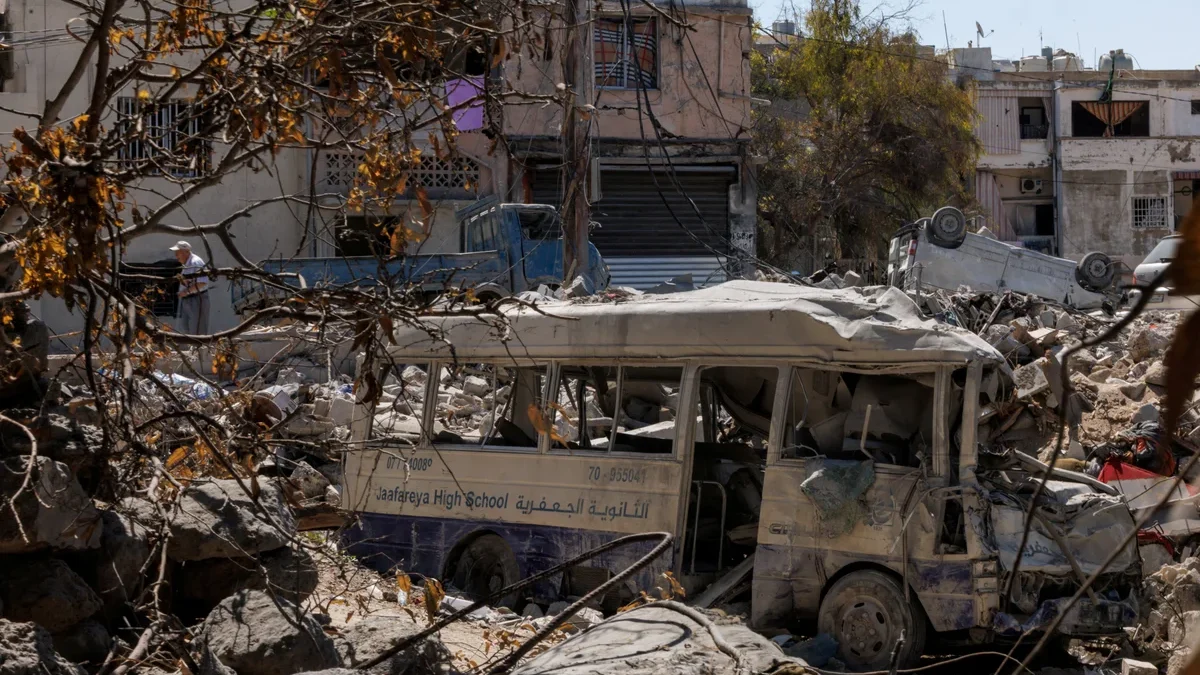
Lebanese military officials have provided additional insight into the situation, noting that Israeli troops have expanded their operational zone in southern Lebanon. A senior officer revealed that the town of Mansouri has been incorporated into this area, which is controlled by Israeli forces. While farmers continue to move freely through the region, they reportedly do not reside there permanently, highlighting the fluid nature of the conflict’s impact on local communities.
Furthermore, Israeli troops are said to be enforcing the northern boundary of the occupied zone by targeting individuals approaching it. This includes both civilians and Lebanese soldiers, indicating a deliberate effort to solidify control. The situation has raised concerns among Lebanese leaders, who fear that the ceasefire may be eroded by sustained Israeli operations. The military official’s statements add context to the broader narrative of regional instability, even as Iran and the U.S. remain engaged in their standoff.
Regional Dynamics and Future Outlook
The conflict has drawn attention to the strategic importance of the Strait of Hormuz, a vital chokepoint for global oil trade. Gharibabadi’s warning about its security underscores Iran’s determination to assert influence over this critical route. If Iran perceives the strait as a bargaining chip, the potential for a broader confrontation with the U.S. could escalate, with significant implications for international markets and global energy supply.
As the situation unfolds, the interplay between Israel’s actions and Iran’s retaliatory capabilities remains central. The defense minister’s threats and the Quds Force’s statements reveal a dynamic where both sides are preparing for the possibility of escalation. Meanwhile, the U.S. continues to play a pivotal role, with Trump’s rhetoric serving as a catalyst for tension. Analysts suggest that the conflict may evolve into a more complex scenario, involving multiple actors and layered strategies.
Despite the ceasefire with Hezbollah, the ongoing clashes in southern Lebanon demonstrate that peace is fragile. The leaflet orders and increased military presence indicate that Israel is not content to wait for resolution. As the conflict progresses, the balance of power in the region may shift, with each side seeking to project strength and deter the other. The coming days will be crucial in determining whether these threats materialize into actual hostilities or if diplomacy can prevent further escalation.
In the meantime, the international community watches closely, with questions lingering about the role of U.S. forces in the recent attack on the girls’ school. The lack of clarity on responsibility has fueled speculation, and the situation could influence future decisions regarding military engagement in the region. As Israel and Iran prepare for potential confrontations, the global ramifications of their actions remain a pressing concern.