Female Officer Punched at Manchester Airport Urges Attacker to Show Remorse
Female police officer punched in Manchester – A 29-year-old female police officer, PC Lydia Ward, was violently attacked at Manchester Airport in July 2024, sustaining a fractured nose and a facial punch. The incident, which has sparked widespread public debate, prompted Ward to publicly appeal for her attacker, Mohammed Fahir Amaaz, to demonstrate remorse. Amaaz, a 21-year-old man, was sentenced to three-and-a-half years in prison at Liverpool Crown Court for the assault.
The Attack and Its Public Reaction
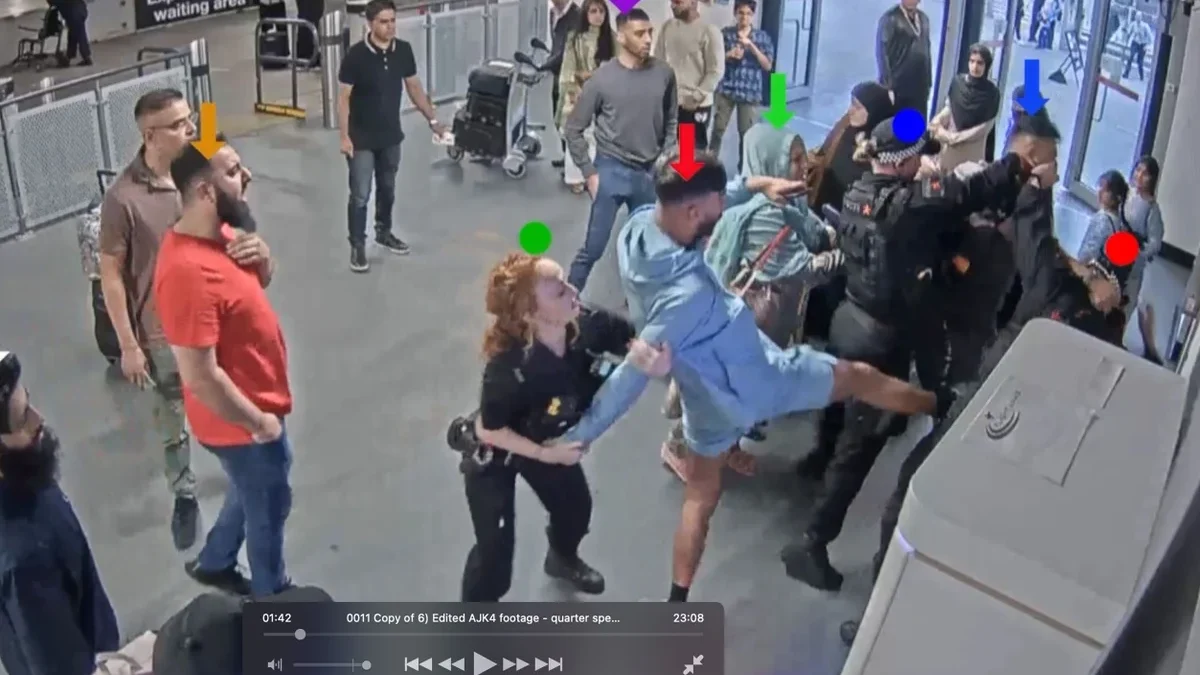
Body camera footage captured the moment PC Ward was struck by Amaaz, who then turned his aggression toward PC Ellie Cook, knocking her to the ground. The altercation unfolded in the crowded airport terminal, where Ward described the environment as “hostile,” filled with shouting and tension. Despite the chaos, she felt targeted, stating the event appeared to be an ambush, fueling perceptions of anti-police sentiment.
“I remember getting up after being punched. I was in a state of panic. I was in so much pain. I thought, ‘Oh my God, there’s people everywhere,’” Ward explained in an interview. “There were two men shouting and being aggressive. People were filming us. Laughing at us. It felt like such a hostile environment.”
Medical and Emotional Aftermath
Following the assault, Ward required surgery to realign her broken nose and recover from the physical trauma. During her time off, she faced online criticism, with some users accusing her of being complicit in the attack and branding the incident as an example of police brutality. Social media became a battleground for contrasting views, as the public debated the officer’s actions and motivations.
“People making videos giving their opinions on it, people commenting and calling it racist and police brutality. I thought: ‘That’s not the full story. I’m the one lying in bed on my back with a broken nose, barely able to breathe, watching all this stuff making out we were the bad guys,’” she said. “Comments online called into question my ability to perform my duties because of my gender. People were saying ‘She’s useless,’ which was frustrating during my recovery.”
Despite the backlash, Ward has since been promoted to sergeant and now works in an investigative role in Bolton. She maintains that accountability is crucial, emphasizing, “I’ve not seen any remorse from Amaaz. Even if you think you’re partially not to blame, you need to take some responsibility for your actions. That’s how I feel about the situation.”
Legal and Investigative Context
Amaaz was also convicted of an earlier assault at a nearby Starbucks café and for attacking PC Cook. Prosecutors highlighted his resistance to being taken outside, which escalated the violence and led to injuries for both officers. However, two juries could not reach a verdict on whether Amaaz caused actual bodily harm to firearms officer PC Zachary Marsden, who was also involved in the incident.
The Crown Prosecution Service (CPS) recently decided not to pursue a third trial against Amaaz and his brother, Muhammad Amaad, for their role in the attack. The judge formally acquitted both defendants, though evidence suggested their actions were not in lawful self-defense. The case has raised questions about the adequacy of legal accountability for those involved in the Manchester airport assault.
Public Discourse and Ongoing Impact
The incident has reignited conversations about how police officers are treated in public spaces and the role of social media in shaping narratives. Ward’s experience highlights the challenges faced by law enforcement in maintaining their reputation amid scrutiny. The Independent Office for Police Conduct (IOPC) is investigating whether excessive force was used during the confrontation, adding another layer to the ongoing debate.
As the investigation continues, Ward remains hopeful that the attacker will acknowledge his actions. “I want people to understand that this wasn’t just a random act. It was an intentional attack on a police officer in Manchester, and it needs to be taken seriously,” she stated. The case underscores the intersection of personal accountability, public perception, and the broader implications of police work in high-pressure environments.