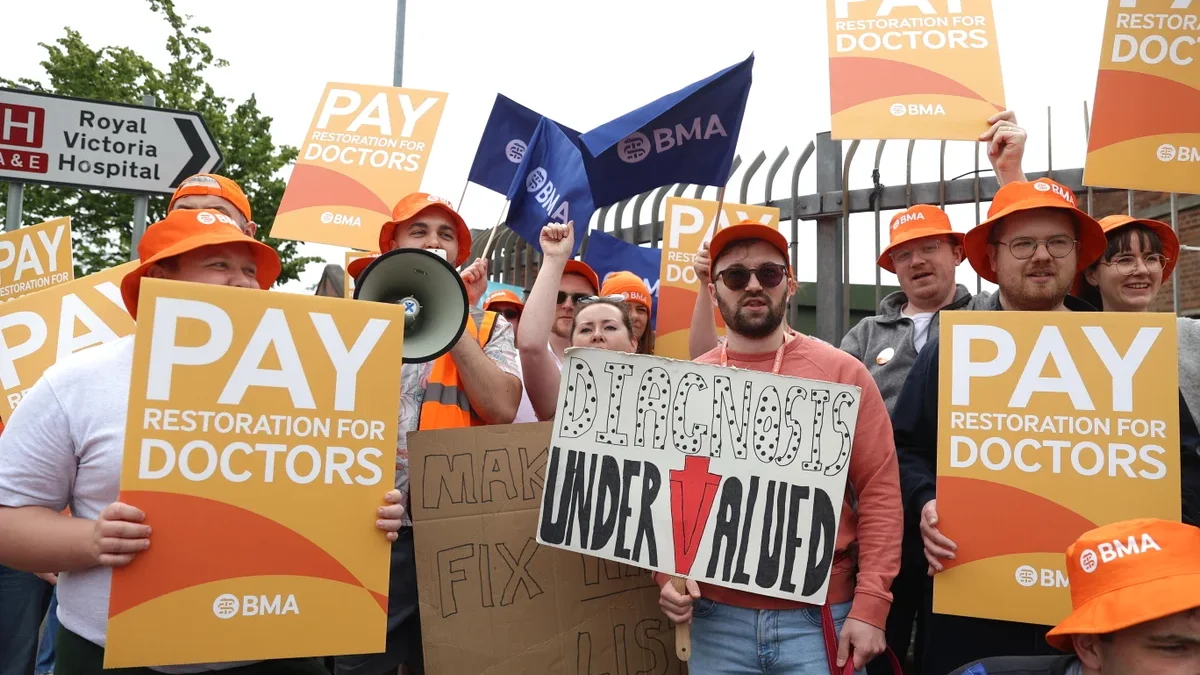
End of Strike Action: England’s Junior Doctors Approve Pay Agreement
Junior doctors vote to accept pay deal – After prolonged disputes and a series of industrial actions, England’s junior doctors have reached a resolution, voting to accept a government proposal on salaries and working conditions. This decision marks the conclusion of a year-long standoff, with the British Medical Association (BMA) Resident Doctor Committee (RDC) leading 21 days of strikes since July 2025. The agreement, which now secures a new deal, will gradually restore fairer pay and improve the medical workforce’s stability, ending the cycle of walkouts that had disrupted healthcare services.
A Year of Tension and Negotiations
The long-standing disagreement between junior doctors and the government has now been resolved following a referendum. Over 57% of participating doctors voted in favor of the deal, with a total of 32,932 votes cast. This outcome was expected to conclude the 21-day strike period, which had stretched across multiple months since the summer of 2025. The resolution comes as a relief to patients and NHS staff, who had faced ongoing disruptions due to the repeated stoppages.
Key Elements of the New Agreement
The finalized deal introduces several key measures to address the concerns of junior doctors. Among them is the reinstatement of standard 2016 contract terms for all locally employed medical professionals, ensuring consistency in pay and working conditions. Additionally, a 6.6% average pay increase is scheduled to be fully implemented by April 2027, providing a pathway to financial recovery. The agreement also includes the creation of 4,500 new specialty training positions over the next three years, aiming to alleviate staffing shortages and support career development.
According to the Department for Health and Social Care (DHSC), the cumulative effect of this deal will result in a 35.2% rise in average resident doctor salaries compared to levels from four years ago. This reflects a broader commitment to reinvigorating the NHS workforce, which had faced significant challenges in recent years. The new pay structure is intended to provide more stability, particularly for those in training, who often bear the brunt of financial pressures and long working hours.
“This agreement offers better career opportunities and improved working conditions for resident doctors,” said Sir Keir Starmer, leader of the Labour Party, in a statement on X. “It enables us to move forward and deliver for patients, ultimately reducing waiting lists and enhancing care quality.”
Health Secretary James Murray expressed optimism about the deal’s impact, stating, “This is very good news for resident doctors, patients, and the NHS as a whole. It allows us to put an end to the disruptions of recent months and refocus on rebuilding our health service with renewed energy.” Murray highlighted the deal’s potential to strengthen the NHS, noting that the proposed changes will provide a framework for better staffing and more sustainable working practices. He also emphasized that this is a critical step toward long-term improvements, though the journey to full resolution is far from over.
Government and Union Collaboration
The successful conclusion of the dispute underscores the importance of collaborative efforts between the BMA and the government. Sir Keir Starmer and James Murray both acknowledged the need for continued dialogue, with Starmer praising the “constructive approach” that led to the agreement. Murray, however, stressed that the deal is just the beginning, with further steps required to ensure the NHS remains resilient and responsive to future challenges.
Dr. Jack Fletcher, chair of the BMA Resident Doctor Committee, welcomed the outcome, stating, “Resident doctors have spoken. They have decided that the current offer is sufficient to advance pay restoration and address the shortage of jobs in the NHS.” He noted that the strikes, while necessary, were not ideal and hoped for more efficient negotiations in the future. Fletcher also cautioned that the deal does not signify the end of the pay restoration process, urging the government to maintain its momentum and continue supporting the medical workforce.
Impact on the NHS and Patient Care
Dean Royles, interim chief executive of NHS Employers, praised the agreement, calling it a “positive step” that will stabilize patient care and reduce the strain on frontline staff. He highlighted that the implementation of the deal will require significant effort, but the ambitious timelines set for pay increases and training expansions demonstrate a shared commitment to progress. “The hard work of implementation now begins,” Royles remarked, adding that the agreement’s structure provides a clear roadmap for long-term improvement.
For patients, the resolution of the strike action means fewer interruptions to healthcare services. With the BMA’s threat of escalating strikes now lifted, the NHS can focus on its recovery. However, the deal’s success also hinges on the government’s ability to follow through with its promises, including the creation of additional training spots and the full realization of the pay uplift by 2027. Fletcher emphasized that the current agreement sets a foundation for future improvements, but ongoing collaboration is essential to sustain the momentum.
Looking Ahead: A New Chapter for the NHS
While the immediate crisis has been averted, the deal does not eliminate all challenges. The BMA had warned that rejecting the offer could lead to more intense strikes, underscoring the urgency of the situation. Dr. Fletcher acknowledged that the journey toward fair pay and better staffing conditions is ongoing, urging the government to prioritize doctors’ needs in future discussions. “We spent far too long at odds with the Government,” he said, “when a solution was already available: more jobs, better pay, and a better-staffed NHS.”
The agreement’s terms are seen as a balanced compromise, addressing both financial and operational concerns. However, the implementation phase will be crucial in determining its long-term effectiveness. As the NHS prepares to integrate these changes, the focus will shift to ensuring that the new structure supports doctors in their roles and that patient care remains at the forefront of all decisions. With the current deal in place, the hope is that this collaboration will foster a more stable and efficient healthcare system for years to come.
Thousands of junior doctors in England had previously threatened a four-day walkout on 15 June, which would have been the 16th round of strikes since 2023. This latest round of action, however, has been successfully resolved, allowing the medical community to refocus on delivering care. The deal’s approval is a testament to the resilience of junior doctors and the willingness of both sides to find common ground. As the implementation begins, the NHS and its staff will be closely monitoring the progress to ensure that the promises made are fulfilled.