Chinese Robot Completes Six-Day Factory Shift with 99.99% Success Rate
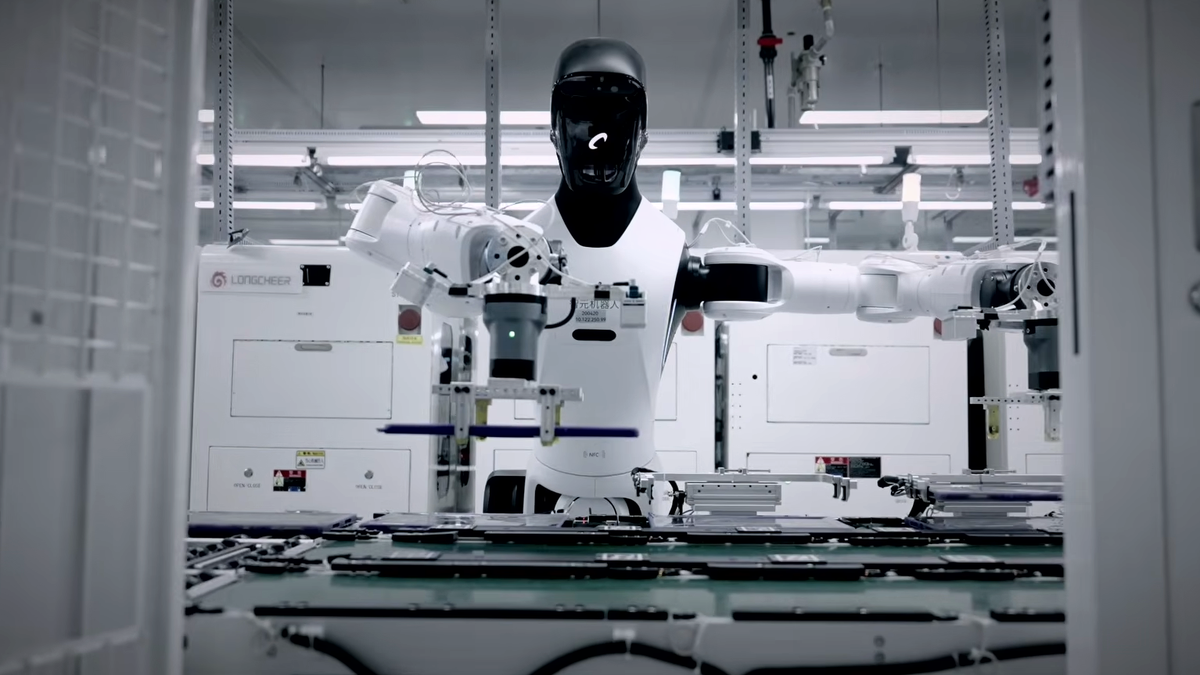
Chinese robot completes six day factory – In a groundbreaking development, a humanoid robot developed by the Shanghai-based startup Agibot has successfully completed a six-day shift on a live production line at a facility in Nanchang, eastern China. The operation, which lasted over 64 hours, demonstrated the robot’s ability to perform complex tasks with remarkable precision, achieving a success rate of 99.99%—a figure that has sparked significant interest in the field of industrial automation.
Robots Perform Quality Control and Material Handling
The robots, equipped with advanced sensors and artificial intelligence, took on responsibilities typically reserved for human workers, such as inspecting products for defects and managing material logistics. This marks a pivotal moment in the evolution of embodied AI, as the machines operated without interruption in a real-world setting. The process was live-streamed, allowing observers to witness the seamless execution of more than 60,000 tasks over the six-day period. This level of consistency and efficiency underscores the potential of humanoid robots to revolutionize manufacturing processes.
Dr. Yao Maoqing, a senior vice president at Agibot, emphasized the importance of this achievement. “The key question for humanoid robotics is no longer what a robot can demonstrate, but whether it can be deployed, integrated, and create value in real operating environments,” he stated. The six-day trial was designed to address this challenge by showcasing the practical application of humanoid robots in a dynamic industrial context. By making the process visible for an extended period, Agibot aims to highlight the transparency and reliability required for large-scale adoption of such technology.
Significant Milestone in Robot Production
Agibot has also announced that it has surpassed a major production threshold, having manufactured over 15,000 humanoid robots to date. This milestone represents a critical step toward the company’s goal of deploying robots in a variety of industrial settings. The ability to scale production while maintaining high performance standards is a key factor in determining the feasibility of widespread implementation.
The company’s success in this trial aligns with broader government initiatives. China’s latest Five-Year Plan, spanning from 2026 to 2030, has identified humanoid robotics as one of the top 10 strategic industries for economic growth. This focus on embodied AI reflects a shift from traditional automation toward more intelligent, adaptable systems. The plan envisions integrating advanced robotics into sectors such as automotive, electronics, and logistics, driving innovation and productivity.
Analysts Forecast Rapid Expansion
Industry analysts predict that China will become a global leader in humanoid robot deployment. Barclays estimates that the country could have 11 million of these robots in use by 2035, a number that would far exceed the 2 million projected for the rest of the world combined. This projection highlights the potential for rapid growth in the sector, driven by government support and technological advancements.
However, some experts caution that expectations may outpace reality. Morgan Stanley’s recent analysis found that China sold just 12,000 humanoid robots last year, suggesting that the market is still in its early stages. Despite this, the Agibot trial provides concrete evidence of the technology’s viability. The company’s ability to operate robots for six consecutive days in a live environment signals a turning point in the industry’s development.
Emphasis on Real-World Application and Transparency
The six-day live stream of the factory operation was a deliberate effort to showcase the robots’ capabilities in a transparent manner. Agibot’s trial not only demonstrated the efficiency of its machines but also highlighted the challenges of integrating them into existing workflows. Dr. Yao Maoqing noted that the goal was to provide a clearer picture of what is needed for industrial robotics to become a standard tool in manufacturing.
“This trial shows that embodied AI is beginning to be tested in a more transparent way, closer to the conditions that industrial customers actually care about,” the expert added. The success of the operation reinforces the idea that humanoid robots are no longer just prototypes but viable solutions for real-world applications. It also signals a growing confidence in the general-purpose robot ecosystem, which is transitioning from theoretical models to practical implementations.
Analysts agree that the trial has set a new benchmark for the industry. Takayuki Ito, president of the International Federation of Robotics, pointed out that China’s approach is shifting from traditional industrial automation to high-end robotics integrated with artificial intelligence. This strategic pivot could position the country as a leader in the next phase of automation, where robots are not only more efficient but also more intelligent and versatile.
Implications for the Future of Manufacturing
As the demand for automation continues to rise, the success of Agibot’s trial could influence the trajectory of the industry. The ability to operate robots for extended periods without errors suggests that they are becoming more reliable and efficient. This is particularly important for industries that rely on continuous production, where even minor disruptions can lead to significant losses.
Furthermore, the trial demonstrates the potential for humanoid robots to handle tasks beyond the scope of standard industrial robots. With powerful chips enabling complex decision-making, these machines can adapt to changing conditions and perform a wide range of functions. This adaptability is a key advantage in an increasingly competitive market.
Experts believe that the widespread adoption of humanoid robots could transform manufacturing landscapes globally. While challenges such as cost and maintenance remain, the trial provides a roadmap for overcoming them. As more companies invest in this technology, the focus will likely shift from proving its capabilities to scaling its deployment across industries.
China’s commitment to embodied AI through its Five-Year Plan and the efforts of startups like Agibot indicate a future where robots are not only tools but integral components of industrial ecosystems. The trial in Nanchang serves as a testament to the progress being made, offering a glimpse into the possibilities of a fully automated manufacturing environment. With continued innovation and investment, the path toward large-scale integration of humanoid robots appears increasingly feasible.