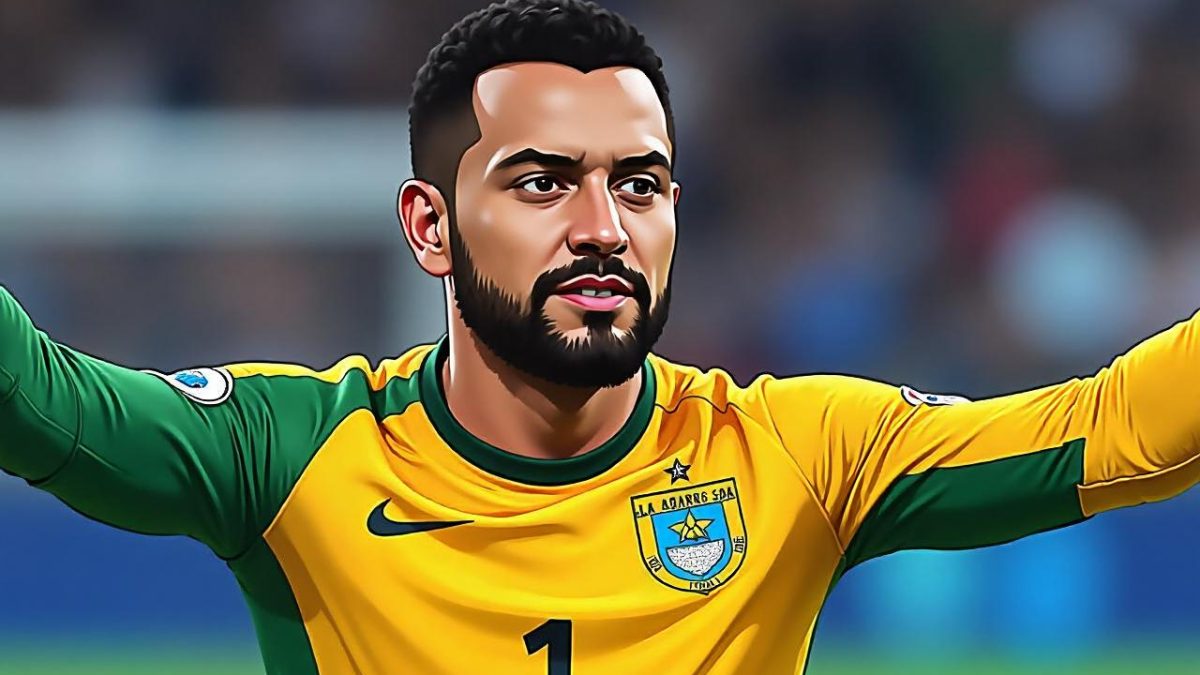
French FA President Condemns Ex-Paraguay Goalkeeper Jose Luis Chilavert for Racist Remarks
French FA chief condemns disgraceful ex Paraguay – The French Football Association (FFF) has taken a strong stance against former Paraguay goalkeeper Jose Luis Chilavert, labeling him a “disgrace” for his recent inflammatory comments during a social media exchange with ex-France international Christophe Dugarry. The controversy erupted as Chilavert made a racially charged remark about the French national team ahead of their World Cup 2026 last-16 clash, sparking a wave of criticism from French football officials and fans alike.
Chilavert, a 60-year-old legend of Paraguay’s national team, made the controversial statement during a heated online discussion. In a post shared on social media, he claimed that his country’s team would face a “squad from Africa” in the upcoming World Cup match in Philadelphia, a comparison that has drawn sharp backlash for its perceived racial undertones. The comment was attributed to Dugarry, a former French forward who had previously criticized Paraguay’s performance in the 1998 World Cup, but Chilavert’s framing of the remark has reignited debates about the legacy of racial stereotypes in football.
Chilavert’s remarks were not entirely new. The dispute between him and Dugarry dates back to the 1998 World Cup, where the two teams clashed in the round of 16. France emerged victorious with a 1-0 win, a result that Dugarry had predicted during the tournament. Chilavert, who was part of Paraguay’s squad at the time, now reinterpreted Dugarry’s earlier assessment in the context of the 2026 World Cup, suggesting that the French team would again dominate against Paraguay. This comparison, however, has been criticized for reducing the complexity of the current match to a simplistic racial narrative.
Diallo, the head of the FFF, responded swiftly to the remarks, issuing a statement on X (formerly Twitter) that condemned Chilavert’s comments as “racist.” He emphasized the importance of respect, fraternity, and diversity in French football, stating that such remarks undermine the values upheld by the national team. “I condemn in the strongest possible terms the racist remarks made by José Luis Chilavert against the French national team,” Diallo wrote. “These comments not only disrespect the players but also risk tarnishing the image of football as a unifying force.”
“I condemn in the strongest possible terms the racist remarks made by José Luis Chilavert against the French national team, which undermine the values of respect, fraternity, and diversity in our football.”
The 2026 World Cup match between France and Paraguay was marked by tense exchanges on the pitch, with Paraguay’s defensive strategies drawing accusations of harshness. French players reported several fouls during the game, yet none of the defenders received yellow cards, a decision that has raised questions about the consistency of disciplinary actions. The lack of penalties has fueled the perception that Paraguay’s tactics were intentionally provocative, setting the stage for the heated post-match discourse.
France’s victory in the last-16 encounter was secured by a controversial penalty awarded after a lengthy VAR check. The decision came following a foul by Paraguay’s Diego Gomez on France’s Desire Doue, a moment that sparked debate among pundits and fans. Joe Hart, serving as a pundit for BBC Sport, called Paraguay’s approach “disgraceful,” highlighting the team’s aggressive play and its impact on the game’s flow. Meanwhile, Didier Deschamps, the French coach, was seen guiding Kylian Mbappé away from a potential confrontation at full-time to prevent any disciplinary issues from escalating.
The incident has reignited discussions about the role of race in football commentary and how past grievances are sometimes used to frame current matchups. Chilavert’s comments, while referencing a historic rivalry, have been criticized for perpetuating the idea that Paraguay’s team is inherently less skilled than France’s, a stereotype that many argue is outdated and unfair. Football historians note that Paraguay has a rich history of competitive performances, including their notable run to the final of the 1998 World Cup, where they narrowly missed out on a place in the final.
Chilavert’s use of social media to amplify his criticism has also drawn attention to the platform’s role in shaping public perception of players and teams. By attributing his remarks to Dugarry, he sought to align himself with a former French player’s assessment, but the phrasing of his statement has been seen as a deliberate attempt to downplay Paraguay’s capabilities. Critics argue that such comparisons can be misleading, as they simplify the nuances of team performance and focus on ethnic stereotypes rather than tactical or competitive differences.
The World Cup 2026 has already seen several high-stakes matches, with France advancing to the next round after their 1-0 win against Paraguay. The game in Philadelphia was part of the group stage, and the outcome has set the stage for France’s next challenge: a clash against Morocco at the Boston Stadium on 9 July. Morocco, who defeated co-host Canada 3-0 in their previous match, will be a formidable opponent, but the French team remains confident in their ability to secure another victory.
While the FFF’s condemnation of Chilavert has been widely supported, some Paraguayan fans have defended his comments, arguing that the comparison to an African team was a fair assessment of France’s perceived strength in the tournament. The debate has also highlighted the generational divide in football commentary, with older players like Chilavert often using historical references to frame their opinions, while younger analysts emphasize data and performance metrics.
Chilavert’s remarks have prompted a broader conversation about how footballers from different nations are judged in international competitions. The use of race as a proxy for team quality is a recurring theme in sports commentary, and this incident has brought it into sharp focus. Diallo’s response underscores the FFF’s commitment to addressing such issues, but it also raises questions about how other football associations might respond to similar incidents in the future.
As the World Cup 2026 progresses, the incident serves as a reminder of the importance of language in sports. While Chilavert’s comments may be seen as a reflection of his past experiences, they also highlight the need for players to be mindful of the impact their words can have on the global perception of their teams. The French FA’s stance reinforces the values of inclusivity and respect, setting a precedent for how future disputes in football might be handled.
In conclusion, the controversy surrounding Chilavert’s remarks has sparked a significant debate within the football community. It has brought attention to the role of racial stereotypes in sports commentary and the responsibility of athletes to represent their teams with dignity. As France prepares for their next match against Morocco, the focus will remain on the game itself, but the lingering impact of this incident will continue to shape discussions about fairness and representation in international football.