
Neptunian moon Nereid could be lone intact survivor from ancient satellite system
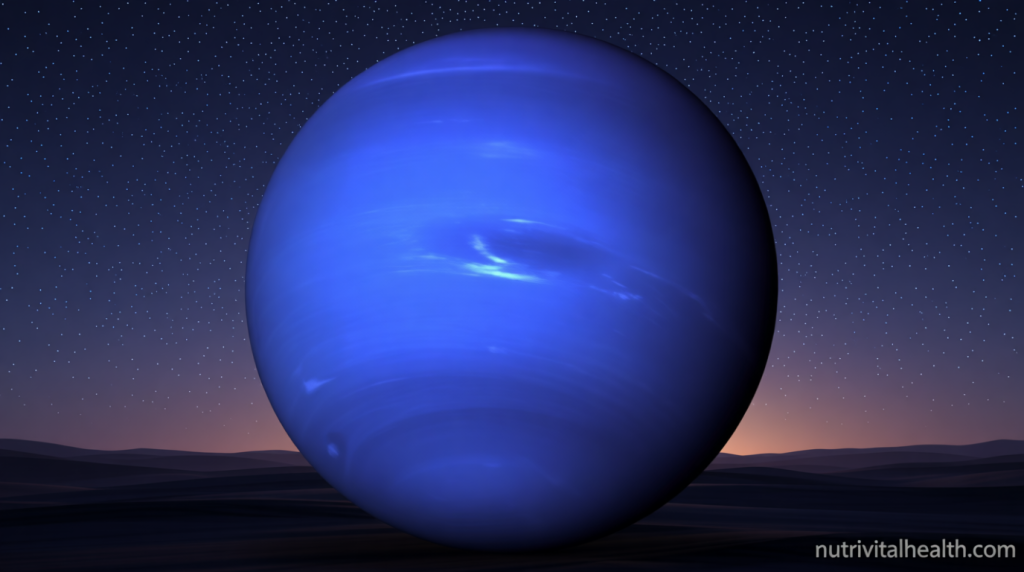
Neptunian Moon Nereid Could Be Lone Survivor of Ancient System
Neptunian moon Nereid could be lone – New research using James Webb Space Telescope data reveals that Neptune’s moon Nereid may be the lone intact survivor of an ancient satellite system. This discovery challenges previous assumptions about its origin, suggesting it wasn’t captured from the Kuiper Belt but instead formed as part of Neptune’s original lunar family. The findings imply that Nereid has endured the violent disruptions that reshaped the planet’s moons in the early solar system, making it a rare remnant of that chaotic era.
Neptune’s Unique Moon System
Neptune, the eighth planet in our solar system, distinguishes itself from its neighbors through its peculiar moon configuration. Unlike Jupiter, Saturn, and Uranus, which have more orderly satellite systems, Neptune’s moons are a collection of irregularly shaped bodies with erratic orbital paths. Triton, the planet’s largest moon, orbits in the opposite direction of Neptune’s rotation, a retrograde motion uncommon among other moons. This peculiarity has prompted scientists to question whether Triton formed alongside Neptune or was acquired later through a dramatic cosmic event.
Neptune’s smaller moons, such as Nereid, exhibit highly inclined, elongated, or even backward orbits, indicating they may not have originated from the same primordial material as the planet. This irregularity has fueled debates about the planet’s early history and the role of external forces in altering its current system. The new study adds a fresh perspective, positing that Nereid might have been the sole surviving member of a once-dense satellite system that was destabilized by the arrival of a massive object like Triton.
Triton’s Origin and the Disruption of Neptune’s System
Scientists hypothesize that Triton’s retrograde orbit is a result of its capture by Neptune’s gravity. Rather than forming from the planet’s initial accretion disk, Triton likely originated in the Kuiper Belt and was pulled into Neptune’s orbit billions of years ago. This event is believed to have caused widespread destruction, as Triton’s immense size and velocity would have collided with Neptune’s pre-existing moons, scattering them into chaotic orbits.
According to Matthew Belyakov, a planetary science graduate student at Caltech, such a collision could have erased many of Neptune’s original satellites. “The other survivors are Neptune’s innermost moons, but they are not intact because we have images of them from Voyager, and they look like disrupted rubble piles,” Belyakov explained. “So they are surviving material from the initial system, but not fully intact moons.” This suggests that the current structure of Neptune’s inner moons is a remnant of the violent interactions that followed Triton’s arrival, while Nereid remains a key piece of the puzzle.
The new analysis, published in the journal *Science Advances*, highlights Nereid’s unique characteristics. While other moons appear to be fragments of a shattered system, Nereid retains a relatively unaltered form. The telescope’s infrared capabilities revealed that Nereid’s surface has a higher water content than previously expected, contradicting earlier theories linking it to the Kuiper Belt. These findings support the idea that Nereid was part of Neptune’s original satellite system, rather than a later addition, and could be the lone intact survivor of that system’s upheaval.
Nereid’s position as Neptune’s outermost moon amplifies its significance. Its orbit is the most eccentric in the solar system, extending over 100 million kilometers from the planet. This elongated path means the moon spends much of its time far from Neptune, yet it still remains within the planet’s gravitational influence. While this makes Nereid an outlier compared to other irregular satellites, it also suggests a possible connection to Neptune’s original system, reinforcing its status as the lone intact survivor of ancient lunar formations.
Belyakov’s team used a 10-minute observation from the James Webb Space Telescope to analyze Nereid’s surface. The data showed that the moon’s brightness and water-rich composition are inconsistent with Kuiper Belt objects, which are generally darker and composed of more methane and ammonia. “What we found was an object that was highly water-rich on the surface, brighter than most Kuiper Belt objects, and with some presence of other compounds,” Belyakov noted. These characteristics support the hypothesis that Nereid has a unique origin, possibly as a member of Neptune’s original satellite system, rather than a captured object from the outer solar system.
