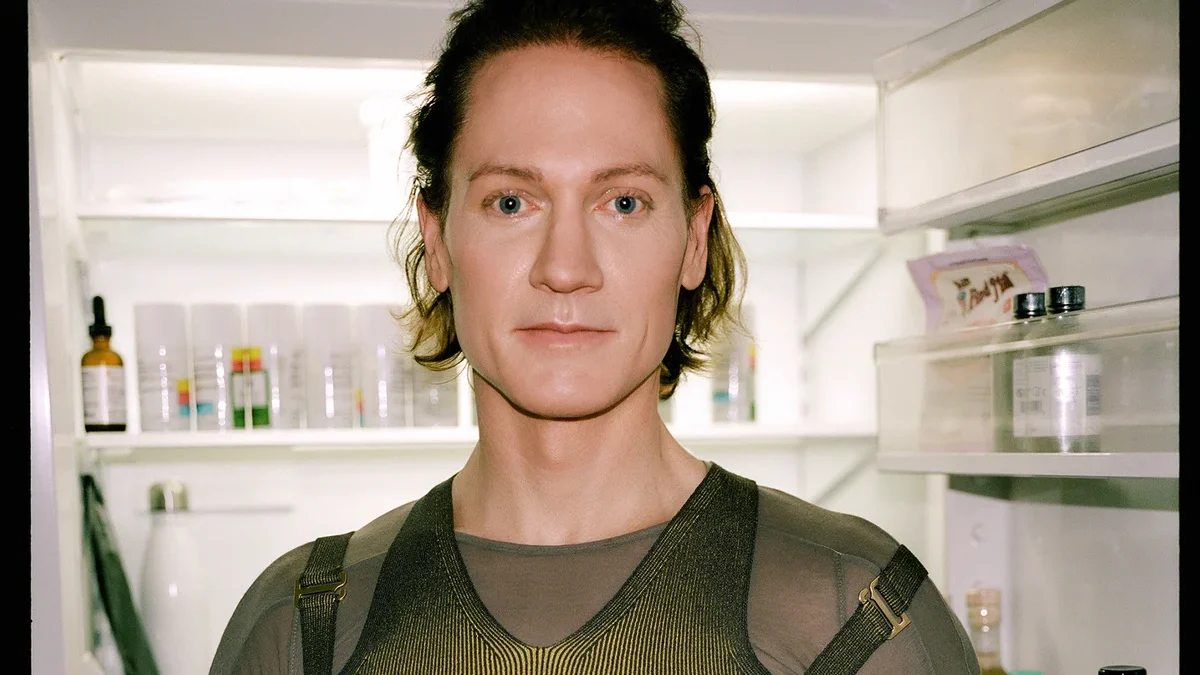
‘Don’t Die’ Biohacker Bryan Johnson Shares Health Diagnosis: ‘My Body Would Have Collapsed Without My Care’
Don t Die biohacker Bryan Johnson – Bryan Johnson, the 48-year-old tech entrepreneur behind the ambitious “Don’t Die” project, has revealed a personal health challenge that has reshaped his understanding of longevity. In a recent conversation with The Independent, he spoke candidly about his diagnosis of autoimmune gastritis, a condition he credits with forcing him to reevaluate his approach to wellness. The revelation underscores his belief that meticulous self-care has been instrumental in preventing a more severe decline in his health.
A Biohacker’s Health Revelation
Johnson, known for his high-tech experiments to extend human life, expressed gratitude for the five years he has dedicated to optimizing his body. “I’ve been deeply invested in health, and it’s made all the difference,” he stated. His recent diagnosis of autoimmune gastritis, which he disclosed publicly, was linked to a prior condition: autoimmune hypothyroidism diagnosed at age 21. According to Johnson, this has been a chronic issue for his body, spanning 27 years, and his current efforts to manage it are a continuation of that journey.
“Had I not taken care of my body during the past five years, the situation would be much worse so I am very grateful to have been focused on health,” he wrote in an email exchange.
Johnson’s health timeline has been marked by significant shifts. He described how his iron levels, which had been low for 11 years, were finally restored after receiving an intravenous treatment of Monoferric, a compound used to address iron deficiency anemia. “I had low iron for 11 years,” he shared on X. “I’ve finally boosted it back to healthy levels.” This treatment, he explained, was part of a broader strategy to reverse the damage caused by his autoimmune gastritis, which he claims impairs his stomach’s ability to absorb essential nutrients like iron.
While his health improvements are a victory, Johnson has faced criticism for his $2 million-a-year lifestyle, which includes extreme interventions such as hyperbaric oxygen therapy and infusions of his son’s blood plasma. He recently challenged skeptics who linked his ailments to his “Don’t Die” regimen, emphasizing that his condition is a result of long-term dietary and lifestyle choices rather than a direct consequence of his biohacking efforts.
Defending His Lifestyle Choices
Over the past week, Johnson launched a series of social media posts to defend his approach to health. He argued that modern medical practices often fail to account for the cumulative impact of everyday habits. “The anesthesia only works if everyone does it together. One abstainer reveals to the room that they are drunk,” he wrote on X, using this metaphor to explain how society’s reliance on indulgence creates a cycle of health complacency.
“It’s not my decisions. It’s their reflection in the mirror.”
Johnson dismissed accusations that his regimen was responsible for his health issues, insisting his comments were not an attack on any individual’s choices. “I’m not criticizing lifestyle practices; I’m highlighting how most people mistake the absence of diagnosis for the presence of health,” he clarified. He suggested that many individuals overlook their own health struggles, believing they are in control of their well-being until symptoms escalate.
His critique extended to common health misconceptions, such as the idea that “meat will remedy my autoimmune gastritis” or that “sunlight is the cure.” Johnson maintained that his condition is multifactorial, with diet playing a central role in its progression. He also pointed out that his critics often fail to consider the complexity of his health history, including the years he spent consuming fast food and sugary drinks before committing to a more rigorous health routine.
A Long-Term Battle with Autoimmune Conditions
Johnson’s health journey began in childhood, when he indulged in sugar cereal, sugary soda, and fast food without awareness of its long-term consequences. “I had a few healthy years in my early 20s,” he reflected, “but then became a young father of three and started building a business. Juggling that stress and grind, I let my health slip and gained 40 lbs. Within a few years, I’d fallen into a deep, chronic depression. Somewhere in that timeline, my body began developing an autoimmune process affecting my thyroid and then my stomach lining.”
“My body’s genetic and immunological architecture made a mistake decades ago, failing to distinguish between my own tissues and external threats.”
The autoimmune gastritis diagnosis, which he received in May, is now a focal point of his health strategy. The condition, which causes the immune system to attack the stomach lining, increases the risk of cancer and affects an estimated 0.5 to 2 percent of the U.S. population, according to the Cleveland Clinic. Johnson emphasized that his treatment plan has been a combination of early interventions and sustained lifestyle changes, including a shift away from processed foods and a focus on sleep optimization.
Despite his confidence in his health practices, Johnson acknowledged that his journey has not been without setbacks. His initial unawareness of his condition highlights the subtle nature of autoimmune disorders, which can develop gradually without immediate symptoms. “It’s only in recent years that I’ve realized how much my body was struggling,” he admitted, underscoring the importance of regular health monitoring.
Johnson’s reflections also touch on the broader implications of his health story. He argued that society often equates a lack of diagnosis with a state of health, ignoring the underlying factors that contribute to chronic illnesses. “For those who do not routinely measure their health, that ignorance manifests a false sense of physiological superiority,” he wrote. This perspective positions him as both a personal advocate and a critic of conventional health norms.
As he continues to refine his health strategy, Johnson remains committed to his mission of extending human life. The recent diagnosis of autoimmune gastritis, he said, is a reminder of the delicate balance between aging and self-care. “I’ve been focused on health for five years, and it’s made all the difference,” he reiterated, offering his experience as a testament to the power of proactive wellness. His story, though personal, has sparked a broader conversation about the role of diet, stress management, and early detection in maintaining long-term health.