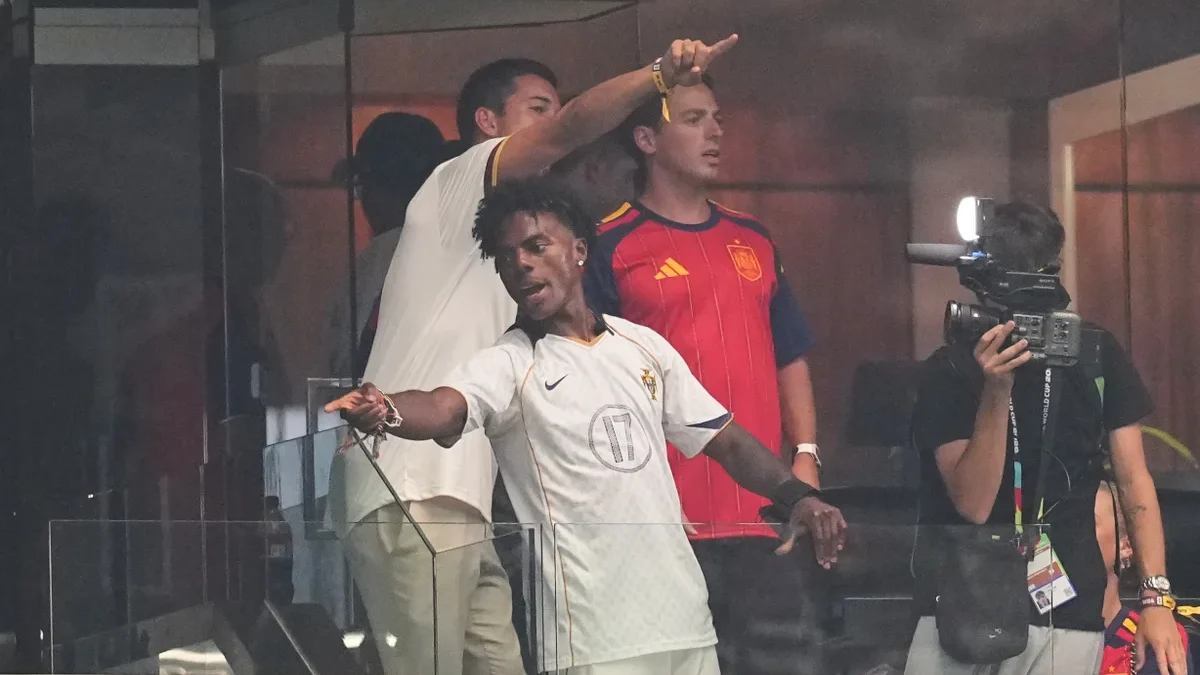
FIFA Investigates Racist Encounter Involving IShowSpeed During World Cup Match
Fifa condemns racist abuse toward IShowSpeed – The International Football Federation (FIFA) has initiated an inquiry into a conflict that occurred between content creator IShowSpeed and a spectator during the World Cup clash between Argentina and Cape Verde on Friday. The incident, which unfolded while IShowSpeed was live-streaming the game, has sparked discussions about racial bias in sports and online interactions at high-profile events.
According to reports, IShowSpeed was broadcasting the match when he approached a fan wearing an Argentina jersey and inquired about the nature of the remarks directed at him. The fan, speaking in Spanish, responded with a derogatory comment, reportedly telling the streamer to “go cry to the zoo.” The exchange highlights the tension that can arise between athletes and fans, particularly in moments of heightened emotion or cultural misunderstanding.
FIFA released a statement on Tuesday condemning the incident, emphasizing its commitment to eradicating racism, hate, and discrimination from the sport. The statement read: “FIFA strongly condemns racism, hate, and discrimination in all forms. These actions have no place in football, at the FIFA World Cup, or anywhere in society.” The organization also noted that the event at Miami Stadium on July 3, 2026, marked the beginning of its investigation into the confrontation.
IShowSpeed, a 21-year-old American streamer with a global following, has amassed over 50 million YouTube subscribers, 45 million Instagram followers, and 47 million TikTok users. His influence on social media underscores the growing role of digital platforms in shaping public perception of sports events, including the potential for rapid backlash against instances of prejudice.
A Separate Incident Involving Kylian Mbappé and a Paraguayan Senator
Meanwhile, a separate incident involving French football star Kylian Mbappé has drawn attention. The 27-year-old forward condemned a Paraguayan senator, Celeste Amarilla, for making racist remarks following Paraguay’s 1-2 defeat to France in the round of 16. Mbappé, known for his fierce advocacy against discrimination, took to X to address the controversy.
“Through your recklessness and your brazen racism, the entire world has already forgotten the journey and the historic effort that your players accomplished during this World Cup,” Mbappé wrote in response to Amarilla’s comments.
Amarilla, a member of Paraguay’s Liberal Radical Party, had posted a series of racially charged comments on X after Mbappé scored the winning penalty in France’s victory over Paraguay. She mocked the French captain’s origins, upbringing, education, and appearance, which sparked outrage among fans and players alike. France advanced to the quarterfinals, set to face Morocco on Thursday, but the senator’s remarks have cast a shadow over the team’s progress.
Amarilla later issued an open letter in French and Spanish, clarifying that her criticism was directed at Mbappé personally rather than the entire country of France. She expressed regret for using the same insults she has endured as a mixed-race individual and stated that she had deleted her initial post. However, she also demanded an apology from Mbappé, warning of legal action if it was not forthcoming.
The Paraguayan government swiftly responded to Amarilla’s comments, issuing a statement that called her remarks “contrary to the values and principles that inspire peaceful coexistence and respect for human dignity that our country promotes.” The government clarified that the senator’s statements did not reflect the views of the nation or its leadership, emphasizing the importance of maintaining unity during the World Cup.
Both incidents reflect broader themes of racism and representation in sports. While IShowSpeed’s confrontation with a fan highlights the microaggressions that can occur in real-time during matches, Mbappé’s criticism of Amarilla underscores the global scrutiny athletes face when addressing systemic issues. These cases serve as reminders of the challenges athletes and public figures encounter in advocating for inclusivity.
The Global Stage and Cultural Impact
The FIFA World Cup, as the pinnacle of international football, is not only a showcase of athletic skill but also a platform for cultural exchange and social dialogue. However, incidents like these reveal how deeply ingrained prejudices can surface even in the most inclusive environments. The clash between IShowSpeed and the fan, and Mbappé’s public rebuke of Amarilla, have ignited debates about the responsibilities of fans and officials in fostering respectful discourse.
IShowSpeed’s presence at the stadium as a streamer illustrates the intersection of technology and traditional sports. His ability to engage with fans in real time has made him a prominent figure in football culture, yet it has also placed him in the spotlight for instances of racial slurs. The incident raises questions about the extent to which digital influencers are held accountable for their interactions with fans, especially during live events.
In contrast, Mbappé’s reaction to Amarilla’s comments demonstrates the power of athletes to amplify marginalized voices. His strong condemnation of the senator’s remarks has not only validated the experiences of those targeted by racism but also placed pressure on public figures to align their actions with the values of the tournament. This duality—of being both a target and a champion against discrimination—highlights the complex role athletes play in shaping societal attitudes.
The World Cup’s global audience amplifies the reach of such incidents, making them more than just isolated moments. The fact that both IShowSpeed and Mbappé have become focal points in these controversies underscores the growing influence of social media in shaping public opinion and holding individuals accountable. FIFA’s response to the IShowSpeed incident, combined with the ongoing discussions around Mbappé’s case, signals a renewed commitment to addressing racism in the sport.
As the tournament progresses, these incidents will likely continue to influence the narrative surrounding the event. They serve as a catalyst for reflection on how prejudice persists in the 21st century, even in spaces that are meant to celebrate diversity and unity. For FIFA, the challenge lies in balancing the enforcement of anti-racist policies with the flexibility to address varied perspectives in a global context.
The actions of individuals like IShowSpeed and Mbappé, whether as victims or advocates, remind us that the fight against racism is an ongoing effort. Their stories, though distinct, contribute to a shared conversation about equality, representation, and the responsibilities of those in the public eye to uphold the values of the communities they represent.
Context and Consequences
The IShowSpeed incident, while seemingly minor, has the potential to resonate beyond the stadium. As a content creator with millions of followers, his experience highlights how racial slurs can spread rapidly in digital spaces, influencing perceptions of the sport and its participants. Similarly, Mbappé’s public rebuke of Amarilla has sparked debates about the senator’s intent and the broader implications of her comments for Paraguay’s image.
FIFA’s statement on the IShowSpeed incident serves as a reminder of the organization’s role in setting standards for behavior not only on the field but also in the stands and online. The statement’s emphasis on unity and respect aligns with the World Cup’s mission but also reflects the need to address microaggressions that can undermine this goal. The investigation into the confrontation may lead to further measures to prevent similar incidents in the future.
Amarilla’s apology and subsequent demand for an apology from Mbappé reveal the multifaceted nature of racism. While she acknowledged her mistakes, she also defended her position, arguing that her comments were a reaction to Mbappé’s performance rather than an attack on his identity. This dynamic illustrates the challenge of distinguishing between personal prejudice and cultural stereotypes, a debate that continues to shape discussions about race in sports.
Ultimately, these events underscore the importance of vigilance in promoting inclusivity. Whether through a live-streamer’s interaction with a fan or a senator’s public remarks, the World Cup remains a microcosm of global society, where moments of unity are often accompanied by instances of division. As the tournament moves forward, the actions of FIFA and its stakeholders will be crucial in ensuring that the values of the World Cup are upheld, even in the face of prejudice.