Trump Questions Iran Deal as Ceasefire Unravels Amid Escalating Tensions
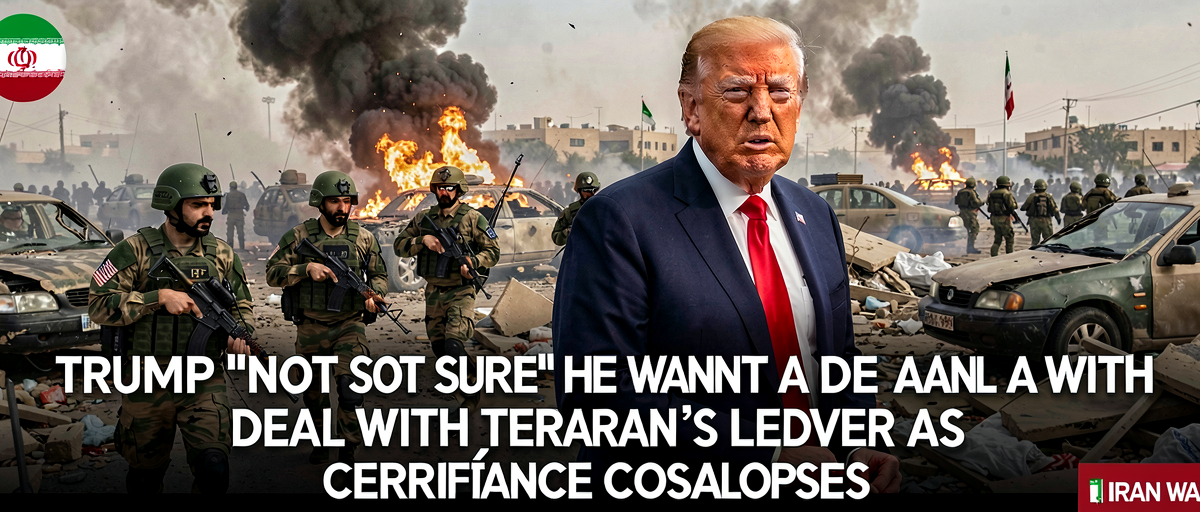
Iran US war latest – President Donald Trump expressed uncertainty about pursuing an agreement with Iranian officials following overnight military exchanges between the two nations. Speaking at the NATO summit held in Ankara, the American leader indicated he might reconsider his position on reaching a settlement with Tehran’s government.
When questioned about his characterization of Iran’s leadership as “scum,” Trump explained that direct engagement had changed his perspective. “I think more than anything else is, I got to know him and I’m not sure I want to make a deal with them,” he stated during his remarks. The president added that while negotiations could continue, he preferred to conclude existing matters rather than prolong discussions.
Despite the heightened tensions, Trump maintained confidence that a comprehensive war would not develop from the recent confrontations. He emphasized that any escalation would likely be brief and potentially beneficial for regional stability, including energy markets.
Strait of Hormuz Confrontations and Military Actions
The diplomatic friction intensified after reports emerged of attacks targeting vessels navigating the strategic Strait of Hormuz. According to US Central Command, American forces responded by striking over sixty small vessels belonging to Iran’s Revolutionary Guard Corps. These operations served as retaliation for Iranian assaults on commercial shipping in the critical waterway.
Washington simultaneously moved to restrict Iranian economic activities by withdrawing authorization that permitted Tehran to export petroleum products. This economic pressure came alongside the military response, signaling a multi-pronged approach to the crisis.
Trump had previously warned that he would order additional strikes against Iran during the same evening. His comments came just hours after he dramatically declared the ceasefire arrangement with Iran to be finished during his address at the NATO gathering.
Kharg Island Dispute and Iranian Response
A significant point of contention involves Kharg Island, a crucial Iranian oil facility. Trump revealed during his summit remarks that American forces had conducted an operation against the island the previous night. “We attacked Kharg Island last night, knocked out a piece,” he told attendees. The president further indicated that American forces had been instructed not to damage oil infrastructure, suggesting the possibility of future control over the territory.
Ebrahim Rezaei, representing Iran’s national security and foreign policy commission, issued a stern warning regarding any American attempts to occupy the island. “Come on, we’re waiting for you and we promise that not even a single American soldier will return alive,” Rezaei declared. His statement reflected growing Iranian determination to resist any territorial encroachment.
Trump’s Personal Stakes in the Conflict
The American president acknowledged that he had become a primary target for Iranian retaliation. Speaking to journalists on Wednesday, Trump recounted how the United States and Israel had eliminated numerous senior Iranian officials during the initial phase of hostilities. “They had leaders, they’re gone, and they had another set of leaders, they’re gone. Now they have another set of leaders, they may be gone. Who knows? And you know what, I may be gone too, because I’m their number one target,” he explained.
Trump attributed Iran’s aggressive posture to what he described as decades of hostile behavior. “I’m the number one, because they’re scum. That’s the way they act, and that’s the way they’ve done it for 47 years, but I’m doing what’s right for the country,” he added.
Iranian ambitions to eliminate Trump and other former administration officials date back to November 2019, when the American president authorized a drone strike that killed Islamic Revolutionary Guard Corps commander General Qassem Soleimani.
Diplomatic Developments and Regional Impact
Complicating the situation, US Defense Secretary Pete Hegseth reportedly cancelled a planned visit to Israel. The cancellation occurred shortly after Trump announced the end of the ceasefire arrangement. Hegseth had been scheduled to meet with Israeli Prime Minister Benjamin Netanyahu and Defense Minister Israel Katz on Wednesday. According to sources familiar with the matter, the visit has been postponed indefinitely.
At the time of the cancellation, Hegseth remained in Ankara participating in the NATO summit alongside the president. The timing of his absence from Israel raised questions about potential diplomatic realignments in the region.
Trump reiterated his assessment that any renewed conflict would be short-lived. “I don’t think it’s going to start again. I think it’s going to go very quickly. They hit a couple of ships, and so we hit them much harder,” he told reporters following his NATO address. The president concluded that any developments would ultimately contribute to greater security, including protection for global oil supplies.
As the summit concluded, Trump described a day marked by rapid developments. Oil prices worldwide experienced significant increases, reflecting market concerns about potential disruptions to energy flows. The American president’s comments suggested that while tensions remained elevated, he anticipated a swift resolution to the current crisis.