Trump Criticizes MS NOW as ‘Failing Network’ During NATO Summit Press Conference
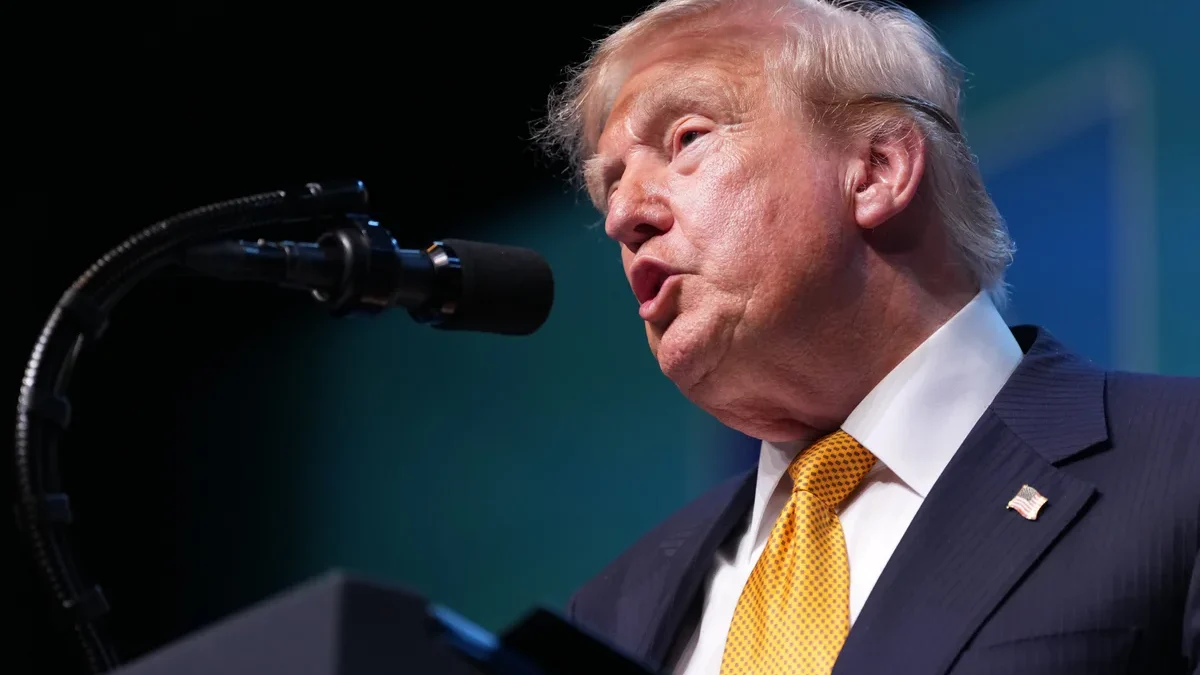
Trump bashes MS Now journalist at failing – During a lengthy press briefing at the NATO summit in Ankara, Turkey, President Donald Trump directed sharp criticism toward MS NOW, labeling the network as a “failing network” while addressing questions from its journalist. The exchange occurred during a 40-minute session where the president discussed international responses to ongoing conflicts, particularly regarding the situation with Iran.
The MS NOW Encounter
The moment gained attention when Ines de La Cuetara, a reporter for MS NOW, introduced herself to the president. Trump immediately responded with his assessment of the network, questioning why anyone would choose to work for them. The president also commented on the network’s recent rebranding from MSNBC, suggesting that the change reflected embarrassment about their previous identity.
“MS NOW, can you imagine? They wanted to get away, they took the name NBC because they were embarrassed by it.”
This exchange took place on Wednesday morning as Trump fielded questions from multiple news organizations. Several high-ranking administration officials accompanied the president, including Defense Secretary Pete Hegseth and Secretary of State Marco Rubio, who stood by as Trump engaged with reporters for nearly forty minutes.
Discussion of International Allies
De La Cuetara pressed the president on his earlier comments regarding European nations’ positions during the conflict with Iran. She asked whether countries like Spain, Italy, and the United Kingdom should face potential military action if they failed to support American interests.
“You said today that countries like Spain, Italy and the U.K. were not there for the U.S. in its war with Iran. Should those countries be attacked? Will the U.S. be there for that?”
The president provided a nuanced response, characterizing Spain’s position as “very bad” while describing Italy as having been “good.” He noted that “almost all of the countries have been good,” suggesting that recent tensions represented merely a “bad moment” rather than a fundamental shift in relationships. Regarding the United Kingdom, Trump criticized officials for indicating they would prefer to wait until hostilities concluded before offering assistance, a stance he claimed contradicted “the spirit of Winston Churchill.” Despite his criticism, Trump acknowledged that the question itself was “very fair.”
Confusion Between Nations
The press conference also featured moments where the president appeared to mix up different countries. During an impromptu session with Ukrainian President Volodymyr Zelensky, Trump discussed missile activity but seemed to conflate Iran with Japan.
“We had 111 missiles shot by the Islamic Republic of Japan. They were shot at the aircraft carrier over a period of about one hour. 111 missiles going to a very expensive ship, and every one of those missiles was knocked down, pretty much most by patriots, but by other means also.”
Shortly thereafter, another confusion emerged when Trump asked reporters if they had questions for “President Putin,” apparently mistaking Zelensky for Russia’s leader. The room erupted in laughter at the mistake, and Trump quickly recovered by suggesting he would take any questions to the Russian president instead.
Broader Context
The NATO summit provided a backdrop for numerous diplomatic discussions and media interactions. Trump’s comments about MS NOW reflected ongoing tensions between the administration and certain media organizations. His remarks about European allies highlighted the complex dynamics of international cooperation during times of conflict.
The president’s ability to engage with multiple journalists simultaneously, while occasionally confusing nations, demonstrated both his comfort with spontaneous media interactions and the potential for miscommunication in high-stakes diplomatic settings. The press conference served as a window into how the administration is positioning itself on the global stage, balancing criticism of allies with expressions of confidence in American capabilities.
As the summit continues, observers will be watching how these relationships evolve and whether the president’s comments about various nations and media outlets will have lasting implications for American foreign policy and domestic media relations.