Diane Morgan Returns with Robotic Comedy Creation ‘Ann Droid’
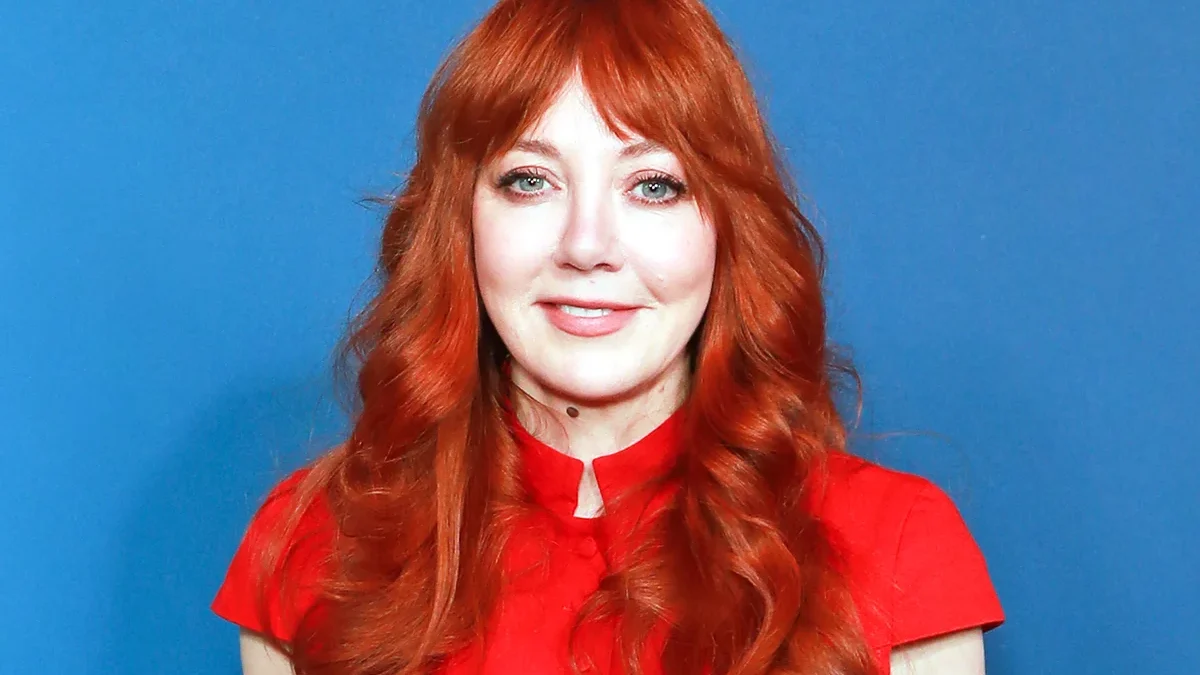
Diane Morgan – The comedian known for her distinctive deadpan delivery has unveiled yet another memorable character in the BBC’s latest sitcom offering. Morgan, whose expressive features and striking red hair have made her a familiar face to television audiences, stars as an artificial intelligence humanoid in the new series titled Ann Droid. The production represents another chapter in her impressive career spanning multiple beloved comedy roles.
A Career Built on Distinctive Characters
Over the course of fifteen years, Morgan has accumulated three cult-favorite personas that each showcase her remarkable range. While every character differs in setting and circumstances, they share an unsmiling, composed quality that has become her trademark. Viewers who follow British television will recognize her as the bewildering interviewer Philomena Cunk, created for Charlie Brooker’s Weekly Wipe program. Those who enjoy family-oriented comedy know her as Liz from Motherland, where she portrayed a sarcastic single mother navigating life’s challenges. Meanwhile, her portrayal of Mandy—a disorganized job seeker with an elaborate hairstyle—has earned particular affection from LGBTQ+ audiences.
“If I was middle-class and I’d been to Cambridge, people would have had more confidence in me.”
Her commitment to character work extends beyond scripted series. During her appearance on Last One Laughing UK, she maintained her stoic demeanor throughout, delivering one of the season’s most memorable moments using nothing more than a flatulence device and a solemn recitation of Dylan Thomas’s poem.
The Inspiration Behind Ann Droid
The concept for Ann Droid emerged from Morgan’s observations of technological advancements in Japan, where robotic caregivers are increasingly common. She discussed the idea with producer Pippa Brown, noting the irony that without children of her own, she would likely be cared for by machines in her later years. The BBC accepted their pitch, though Morgan admits she initially doubted the network would embrace such an unconventional premise.
Once the series was greenlit, she faced the challenge of embodying a machine. She brought on board Dan O’Neill, a movement specialist who had previously worked on Channel 4’s Humans, to help her develop the stiff, mechanical mannerisms required for the role. The character Linda is described as a secondhand eldercare robot with a rigid Star Trek-inspired costume and an Anne Robinson-style haircut.
Life Behind the Robot Persona
Speaking from her Bloomsbury residence, Morgan revealed that her real personality contrasts sharply with her on-screen robot. She lives with her partner Ben Caudell, who serves as a BBC Comedy commissioning editor. Despite being fifty years old, she maintains an energetic and warm demeanor during interviews, even while managing her toy poodle Bobby’s demanding medication routine. The dog recently underwent a corneal graft procedure for an eye ulcer and currently wears an inflatable collar.
Her commitment to the robot character involved several physical challenges. She initially decided not to blink while filming, a choice that proved difficult when wind would blow into her eyes during outdoor scenes, causing tears to stream down her face. She also wore thick blue contact lenses to enhance her robotic appearance, though she found them uncomfortable during extended shooting days.
The series features Sue Johnson as the elderly widow whose adult son relocates, leaving her in the care of the Ann Droid Z58/100 Basic Eldercare Robot. Morgan describes the experience of playing a machine as more demanding than anticipated, requiring her to suppress natural human responses while maintaining the character’s vacant, unbothered quality.