Iron Age Britons Likely Removed Corpse Brains in Unusual Funeral Custom
Ancient Discovery Challenges Understanding of Prehistoric Burial Practices
Iron Age Britons likely removed corpse – A recently uncovered 2,000-year-old skull from a Scottish burial site has sparked new theories about the funerary traditions of Iron Age Britons. The remains, found in a low stone cairn at Loch Borralie in Sutherland, reveal traces of intentional brain extraction, a practice that may have been central to their rituals. This finding, detailed in a study published in *Antiquity*, offers a rare glimpse into the cultural and social behaviors of a people who lived between 800 BC and 43 AD.
“The removal of the brain from the skull is a striking detail that raises questions about the symbolic importance of this act in their burial customs,” said Laura Castells Navarro, the lead researcher of the study. “While the purpose behind these modifications remains unclear, the precision of the work suggests a deliberate effort to alter the body’s appearance postmortem.”
Preservation of Bones in Northwest Scotland
Investigating Iron Age funerary practices has long been difficult due to the fragility of human remains from that era. However, northwest Scotland presents a unique opportunity for preservation, with its cool, moist climate and peat-rich soil helping to protect bones over millennia. This environmental advantage allowed archaeologists to examine the remains in remarkable detail, uncovering signs of post-death manipulation that defy conventional understanding.
The cairn, located near the northernmost tip of the Scottish mainland, was the focus of the latest excavation. Researchers uncovered two individuals, whose remains provided critical insights into the region’s prehistoric population. By combining traditional archaeological methods with advanced genetic analysis, the team aimed to reconstruct the lives of these people and their connections to other communities.
Analysis of the Skull and Skeletal Modifications
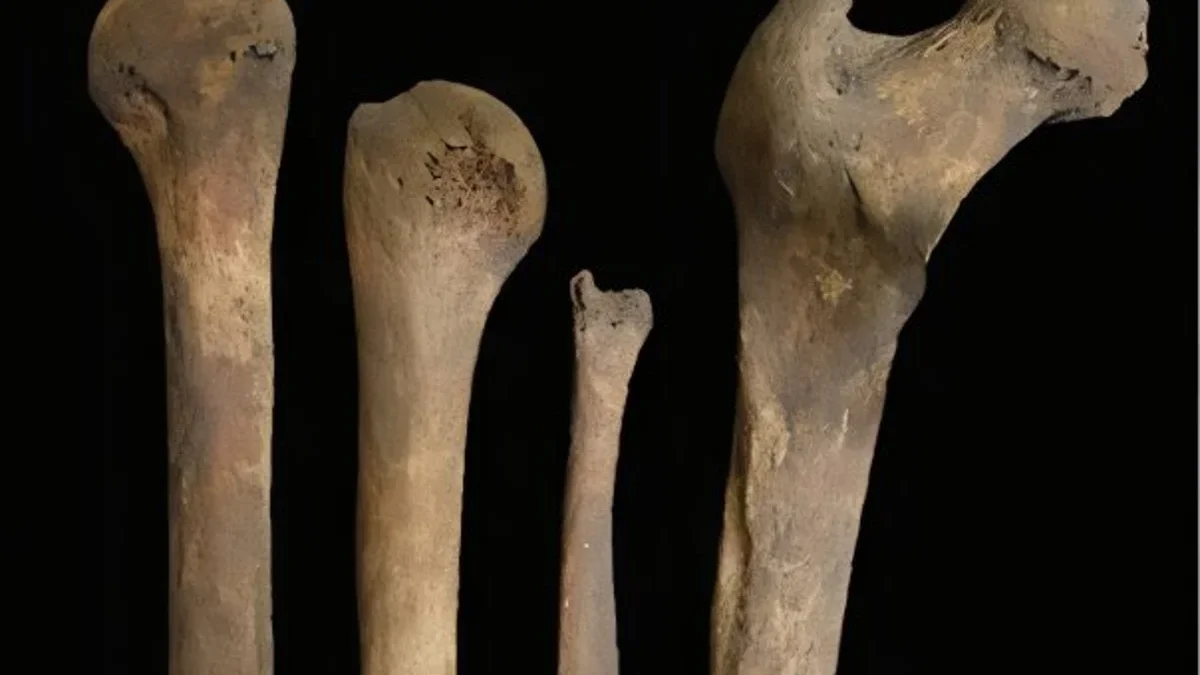
The adult female’s skull displayed distinct internal striations, likely caused by the scraping or removal of the brain. These marks, along with the tapered ends of her limb bones—specifically the humerus, ulna, and femur—indicate that her body was subjected to careful postmortem treatment. The process of brain extraction, which involves drilling or cutting into the skull to remove the cerebral tissue, is believed to have been performed with tools such as flint or bone implements.
“The modifications to Individual 1’s skull and bones suggest a ritual that combined physical alteration with cultural symbolism,” Dr. Castells Navarro explained. “The precise nature of the cuts and the uniformity of the tapered ends imply a practiced technique, possibly carried out by skilled individuals within the community.”
Further examination of the DNA extracted from the remains revealed an unexpected genetic relationship between the two individuals. They were likely maternal second cousins, a discovery that adds complexity to the study of kinship structures in Iron Age Britain. Additionally, the genetic data showed links to populations in Orkney, approximately 175 kilometers northeast of the site, and Applecross, roughly 225 kilometers southwest. These connections suggest that people from different regions were interacting more frequently than previously thought.
Movement and Cultural Exchange Among Prehistoric Communities
The study’s findings challenge the assumption that Iron Age Britons were largely insular. Instead, they highlight a pattern of mobility, with individuals and groups traveling across Scotland’s northern coast. This movement, facilitated by maritime routes, may have played a key role in spreading and sustaining cultural practices, including the enigmatic brain-removal ritual.
Dr. Castells Navarro emphasized that the combination of physical alterations and genetic evidence points to a sophisticated system of beliefs. “The fact that these individuals were not only related but also connected to distant regions suggests that their funerary traditions were part of a broader network of exchange,” she noted. “This ritual may have served as a way to honor the deceased or to communicate with the spiritual realm.”
“The brain, often seen as the seat of consciousness, may have held symbolic significance in their worldview,” the researcher added. “By removing it, they could have transformed the body into a vessel for the soul or a marker of social status.”
While the exact motivations behind the ritual remain speculative, the care with which the remains were arranged in the cairn hints at a deep respect for the individual. The process of brain extraction, coupled with the sharpening of bones, could have been a way to emphasize the person’s role in the community or to prepare their body for an afterlife that required specific adornments.
Broader Implications for Iron Age Culture
The discovery at Loch Borralie is part of a growing body of evidence that suggests Iron Age Britons engaged in intricate funerary traditions. These rituals, which may have involved multiple stages of modification, indicate a level of cultural sophistication that was previously underappreciated. The study also underscores the importance of environmental factors in preserving human remains, opening new avenues for research in other regions with similar conditions.
Dr. Castells Navarro concluded that the ritual’s significance may lie in its ability to bridge the gap between life and death. “The way the living treated the dead could have reinforced social bonds or established a connection between generations,” she said. “This act of transformation might have been a way to ensure the deceased’s memory was preserved in a form that resonated with the community’s values.”
Further analysis of the DNA and skeletal remains could shed more light on the specific roles these individuals played in their society. Researchers are now exploring whether similar practices were observed in other parts of Britain or if this ritual was unique to the northwest. The study also raises questions about how these traditions were passed down and whether they were influenced by external cultures or developed independently.
As archaeologists continue to investigate such findings, the picture of Iron Age life becomes increasingly nuanced. The brain-removal ritual, once an enigma, now serves as a compelling example of the creativity and symbolism that defined their burial customs. With more discoveries like this, the understanding of prehistoric communities in Britain is evolving, revealing a rich tapestry of beliefs and practices that connected them across time and space.
The research team is hopeful that future excavations will uncover additional evidence to support their theories. “We’re still uncovering the layers of meaning behind these rituals,” Dr. Castells Navarro said. “Each new find brings us closer to understanding how Iron Age Britons viewed their mortality and the rituals that accompanied it.” This ongoing exploration not only enriches our knowledge of the past but also highlights the enduring human desire to honor the dead through unique and meaningful acts.