Brazil reports drop in Amazon deforestation rates, pushing back on US tariff accusations
Brazil reports drop in Amazon deforestation – Brazilian authorities have released data showing a significant decline in deforestation rates, countering a key argument the Trump administration used to justify new tariffs on South American exports. The findings, announced on Thursday, challenge the U.S. claim that Brazil’s environmental practices are detrimental to global trade and climate goals.
According to officials from the National Institute for Space Research (INPE) and the Ministry of Environment, deforestation in the Amazon dropped by 61.4% in May compared to the same month in 2025. Despite this progress, 370 square kilometers of rainforest were still cleared, a figure that officials describe as a notable achievement given the ongoing pressures on the region.
Deforestation in the Cerrado, a vast savanna region central to Brazil’s agricultural economy, also saw a 12% reduction during the same period. This decline comes as the agribusiness sector continues to exert influence over land use, yet environmental ministers emphasize the progress being made.
“This is the lowest deforestation level ever recorded for May, and Brazil is well on track to achieve its annual minimums once the data is fully compiled,” stated Environment Minister João Paulo Capobianco. He attributed the decline to Brazil’s commitment to protecting its forests, noting that May typically marks the beginning of the Amazon’s dry season, which historically sees increased clearing activity.
Capobianco added that the 37.5% drop in Amazon deforestation between August 2025 and May 2026 underscores a consistent trend. “The data proves that Brazil is making measurable strides in reducing forest loss,” he said. “This is not just a seasonal fluctuation but a reflection of our long-term strategy.”
The Trump administration’s recent proposal to impose 25% tariffs on Brazilian imports was based on accusations that Brazil’s trade policies are “unreasonable” and detrimental to U.S. commerce. The U.S. Trade Representative’s investigation cited deforestation as a central justification, linking Brazil’s environmental practices to economic harm.
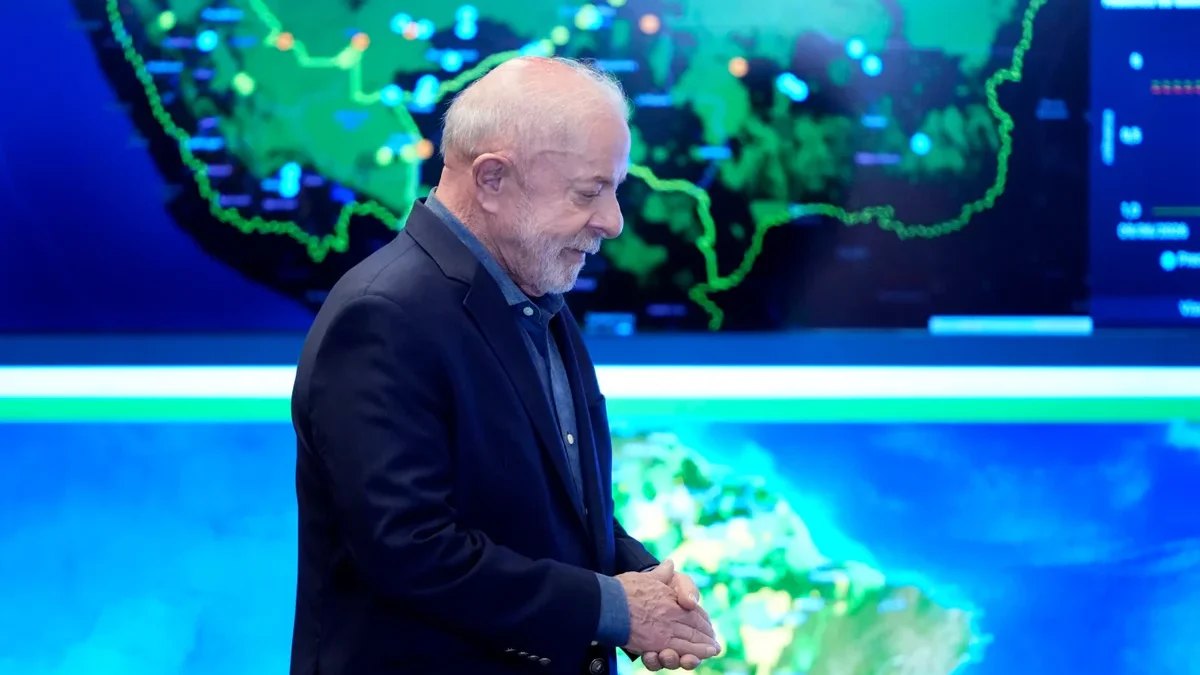
Brazilian President Luiz Inácio Lula da Silva responded to the allegations with a firm stance. “The U.S. administration is using deforestation as a scapegoat for their trade disputes,” Lula remarked. “They failed to address the trade deficit they created last year and now shift blame to Brazil’s forests.”
Lula also highlighted the government’s plan to achieve zero deforestation by 2030. “This goal is not tied to any international summit or UN agreement—it is a national commitment,” he stated. “Our efforts to protect the Amazon are driven by Brazil’s responsibility to the planet, ensuring sustainable development for future generations.”
Environmental advocates note that deforestation remains a critical factor in Brazil’s greenhouse gas emissions, which account for a large portion of global warming. The Amazon, often called the “lungs of the Earth,” plays a vital role in regulating the planet’s climate. Scientists warn that continued forest loss could accelerate climate change and impact ecosystems far beyond Brazil, including regions like the U.S. Midwest and parts of Europe.
The recent decline contrasts sharply with the 2019-2022 period under former President Jair Bolsonaro, when deforestation rates reached historic highs. Lula’s government has since reversed this trend, achieving its lowest deforestation levels in a decade in 2025. However, environmentalists caution that challenges persist.
While tree cover has improved, other threats loom. Climate change, combined with potential legislative changes, could jeopardize Brazil’s progress. Forest degradation, caused by wildfires, logging, and prolonged droughts, now affects nearly 40% of the Amazon, surpassing clear-cutting in scale. These issues may worsen with the arrival of a strong El Niño event this year, which brings warmer temperatures and drier conditions to the region, increasing the risk of large-scale fires.
Capobianco acknowledged the ongoing risks but remained optimistic. “We have the tools and policies in place to tackle these challenges,” he said. “The reduction in deforestation is a testament to our collective efforts, but vigilance is essential.”
The U.S. accusations come as Brazil navigates a complex landscape of environmental and economic priorities. While the country has made strides in curbing forest loss, critics argue that more needs to be done to address the root causes of deforestation, such as land-use incentives and infrastructure expansion.
For now, Brazil’s officials are using the latest data to assert that the Amazon’s health is a priority. “Deforestation is not just a Brazilian issue—it is a global one,” Capobianco emphasized. “Our actions today will shape the climate challenges of tomorrow.”
As the Trump administration moves forward with its tariff plans, Brazil’s response highlights the importance of accurate data in international trade disputes. The country’s progress in the Amazon serves as both a victory and a call to action, proving that environmental and economic goals can align when policies are prioritized effectively.
The Associated Press’ climate and environmental coverage receives financial support from multiple private foundations. AP is solely responsible for all content. Find AP’s standards for working with philanthropies, a list of supporters, and funded coverage areas at ap.org.