
Is Iran’s regime at a breaking point?
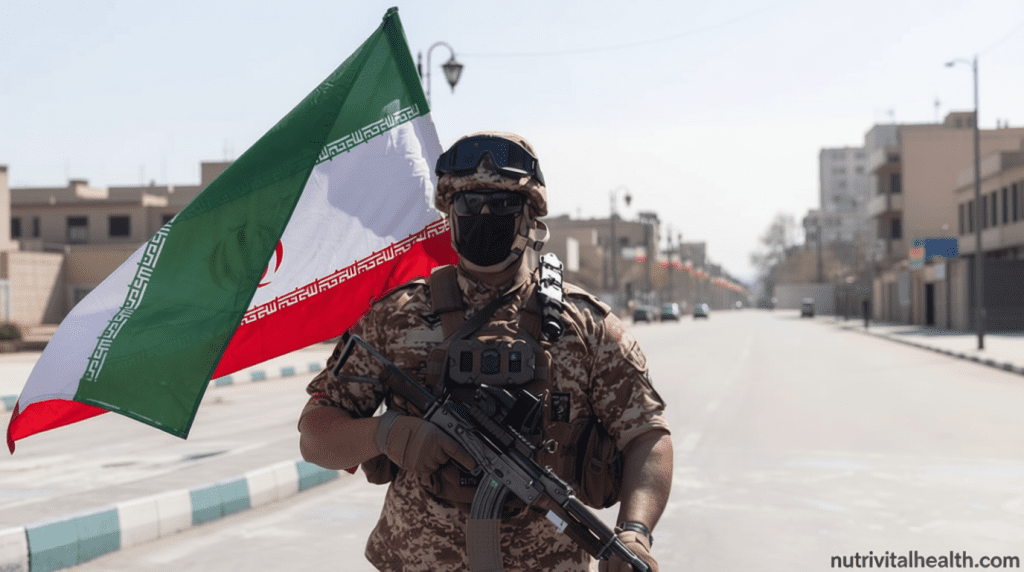
Is Iran’s Regime at a Breaking Point?
Resilience Amidst Initial Struggles
Eighteen days into the current conflict, Iran’s Revolutionary Guards continue to operate despite significant challenges. Their decentralized command structure supports ongoing activities, yet analysts observe signs of strain within the regime’s power framework.
Initially, it seemed the Islamic Republic’s core leadership had suffered a critical blow after the U.S. and Israel launched attacks, targeting Supreme Leader Ali Khamenei and other key political and military figures within the first hours. However, as the third week of hostilities begins, it’s evident the power structure has not collapsed as anticipated.
“The initial shock has been weathered, and the regime’s stability remains intact,” said Habib Hosseini-Fard, a Middle East analyst.
Strategic Adjustments and Persistent Threats
Despite setbacks, the Revolutionary Guard Corps (IRGC) maintains its offensive operations against the U.S., Israel, and neighboring Arab states. Recent strikes by Israel have claimed the life of Ali Larijani, secretary of the Supreme National Security Council, and eliminated Gholamreza Soleimani, head of the Basij militia. These actions have not deterred Iran from escalating its attacks.
Over the past two weeks, Iran has launched over 300 strikes across multiple fronts, including Oman, Saudi Arabia, Israel, Jordan, Cyprus, Turkey, Azerbaijan, the United Arab Emirates, Qatar, Iraq, Kuwait, and Bahrain. Saudi Arabia’s Defense Ministry reported intercepting more than 60 drones since midnight, highlighting the intense scale of the conflict.
Foreign Minister’s Stance and Military Capabilities
Iran’s Foreign Minister, Abbas Araghchi, has dismissed the possibility of negotiations, stating no cease-fire will be agreed to as long as the U.S. and Israel target Iranian assets. This position reflects the continued strength of Iran’s military infrastructure, with the IRGC playing a central role in adapting to evolving circumstances.
Established post-1979 Islamic Revolution, the IRGC was created to safeguard the state ideology and prevent coups. Today, it forms the backbone of Iran’s armed forces, reporting to Supreme Leader Mojtaba Khamenei. With personnel strength estimated at up to 200,000, the organization has transformed from a hierarchical entity into a networked structure, granting provincial commands greater autonomy.
Internal Dynamics and Strategic Depth
Reza Talebi, a political analyst, highlights the complexity of Iran’s internal dynamics, cautioning against assumptions of an imminent regime collapse. He emphasizes that the IRGC operates beyond mere military functions, influencing economic and ideological frameworks across the region.
“The IRGC’s role extends beyond defense; it controls critical economic and ideological networks that span beyond Iran’s borders,” Talebi explained. The organization’s Quds Force, a specialized unit, and affiliated militant groups in the Middle East further reinforce its strategic reach.
Despite U.S. claims of destroying 15,000 Iranian targets through airstrikes, the country continues to launch rocket attacks on Israeli cities. Recent events include a drone and rocket assault on the U.S. embassy in Baghdad, underscoring the persistent threat from Iran’s military apparatus.
Ultimately, the regime’s ability to sustain operations amid external pressures suggests a resilient system. As Talebi noted, “Strategic depth and underground missile silos ensure the military’s capabilities cannot be dismantled quickly, enabling the continuation of attacks despite initial losses.” This underscores the enduring nature of Iran’s power structure in the face of ongoing conflict.
