
‘Endless fears’: Even if fighting stops, the damage to Iran’s children will endure
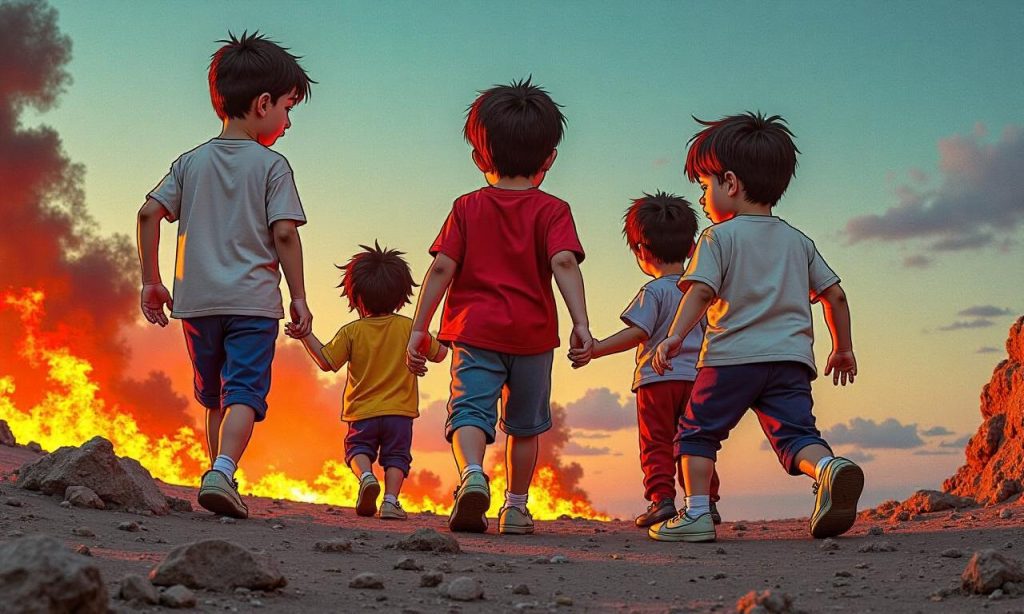
‘Endless fears’: Even if fighting stops, the damage to Iran’s children will endure
The war has become a constant presence in his mind. A slamming door or cutlery falling from a shelf sends him into a panic. The truce fails to ease his anxiety. “Before the conflict, I felt no pressure,” shares Ali, a 15-year-old whose name has been altered. “Now, even the smallest sound triggers my brain’s alarm.” He understands how the fear induced by US and Israeli air strikes lingers in the minds of his peers. Such noises activate an involuntary startle reflex, disrupting their daily lives.
Over 20% of Iran’s population, roughly 20.4 million, is under 14 years old. What Ali and countless others endure is recognized by psychologists as “hyper arousal,” a potential precursor to post-traumatic stress disorder (PTSD). The younger generation’s world has contracted. Schools are closed, streets are monitored by regime militias, and the persistent threat of aerial attacks – until the ceasefire – has confined families to their homes. All that remains is waiting for peace to last.
“Try to do the things I mentioned to you to create a calmer environment for him,” says Aysha, a counselor in Tehran. “If possible, play with him and keep him engaged. And if even then things don’t improve, bring him back to the centre.”
Aysha reports the center receives frequent calls and visits from anxious parents. “We see sleep disturbances, nightmares, difficulty focusing, and even aggressive behavior,” she explains. “When you fight so hard to raise a child, only for that child to be killed – whether in protests or war – no parent would willingly bring a child into the world.”
According to the US-based Human Rights Activists News Agency (HRANA), 3,636 individuals have perished in the conflict. Among them are at least 254 children. The Iranian government has actively enlisted young people into the Basij volunteer militia, pushing them into combat roles. “Do you want your son to become a man? Let him feel he’s a hero in the battlefield,” says a regime official in a televised speech. “Mothers, fathers, send your children at night to the roadblocks. These children will turn into men.”
For 11-year-old Alireza Jafari, this call to action proved fatal. He was killed by a drone strike while assisting his father at a checkpoint in Tehran on 29 March. His mother, Sadaf Monfared, recounted how he told her, “I would like to become a martyr.” Amnesty International criticizes the regime for violating children’s rights, accusing it of committing a war crime by recruiting minors under 15 for military service. Such actions contradict international law, which prohibits the use of child soldiers.
A Tehran resident, whose name is Noor, swears to keep his son out of the armed forces. “A 12-year-old should not be sent to war,” he says. “He should grow up, study, and build a future free of endless fears.” The war’s psychological toll continues to shape the lives of the young, even in its absence.
