
Explainer: Who is Mojtaba Khamenei and how did he succeed his father?
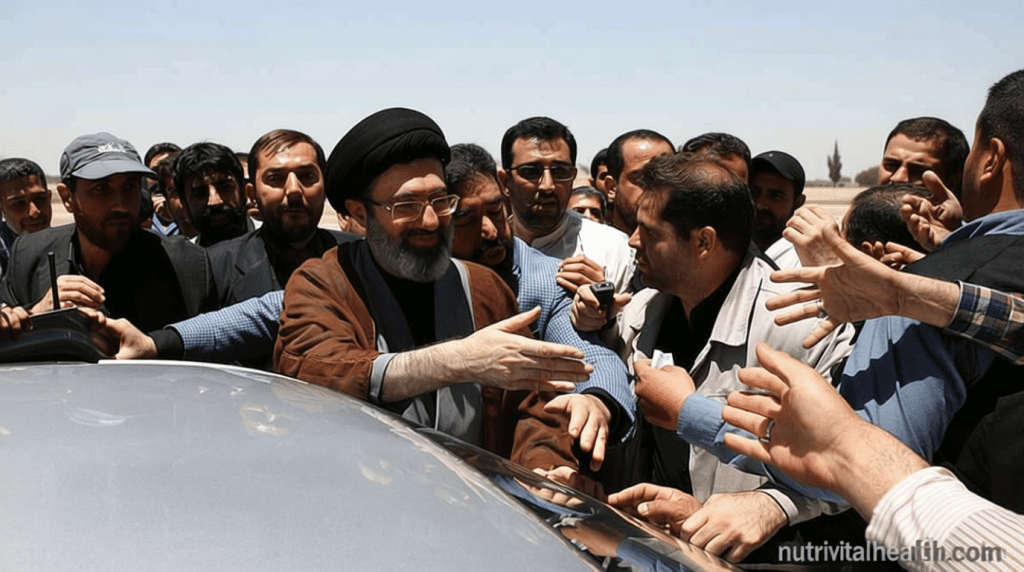
Explainer: Who is Mojtaba Khamenei and how did he succeed his father?
The Iranian Assembly of Experts has confirmed Mojtaba Khamenei as the new Supreme Leader, succeeding his 86-year-old father, Ali Khamenei, following an Israeli attack that killed both the leader and his wife, Zahra Haddad Adel. The incident, which occurred on a Saturday, marked a pivotal moment in the transition of power within the country’s theocratic structure.
Mojtaba Khamenei, born in 1969 in Mashhad, has maintained a low public profile since the tragedy. His path to leadership has been described by experts as calculated, spanning from his youth in the Iran-Iraq War to his current role in Iran’s highest echelons of governance. This journey forged deep connections with military and security factions, positioning him as a key figure in the nation’s political hierarchy.
Many analysts note that Mojtaba’s trajectory—moving from frontline combat to the core of Iran’s religious and security systems—was a deliberate strategy, one that secured his influence within the regime.
Unlike his older brother Mostafa and younger siblings Masoud and Meysam, Mojtaba has transcended the traditional role of “supreme leader’s son.” While his brothers focused on cultural or administrative duties, Mojtaba’s actions have increasingly linked him to covert power structures and critical security operations. His financial assets, including properties in London and Vienna, have also sparked Western media speculation, though their exact control remains unclear due to limited transparency in Iran’s economic systems.
Within Iran, Mojtaba is not publicly labeled as a businessman or billionaire. Instead, his political clout is attributed to his role in state institutions and ties to the Islamic Revolutionary Guard Corps (IRGC). His early military experience, though brief, played a role in shaping alliances that bolstered his position. The Iran-Iraq War, a defining chapter in the country’s history, also lent him symbolic weight, as many leaders draw legitimacy from their wartime service.
After completing school in Tehran, Mojtaba joined the Qom seminary, where he studied under influential clerics, including his father and Mohammad-Taghi Mesbah-Yazdi. This education helped him develop the religious authority essential for leadership. However, his political leanings remain an enigma, with analysts divided on whether he aligns with hardline security factions or represents a more ambiguous ideological stance.
The transition of power following Ali Khamenei’s death highlights Mojtaba’s role in a leadership structure that values loyalty and strategic positioning. His ascension underscores the continuity of a family legacy intertwined with Iran’s revolutionary narrative, even as his brothers navigate different domains of influence.
