
What proteins in prehistoric teeth reveal about Stone Age sex between early human species
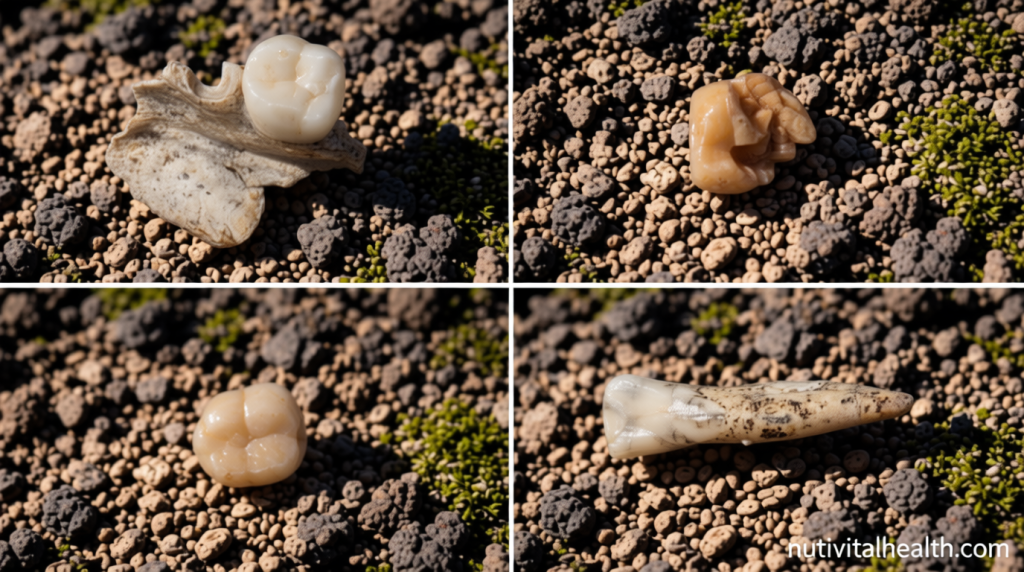
Unearthing Secrets of the Past: How Ancient Proteins from Homo erectus Teeth Shed Light on Human Evolution and Interbreeding
What proteins in prehistoric teeth reveal – For centuries, Homo erectus has captivated scientists with its enigmatic role in human evolution. As the earliest of our ancestors to migrate beyond Africa, this species roamed the Earth for nearly two million years, leaving behind fossils across continents. Yet, the lack of well-preserved genetic material has made it difficult to piece together its evolutionary story. Now, a groundbreaking study has uncovered molecular clues hidden in the enamel of prehistoric teeth, offering new insights into the relationships between Homo erectus, Denisovans, and modern humans.
A New Method for Extracting Ancient Proteins
Researchers led by Chinese geneticist Fu Qiaomei have developed a novel technique to analyze proteins from fossils, bypassing the challenges of DNA degradation. This approach involved using acid etching to gently remove enamel samples from six teeth discovered at three Chinese sites: Zhoukoudian, Hexian, and another location in northern China. The fossils, dating back approximately 400,000 years, provided a unique opportunity to study proteins, which are more resilient than DNA. While DNA degrades quickly over time, proteins can persist in fossilized remains, preserving critical evolutionary information.
“This is a major step forward in tying together the broken branches of our human evolutionary tree,” said Ryan McRae, a paleoanthropologist at the Smithsonian National Museum of Natural History. “Homo erectus has long been a bit of an enigma.”
The study, published in the journal *Nature*, marks the first time ancient enamel proteins have been used to establish a molecular connection between Homo erectus and later human species. By examining amino acid sequences within the proteins, the team identified two variants that revealed a surprising link. One of these variants was entirely new, while the other had been previously observed in Denisovans—a mysterious group of ancient humans—and in some modern populations. This discovery suggests a complex history of interbreeding between Homo erectus and Denisovans, as well as a subsequent interaction between Denisovans and Homo sapiens.
Sex Determination Through Protein Analysis
Beyond tracing lineage, the researchers also uncovered the sex of the fossils. By analyzing specific markers in the Y chromosome of a tooth enamel gene, they determined that five of the specimens were male and one was female. This finding highlights the potential of proteins to provide not just evolutionary data, but also demographic insights into prehistoric populations. The ability to distinguish between genders in such ancient remains adds a new layer to understanding the social structures of early humans.
Scientists had long struggled to obtain meaningful genetic data from Homo erectus fossils due to their age and the fragile nature of DNA. While previous studies managed to extract proteins from a 2020 fossil in Georgia, that research did not clarify how Homo erectus related to other hominins. Fu’s team, however, has taken a different route. By focusing on enamel proteins rather than DNA, they avoided damaging the fossils’ morphology, ensuring their integrity for future analysis. This method opens the door to studying other Homo erectus remains, particularly those found in Indonesia, where geneticists suspect further links to ancient human lineages.
“Geneticists knew that Denisovans had some ancestry from an unknown ‘ghost lineage’ with no DNA match, and Homo erectus was one possible candidate,” noted Eduard Pop, a research scientist at the Naturalis Biodiversity Center. “This study strengthens that link.”
Pop, who is collaborating with the research team to explore protein preservation in Indonesian fossils, emphasized the broader implications of the findings. “It suggests that East Asian Homo erectus-related populations may have contributed genetically to Denisovans, and through them indirectly to some modern humans,” he added. This revelation challenges the traditional view of human evolution as a linear progression, instead supporting a model of interconnected populations that occasionally merged through interbreeding.
The Legacy of Interbreeding in Modern Humans
Modern humans carry traces of Denisovan DNA, a result of ancient interbreeding. Similarly, Neanderthal DNA is present in many contemporary populations, stemming from interactions with that species that occurred about 40,000 years ago. The new study reinforces the idea that such genetic exchanges were not isolated events but part of a dynamic network of relationships across Asia. Southeast Asian populations, for instance, exhibit the highest levels of Denisovan ancestry, hinting at a shared history between these groups.
The discovery of shared amino acid variants between Homo erectus and Denisovans provides compelling evidence for their interaction. This connection implies that Homo erectus may have contributed to the genetic makeup of Denisovans, which in turn influenced modern humans. The findings also align with previous research showing that Neanderthals and Denisovans interbred, further complicating the tapestry of human ancestry.
How 2025 Shifted the Paradigm
While the 2020 study on Georgia fossils was a significant milestone, it left many questions unanswered. The latest research in 2026 not only confirms the presence of Homo erectus in Asia but also introduces a new framework for understanding its role in human evolution. By leveraging proteins instead of DNA, the team has overcome previous limitations, revealing that these ancient humans were not entirely separate from later species but part of a more intricate web of genetic exchanges.
The implications of this work extend beyond the immediate findings. It suggests that the evolutionary path of humans in Asia was marked by overlapping populations and repeated interbreeding events. This challenges the notion of a strictly linear progression from Homo erectus to Homo sapiens, instead painting a picture of a branching tree with many interconnected paths. Such a model could reshape our understanding of how human diversity emerged and how different species coexisted and interacted over millennia.
As the study demonstrates, proteins can serve as a powerful tool for exploring the genetic history of ancient species. This method not only complements DNA analysis but also offers a way to study fossils where DNA has been lost to time. By combining these approaches, scientists can build a more comprehensive picture of human origins. The results from the Chinese teeth are a testament to the value of protein data in unraveling the mysteries of our evolutionary past, particularly in regions where DNA preservation has been poor.
A Network of Populations, Not Isolated Branches
Pop’s observations underscore a growing consensus among geneticists that human evolution was not a simple sequence of distinct species but a complex network of interactions. The shared amino acid variants between Homo erectus, Denisovans, and modern humans support this view, indicating that genetic material flowed between these groups. This model of interconnectedness is particularly evident in East Asia, where Homo erectus remains have been found alongside Denisovan fossils.
Future research will focus on whether this genetic exchange was widespread or limited to specific populations. By examining proteins in Indonesian Homo erectus fossils, scientists hope to determine if these individuals played a central role in the interbreeding network. The study’s success in extracting and analyzing such proteins could pave the way for similar investigations in other regions, further expanding our knowledge of human evolution.
As the pieces of the evolutionary puzzle continue to come together, the significance of this work becomes clear. By unlocking the secrets of ancient proteins, researchers have taken a crucial step toward understanding the intricate relationships that shaped our species. The findings not only bridge gaps in the fossil record but also highlight the importance of interdisciplinary approaches in uncovering the past. For now, the story of Homo erectus is far from complete, but these discoveries offer a promising path forward.
