
WHO warns of health crisis ‘unfolding in real time’ across Middle East
WHO Warns of Health Crisis ‘Unfolding in Real Time’ Across Middle East
Dr. Hanan Balkhy, the World Health Organization’s regional director for the Eastern Mediterranean, has issued a warning that a health emergency is rapidly escalating across the Middle East. She emphasized that healthcare institutions, including hospitals, must be safeguarded as protected zones, urging officials to update protocols and prepare for potential impacts on nuclear facilities.
The Middle East spans 22 countries and territories, including Iran, Gulf nations, Gaza, Sudan, Afghanistan, and Pakistan. Balkhy noted that while the region has faced challenges for a while, the current scenario marks a critical turning point, with a real-time health crisis spreading across various areas.
‘The situation has been quite difficult for some time, but what we’re seeing today is just an actual regional health crisis unfolding in real time in multiple parts of this region,’ Balkhy told the Guardian.
The ongoing conflict between the US and Iran has resulted in over 1,000 fatalities in Lebanon, more than 1,500 in Iran, and 16 in Israel, according to official reports. Additionally, a dozen deaths were recorded in the West Bank and Gulf states. People with chronic illnesses are facing treatment interruptions due to hospital closures and mass displacement, with over 3.2 million Iranians and more than a million Lebanese people forced from their homes in less than a month.
Balkhy expressed concern over rising maternal mortality rates and deteriorating mental health, alongside the growing number of children becoming orphans and losing educational opportunities. Additionally, she stressed her apprehension regarding the risk of nuclear facilities being struck, whether intentionally or through error, and the subsequent health risks from water shortages if desalination plants were targeted.
Balkhy made these remarks prior to Iran’s Atomic Energy Organization announcing a projectile strike on the Bushehr nuclear power plant grounds on Tuesday night, following an earlier attack on 17 March. She warned that the consequences of ongoing conflicts will persist long after active combat subsides, affecting multiple aspects of healthcare access.
She also highlighted that rainwater might carry pollutants from oil or nuclear facility strikes into underground aquifers, threatening additional water sources. ‘Even if there was any hope of other types of water sources, it can become contaminated,’ she said.
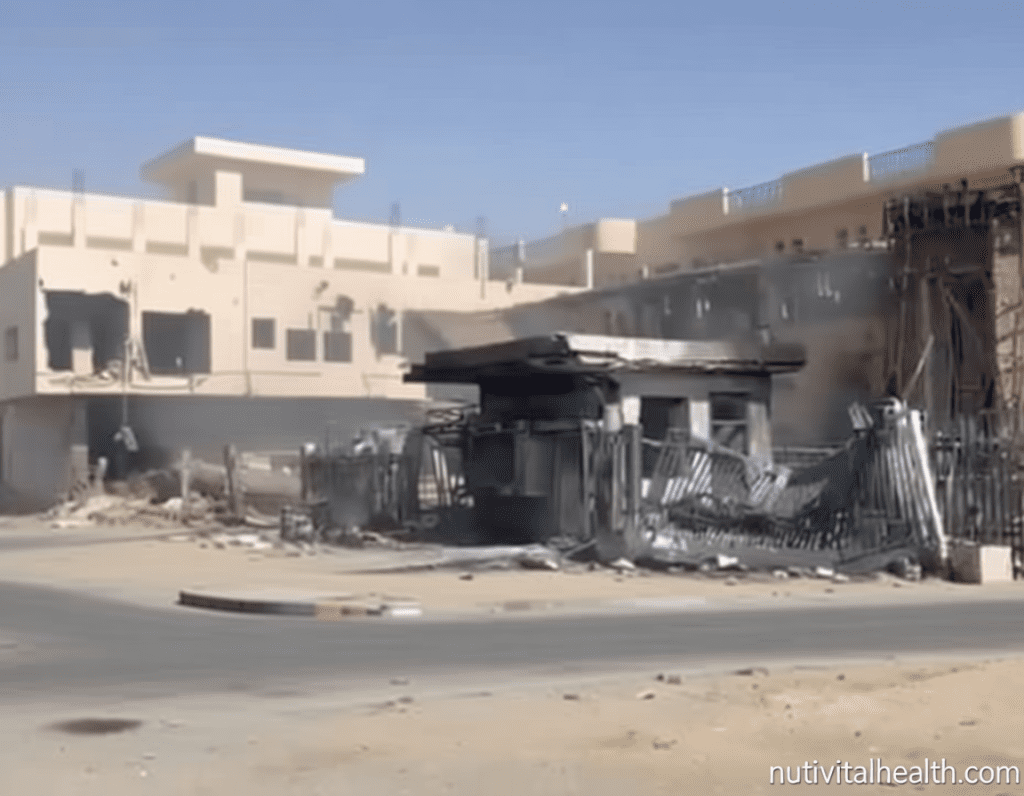
Balkhy urged immediate action to secure the healthcare sector. ‘Let’s not attack hospitals, health workers, and healthcare facilities and patients. Let’s have at least a safe haven for them,’ she added. The WHO has verified dozens of attacks on healthcare in Lebanon, Iran, and Israel since the US-Iran war began. Last week, an attack on El-Daein teaching hospital in East Darfur, Sudan, led to the deaths of at least 70 people, including 13 children, two nurses, and a doctor, leaving the hospital nonfunctional.
Meanwhile, she said the crises in Gaza, Sudan, and Yemen are being overlooked as global focus shifts toward the US-Iran conflict. ‘This neglect is heartbreaking, as it conceals significant suffering, loss of life, and displacement across these areas,’ she stated.
‘My worry is driving me to prepare and to have my teams prepare. And that’s what we’re doing,’ she said. The WHO is collaborating with other UN agencies to explore ways of mitigating such a catastrophe if it occurs. Balkhy stressed that the only solution at this moment is a substantial de-escalation or pause in the war’s intensification.
