Trump’s Spelling Lesson and Nickname Gambit: Dumocrat vs. Dumbocrat
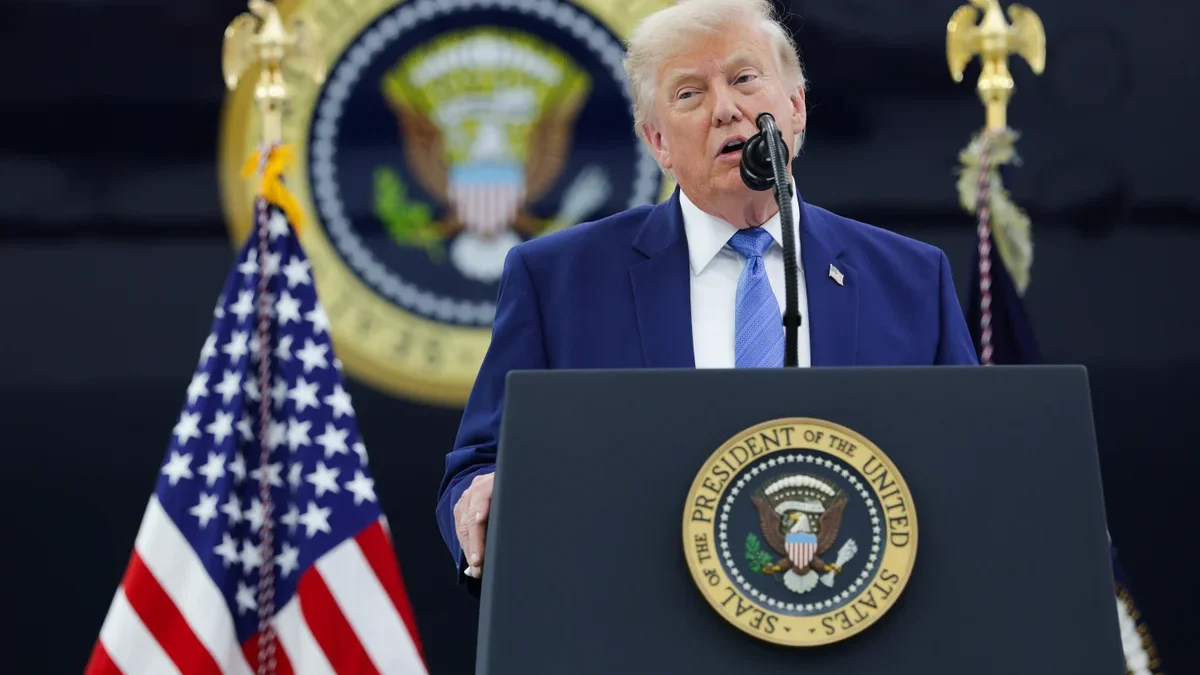
D U M B – President Donald Trump took a playful turn toward education on Saturday morning, engaging his supporters with a spelling-related poll on his Truth Social platform. The question posed to over 60,000 users asked whether they favored the term “Dumocrat” or “Dumbocrat” as a new moniker for Democratic politicians. This move sparked a wave of commentary, as Trump leveraged his platform to not only gauge public opinion but also assert his authority on linguistic correctness.
A Campaign of Words: The Dumocrat Controversy
Trump’s initiative centered on mocking his political adversaries, a tactic he has employed consistently throughout his tenure. By highlighting the supposed simplicity of the nickname “Dumocrat,” he invited followers to participate in a linguistic exercise, emphasizing the ease of substituting a single letter. “Many people don’t know that DUMB ends in ‘b,’” he noted, suggesting that the alternative spelling, “Dumbocrat,” might dilute the intended impact of the term.
“POLL: Which do you prefer, Dumocrat or Dumbocrat? In one case, you simply exchange the ‘e’ for ‘u,’ so simple and precise,” the president wrote. “In the other case, you spell out DUMB, but it seems to lose some of the identity to Democrats when done this way. Which is better?”
While the poll itself was a light-hearted effort, it underscored Trump’s broader strategy of using language to shape public perception. The term “Dumocrat” had already gained traction in recent speeches and social media posts, serving as a pejorative to highlight his view of Democrats as intellectually inferior. This approach aligns with his history of crafting nicknames to undermine opponents, such as “Crooked Hillary” or “Fake News.”
Rebranding ICE: A New Identity for Immigration Agents
Shortly after the spelling debate, Trump introduced another poll, this time targeting Immigration and Customs Enforcement (ICE). He proposed rebranding the agency by adding the word “National” to its name, suggesting that its personnel should be referred to as “NICE agents” instead of “ICE agents.” The president framed this as a way to combat the negative sentiment surrounding the agency, which has been a focal point of his immigration policies.
“Which is better?” Trump asked, implying that the rebranding could strip away the hostility associated with ICE. “For them to say, ‘We went to a NICE Facility today,’ as opposed to ‘ICE,’ or, ‘NICE Agents have deported a Violent Drug Dealer,’ they won’t be able to handle it, they will go totally crazy,” he added, using the rebranding as a tool to disorient critics.
Trump’s reasoning for the name change rested on his claim that the current label had been tarnished by public backlash. He attributed this hostility to Democrats and the media, suggesting that “NICE” would convey a more favorable image. “Everyone loves it,” he claimed, though he acknowledged some skepticism from the agency’s staff. The White House’s official X account later amplified the idea, sharing memes that portrayed the rebranding as a victory for clarity and prestige.
Political Context: The Legacy of Anti-ICE Sentiment
The push to rename ICE comes amid a backdrop of growing criticism against the agency’s operations. Over the past year and a half, Trump’s hardline immigration policies have fueled widespread protests, with demonstrators targeting ICE for its aggressive enforcement tactics. The most intense moments of this backlash occurred during immigration raids in Minnesota, where two Americans were fatally shot, galvanizing public outrage.
Even before Trump’s rebranding proposal, opinion polls had already signaled support for changes to the agency. An NBC News survey conducted in February revealed that nearly three-quarters of U.S. adults believed some adjustments to ICE were necessary. Among them, 29% advocated for the complete abolition of the organization, reflecting a deepening divide over its role in American society.
Staff Perspectives: A Mixed Reception
While the rebranding idea gained traction among supporters, it also faced mixed reactions within the agency itself. Trump acknowledged that some staff members might not be enthusiastic about the shift, citing their pride in the current branding. “I think they like their image of being strong, and they’ve done a great job,” he remarked during an interview with WABC in May.
Despite these concerns, the president remained steadfast in his belief that the new name would bolster the agency’s reputation. “Adding an ‘N’ to ‘ICE’ — it’s a much more prestigious name,” he argued, framing the change as a simple yet effective step toward restoring public confidence. The proposal has since become a recurring topic in his campaign, with the White House using social media to rally backing for the initiative.
Expanding the Narrative: A Tool for Political Messaging
Trump’s use of nicknames and rebranding efforts exemplifies his broader approach to communication. By framing opposition as either linguistically careless or ideologically flawed, he seeks to control the narrative around his policies. The “Dumocrat” label, for instance, serves as a dual-purpose weapon: it critiques Democratic leadership while also reinforcing his image as a knowledgeable figure who can spot flaws in their rhetoric.
Similarly, the rebranding of ICE as “NICE” reflects a calculated attempt to shift public sentiment. The term “NICE” is not only a play on the acronym but also a nod to the agency’s mission of enforcing immigration laws with efficiency and grace. Trump’s rhetoric often hinges on such wordplay, where the simplicity of a nickname can mask complex political agendas.
These initiatives highlight the president’s ability to blend humor with strategy, using his platform to engage supporters while simultaneously disarming critics. Whether through spelling lessons or rebranding proposals, Trump has consistently demonstrated a knack for turning language into a tool of influence. The outcome of these polls may not directly alter policy, but they serve to reinforce his messaging and unify his base around a shared critique of his opponents.
As the campaign season progresses, the “Dumocrat” label and the “NICE” rebranding are likely to remain part of the political discourse. They underscore the importance of language in shaping public opinion and the enduring role of nicknames in American politics. For Trump, these efforts are not just about branding — they are about control, clarity, and the power of words to define reality itself.