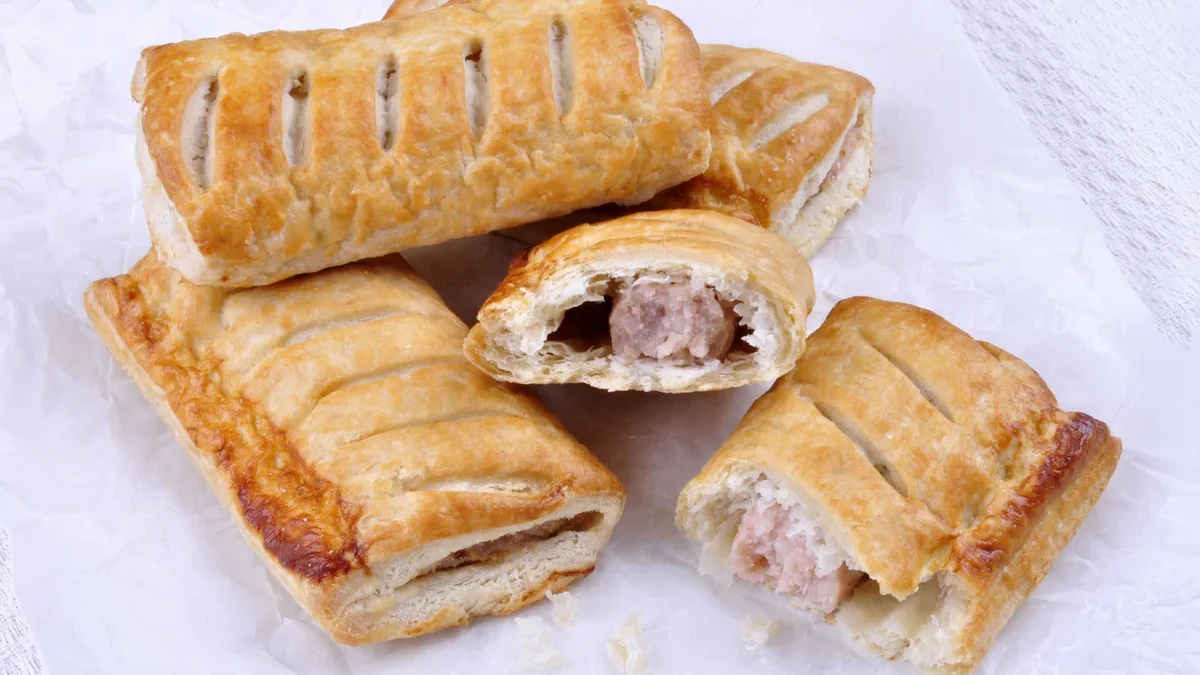
Scientists Bid to Make Sausage Rolls Healthier Without Ruining Flaky Pastry
Scientists bid to make sausage rolls – Researchers at Heriot-Watt University in Edinburgh are tackling a challenge that could reshape the nutritional profile of a quintessential British snack. Sausage rolls, a staple in many households, are often criticized for their high saturated fat content. Yet, scientists are determined to preserve their signature flaky texture while significantly reducing unhealthy fats.
The Challenge of Flaky Texture
The traditional puff pastry used in sausage rolls relies on solid fats to create its delicate, layered structure. These fats help form the crisp, buttery layers that separate during baking, producing the flaky texture consumers crave. However, the process also contributes to a substantial amount of saturated fat—often exceeding 60% of an adult’s daily recommended intake in a single roll.
“We want to lower the level of saturated fat while keeping the taste and texture that people love,” explained Professor Stephen Euston from Heriot-Watt’s School of Engineering and Physical Sciences.
Replacing solid fats with liquid oils like sunflower or rapeseed poses a problem. While these oils are healthier, they lack the structural integrity needed to maintain the pastry’s characteristic layers. To overcome this, the team is experimenting with a technique called oleogelation, which transforms liquid oils into a “solid-like fat” that mimics the behavior of traditional fats.
A Step Toward Healthier Baked Goods
If successful, this innovation could extend beyond sausage rolls. The process might also be applied to other baked goods, including croissants, Danish pastries, and sweet or savory turnovers. These items are commonly consumed in large quantities, making them prime candidates for reformulation.
Professor Euston highlighted the potential impact: “Reducing the saturated fat content of these ubiquitous snacks could have a very positive effect on the nation’s health and waistlines.” The goal is to create a product that satisfies taste preferences while aligning with dietary guidelines.
Environmental and Industrial Benefits
The researchers are prioritizing UK-grown oils to minimize the environmental footprint of their approach. This choice not only supports local agriculture but also ensures sustainability in the production process. Additionally, the new method could streamline manufacturing for bakers.
Traditional laminated pastry requires repeated chilling during production to prevent the fat layers from melting as the dough is folded. The team’s oleogels, however, may remain stable at higher temperatures, potentially reducing the need for chilling. This could lower energy consumption and operational costs in the food industry.
Testing with Real Consumers
The 10-month project, funded by the UK Research and Innovation Engineering and Physical Sciences Research Council (UKRI EPSRC), aims to transition the modified pastry from the lab to the kitchen. Researchers at Heriot-Watt are collaborating with industry partners New Food Innovation and AB Mauri to test the product with real consumers and refine its appeal.
“By taking innovative food science out of the lab into the kitchen and testing it with everyday consumers, it has the potential to make the nation’s favorite snacks healthier and make a genuine difference to our health and wellbeing,” said Dr. Andrew Bourne, UKRI EPSRC’s executive director for innovation and partnerships.
This phase of the project is crucial for ensuring the final product meets both nutritional standards and consumer expectations. The team will evaluate taste, texture, and overall satisfaction to determine if the healthier alternative can compete with traditional versions.
Expanding the Technology
While the focus remains on pastry, the researchers are also investigating whether the same technique can be adapted for other food products. One promising area is vegan cheese alternatives, where reducing saturated fat without compromising texture could be equally transformative.
“This technology could open doors to broader applications,” noted Prof. Euston. “We’re not just targeting one snack—our work might pave the way for healthier versions of multiple products.”
Public Funding and Industry Collaboration
The UKRI EPSRC’s Impact Acceleration Awards are designed to bridge the gap between research and real-world solutions. By funding this project, the council is supporting the development of practical, consumer-friendly innovations. The collaboration with industry partners ensures that the findings are not only scientifically sound but also commercially viable.
Such partnerships are essential for scaling production and addressing potential challenges. For instance, adapting oleogelation to mass manufacturing requires balancing cost, efficiency, and quality. The team is working closely with companies to refine the process and prepare for future rollouts.
The research reflects a growing trend in the food industry to address health concerns without sacrificing beloved flavors or textures. With over 10–15 million sausage rolls sold weekly in the UK, even a small reduction in saturated fat could have a significant cumulative effect on public health. The project’s success could set a precedent for other manufacturers seeking to improve their products’ nutritional value.
As the team continues their work, they emphasize the importance of maintaining the pastry’s structural properties. “The fat is not just there for flavor; it plays a crucial structural role in the pastry,” said Prof. Euston. “You need the fat sitting between the layers of dough so that when the pastry bakes, steam forces those layers apart and gives you that flaky texture people expect.”
Ultimately, the project aims to create a win-win scenario: healthier snacks for consumers and more sustainable practices for producers. By leveraging innovative food science, the researchers hope to redefine the way we think about traditional treats. Their work could lead to a future where indulgent favorites like sausage rolls are not only delicious but also aligned with healthier dietary choices.
For now, the team is focused on refining their process and gathering feedback from test participants. If all goes well, the modified pastry could soon be available on store shelves, offering a lighter alternative to the classic recipe. This initiative underscores the potential of scientific advancements to address everyday dietary habits, one flaky layer at a time.
Meanwhile, the broader implications of the research extend beyond sausage rolls. The technology’s adaptability to other food products, such as vegan cheese, highlights its versatility. This could lead to a range of healthier options that meet the diverse needs of consumers, from those seeking low-fat alternatives to those prioritizing environmental sustainability.
As the project progresses, it remains a testament to the power of interdisciplinary collaboration. By combining expertise in food science, engineering, and industry practices, the team is working to create a solution that is both innovative and practical. Their efforts may soon turn a long-standing culinary tradition into a modern health-conscious option.