
The Bryson DeChambeau Show captivates the crowds, even on a bad day. Is that fascination enough for a truce with the PGA?
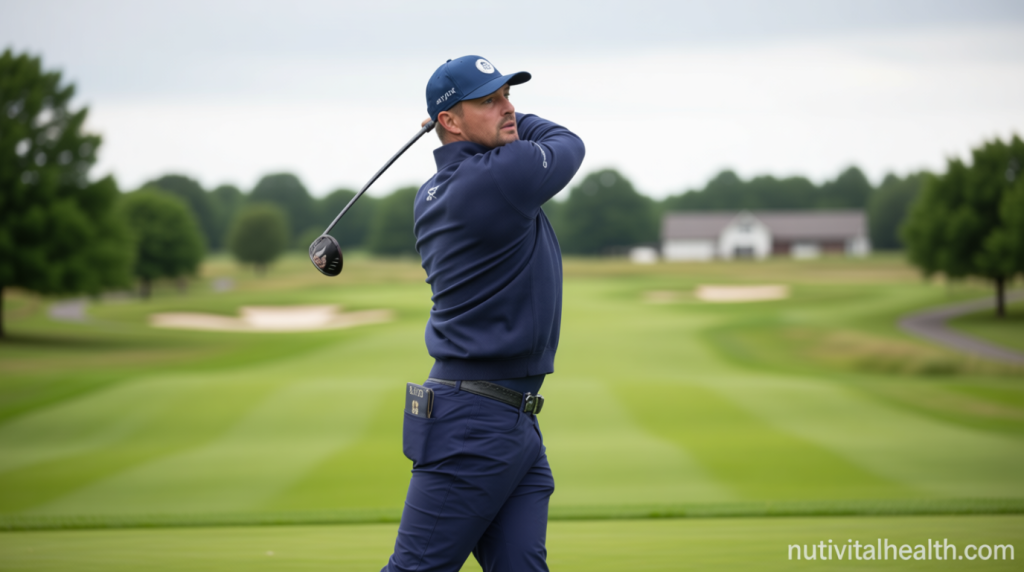
The Bryson DeChambeau Show captivates the crowds, even on a bad day. Is that fascination enough for a truce with the PGA?
The Bryson DeChambeau Show captivates the crowds – Following the completion of his scorecard to formally acknowledge a round of golf he’d rather forget, Bryson DeChambeau dashed through the player’s parking lot and continued on to the driving range. He placed two buckets beside him and began swinging, pausing only to either check a video of his stroke captured on an iPhone or to have his staff clear two cameramen who had set up behind him. Once the buckets were empty, DeChambeau fetched more, as if searching for a hidden reservoir of skill somewhere in the ground. His game had seemingly vanished, leaving him stranded in a moment of self-doubt.
DeChambeau’s first round at the PGA Championship was a 6-over 76, pushing him to a staggering plus-17 over his previous three major tournaments. The situation spiraled so dramatically that one of his misfired shots landed on a staircase, coming to rest directly beneath a tent emblazoned with “Level Blue On the Fairway.” The ball, indifferent to the irony, remained in place as DeChambeau’s frustration grew. Yet, in an unexpected twist, that precarious lie turned into one of his most memorable salvos; he managed to recover par. His drives veered sharply right, while his putts veered left, right, short, or wide, all on the challenging Aronimink greens.
On the par-3 eighth hole, DeChambeau launched his second shot high enough to draw rain, sending it soaring over the green. The dramatic arc required only a loop-di-loop to complete its absurdity. Despite the theatrics, he ended up with a double bogey. As the round unfolded, his demeanor shifted from determined to confused to visibly irate, a pattern that has become all too familiar for the two-time US Open champion. At one point, he slammed his club into the green, and repeatedly returned to the spot of his latest error—whether a wayward drive or a missed putt—executing ghost swings as if both reflecting on his missteps and envisioning a do-over.
DeChambeau arrived at his 8:18 a.m. tee time in a black puffy parka, a reasonable choice given the cool, rainy conditions. The crowd erupted in applause as he stepped up for his opening drive. When he launched the ball, the fans responded with a familiar refrain for the day. On his first hole, the reaction was “Whoa.” Later, it evolved into “Jesus!” and “Holy moly,” eventually culminating in “Oh s**t.” These exclamations underscored the unique energy he brings to the course, even in his most off days.
A Rivalry Rooted in Ambition
DeChambeau’s struggles come at a pivotal moment for the LIV Golf rebels, including himself, who have been striving to redefine the sport’s landscape. The Saudi Public Investment Fund, once a key investor in the breakaway league, has begun withdrawing its financial support, signaling that the vision of LIV Golf may not be as sustainable as initially thought. DeChambeau’s contract with LIV expires at the end of this year, but his return to the PGA Tour isn’t guaranteed. He was among the leaders who split from the PGA, and he also joined a lawsuit accusing the organization of leveraging its monopoly to penalize players who defected to LIV.
A reunion would require negotiations, potential penalties, and perhaps a series of harmonious discussions. The PGA Tour has already made a concession by easing its strict social media policies, a move that might help DeChambeau retain his platform. As a proud YouTuber, he has hinted at playing solo on his channel if a stalemate continues. The path to reconciliation remains unclear, but one thing is certain: ego stands as the primary obstacle between the two factions. Neither side is willing to concede fault, and neither is ready to admit the need for compromise.
The PGA Tour has not been entirely sidelined by the LIV Golf rebellion. In fact, the 2025 season saw the most-watched CBS coverage since 2018, with Sunday viewership for top events hovering around 3.1 million compared to LIV’s 480,000. This suggests that the PGA’s brand still holds strong, even as it faces competition from a new league. Yet, the sight of DeChambeau walking through Aronimink during his round revealed a different story. While Rickie Fowler and Ludvig Åberg paused to chat with their caddies, DeChambeau kept moving, his presence a constant spectacle. His relentless pace, often matched by the energy of his swings, seemed to demand attention at every turn.
DeChambeau’s performance has become a metaphor for the broader conflict between the PGA and LIV Golf. His ability to generate excitement—whether through a powerful drive or a dramatic recovery—has kept fans engaged, even when his play didn’t meet expectations. This is not just about individual talent but about the cultural impact he wields. In an era where subtlety is often overshadowed by spectacle, DeChambeau represents a force of raw, unfiltered intensity. Unlike the nuanced strategies of traditional golf, his approach is steeped in power, a trait that resonates with fans who crave drama over precision.
As he continued to practice swings and chomped through beef jerky with an almost aggressive fervor, DeChambeau’s actions highlighted his character. The moment was both a display of frustration and a testament to his unyielding spirit. Even after a difficult round, he remained focused, embodying the same determination that has defined his career. This persistence, however, has also sparked questions about his future with the PGA Tour. Will his continued presence in the public eye be enough to convince the organization to soften its stance? Or will the lingering tension between the two sides prevent a lasting truce?
In the end, DeChambeau’s journey reflects the broader dynamics of golf’s evolving landscape. His ability to command attention, even on a day when his scorecard tells a different story, underscores the unique role he plays in the sport. While his performance may not have been stellar, the spectacle of his presence continues to captivate. Whether this fascination translates into a formal reconciliation with the PGA remains to be seen, but for now, DeChambeau’s show is as compelling as ever.
“Whoa.” “Jesus!” “Holy moly.” “Oh s**t.”
The PGA Championship’s first round was more than a test of skill—it was a stage for DeChambeau’s persona, a blend of intensity and unpredictability. As he walked the fairways, his actions spoke louder than his score, reminding fans that the game’s appeal lies not just in its mechanics but in its personalities. The question remains: Can the PGA Tour balance its competitive ambitions with the need to embrace the very players who once challenged its authority?
