Simon Roberts Foresees Continued Inflationary Impact Amid Middle East Uncertainty
More inflationary pressure to come through – Simon Roberts, the chief executive of Sainsbury’s, has warned that inflationary pressures will persist in the coming months, driven by ongoing disruptions in global supply chains. The UK’s second-largest supermarket chain highlighted that while recent trading activity has shown positive signs, the Middle East conflict continues to cast a shadow over consumer confidence and market stability.
Roberts emphasized that the current inflationary trend, though less severe than initially anticipated, remains a concern. He noted that the company has previously projected delays in inflation’s full impact until the summer months, but the pace of price increases has not met the most pessimistic expectations. “There is still uncertainty about how the Middle East situation will evolve,” Roberts said, “and this will shape the trajectory of inflation in the near term.”
“Customers are looking for value now more than ever. We are consistently delivering outstanding quality at great value, so more people are choosing Sainsbury’s for their big weekly shop.”
Sainsbury’s reported that its core grocery business experienced steady growth, with sales rising by 3.6% compared to the previous quarter. This growth was supported by a 3.1% increase in total retail sales, excluding fuel, which reached £8.04 billion in the 16 weeks ending June 20. However, the company acknowledged challenges in its general merchandise and clothing divisions, which saw declines of 6.3% and 2.1% respectively.
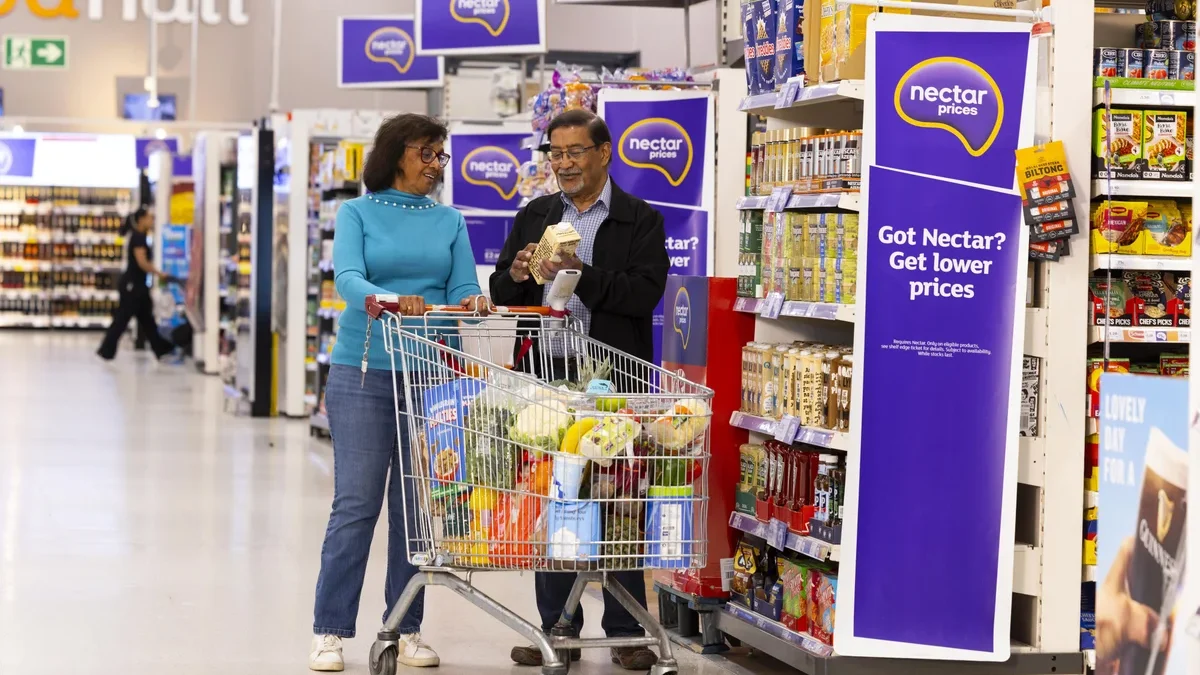
The supermarket chain attributed part of the merchandise sales drop to the impact of subdued consumer spending, which has lowered average selling prices. Roberts pointed to strategic initiatives such as its Aldi price match program and Nectar price discounts as key drivers of growth, stating these efforts have helped attract price-sensitive shoppers. “We’ve invested heavily in value propositions,” he explained, “which are now paying off in terms of customer retention and market share.”
Despite the challenges in general merchandise, Sainsbury’s remained optimistic about its overall performance. The firm noted that its grocery sales, a cornerstone of its operations, have outperformed the broader market. This has allowed it to offset some of the declines in other sectors, ensuring a balanced financial outlook. The Office for National Statistics recently confirmed that food and non-alcoholic drink inflation peaked at 2.2% in May, marking the lowest level since early 2024.
Supply Chain Dynamics and Market Outlook
Roberts stressed that the inflationary pressure is not yet at its peak, with supply chain bottlenecks expected to continue influencing prices. He noted that while some industry trade bodies have revised their inflation forecasts downward, the overall economic climate remains uncertain. “The conflict in the Middle East has created a ripple effect across global markets,” he said, “and this is translating into higher costs for goods and services.”
The CEO also highlighted the role of seasonal factors in shaping the company’s performance. With the World Cup currently in progress and an exciting summer of sporting events on the horizon, he expressed gratitude for the efforts of employees, suppliers, and partners. “The combination of major events and ongoing consumer demand has helped drive our results,” Roberts added, “and we are confident this momentum will carry into the next quarter.”
Sainsbury’s brand sales, which include its grocery and convenience offerings, grew by 3.1% to £8.04 billion over the quarter. This outperformed the broader retail sector, which saw total sales increase by 2.7% to £9.15 billion. The company’s grocery division, however, faced headwinds from rising input costs, which Roberts described as a “mixed picture” of growth and constraint.
Regional and Sectoral Performance
While the grocery sector showed resilience, the general merchandise segment, which encompasses homeware, technology, and other non-food items, recorded a significant 6.3% sales decline. This slump was particularly pronounced in the clothing division, where Tu, Sainsbury’s own brand, saw a 2.1% drop. Roberts attributed this to “tough comparisons” against the previous year’s strong performance, but he remains confident in the long-term potential of these sectors.
The Argos business, a key part of Sainsbury’s retail portfolio, also experienced a 0.5% decline in sales. Roberts explained that this was due to a combination of factors, including the impact of reduced consumer spending on average selling prices. “Positive volume growth was offset by the impact of subdued consumer spending,” he said, “which has affected the pricing power of our merchandise offerings.”
Despite these challenges, the CEO emphasized that Sainsbury’s is adapting its strategies to maintain competitiveness. He noted that the company’s focus on value has resonated with customers, leading to increased foot traffic and repeat purchases. “By offering great deals without compromising on quality, we are ensuring our position as a trusted brand in the market,” Roberts stated.
Looking Ahead: Challenges and Opportunities
Roberts acknowledged that the inflationary pressures are not evenly distributed across all product categories. While grocery inflation has eased, the merchandise and clothing segments continue to grapple with cost increases and demand fluctuations. He pointed to the importance of supply chain resilience, stating that the company is working closely with suppliers to mitigate risks and stabilize prices.
“Inflation is coming through, but not as significantly as some had expected,” Roberts said. “This is a result of both market adjustments and our proactive approach to managing costs.” He added that the company’s ability to deliver value while maintaining quality has been a critical factor in its performance, even amid rising prices. “We are focused on ensuring our customers get the best deals, which is essential for sustaining growth in a challenging environment.”
As the Middle East conflict continues to unfold, Roberts believes the market will see further inflationary pressures in the months ahead. “The situation is evolving quickly, and we must remain agile in our response,” he said. “Our strategy is to balance cost control with customer satisfaction, which will be vital as we navigate this period of uncertainty.”
Sainsbury’s has also been bolstered by its expansion into the convenience and premium grocery markets, which have provided additional revenue streams. Roberts noted that these areas have shown strong growth, contributing to the overall positive trend in the company’s financial performance. “We are seeing increased interest in our value-priced offerings, which is a clear signal of consumer behavior shifting toward cost-conscious choices,” he said.
Looking further ahead, the CEO expressed confidence that the company’s strategies will continue to drive results. “We are well-positioned to capitalize on the opportunities in the market,” he said. “With the World Cup in full swing and an exciting summer of sport ahead, we are ready to meet the demands of our customers while keeping costs in check.”
Roberts concluded by thanking the team behind Sainsbury’s and Argos for their hard work and dedication. “Their efforts have been instrumental in maintaining our performance, even in the face of these challenges,” he said. “We are committed to delivering value and quality to our customers every day, which is the foundation of our success.”
As the retail landscape continues to shift, Sainsbury’s is poised to adapt to new economic conditions while maintaining its position as a leader in the UK grocery market. The CEO’s comments underscore the company’s resilience and strategic focus on navigating inflationary pressures and supply chain challenges. With a clear roadmap for growth, Sainsbury’s aims to continue outperforming competitors and meeting consumer needs in an increasingly uncertain environment.