
250 missing after migrant boat sinks in Indian Ocean
250 Missing After Migrant Boat Sinks in Indian Ocean
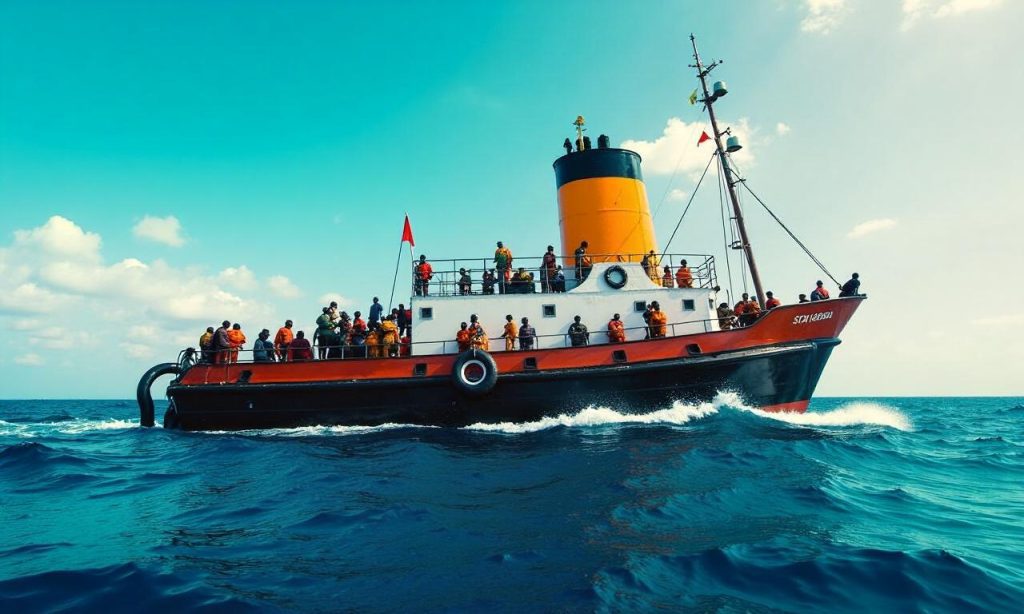
A vessel carrying approximately 250 Rohingya and Bangladeshi individuals, including minors, has reportedly gone missing following a capsizing incident in the Indian Ocean. The boat, which set sail from Bangladesh and aimed for Malaysia, is said to have “sunk due to heavy winds, rough seas and overcrowding,” according to the United Nations’ refugee and migration agencies.
The Bangladesh Coast Guard informed AFP that one of its ships rescued nine survivors from the vessel on April 9. However, the exact moment of the boat’s collapse remains uncertain. This tragedy underscores the ongoing challenges faced by the Rohingya, an ethnic minority group in Myanmar, who have been fleeing across the border into Bangladesh since a violent crackdown in 2017.
Survivor’s Account
“I floated for nearly 36 hours before being saved,” recounted Rafiqul Islam, a survivor. He also mentioned that he suffered burns from oil that spilled during the accident. The 40-year-old shared that the promise of employment in Malaysia was the main reason he boarded the boat.
Rohingya people, predominantly Muslim, are excluded from citizenship by Myanmar’s government, a country where Buddhism is the dominant religion. Despite this, the poor living conditions in Bangladesh have led some to seek refuge in Malaysia, a Muslim-majority nation they view as a potential safe haven.
Displacement and Hope
The UN High Commissioner for Refugees (UNHCR) and International Organization for Migration emphasized in their statement that “this tragic incident reflects the dire consequences of protracted displacement and the absence of durable solutions for the Rohingya.” Persistent violence in Rakhine, their homeland, has “faded hopes of a safe return in the near future,” they added, citing dwindling humanitarian aid and difficult living conditions in refugee camps as factors pushing more to take perilous sea journeys.
These boats, often small and overcrowded, typically lack essential amenities such as fresh water and sanitation. Many do not reach their intended destinations. Some perish at sea, while others are detained or deported. Additionally, certain Rohingya have been turned back near Malaysia and Indonesia, either by officials or local communities.
In January 2025, Malaysia reportedly rejected two boats carrying around 300 refugees after providing them with food and water. A Rohingya refugee in Cox’s Bazar, Bangladesh, previously told Reuters, “People are dying in the fighting, dying from hunger. So some think it’s better to die at sea than to die slowly here.”
Call for Support
As Bangladesh marks its new year, the UN agencies urged the international community to continue funding for Rohingya refugees and their host communities. They stated, “This tragedy is a reminder of the urgent need to address the root causes of displacement in Myanmar and create conditions that would allow Rohingya refugees to return home voluntarily, safely and with dignity.”
