Former BBC Director-General Issues Stark Warning on UK Media: ‘Rome Is Burning’
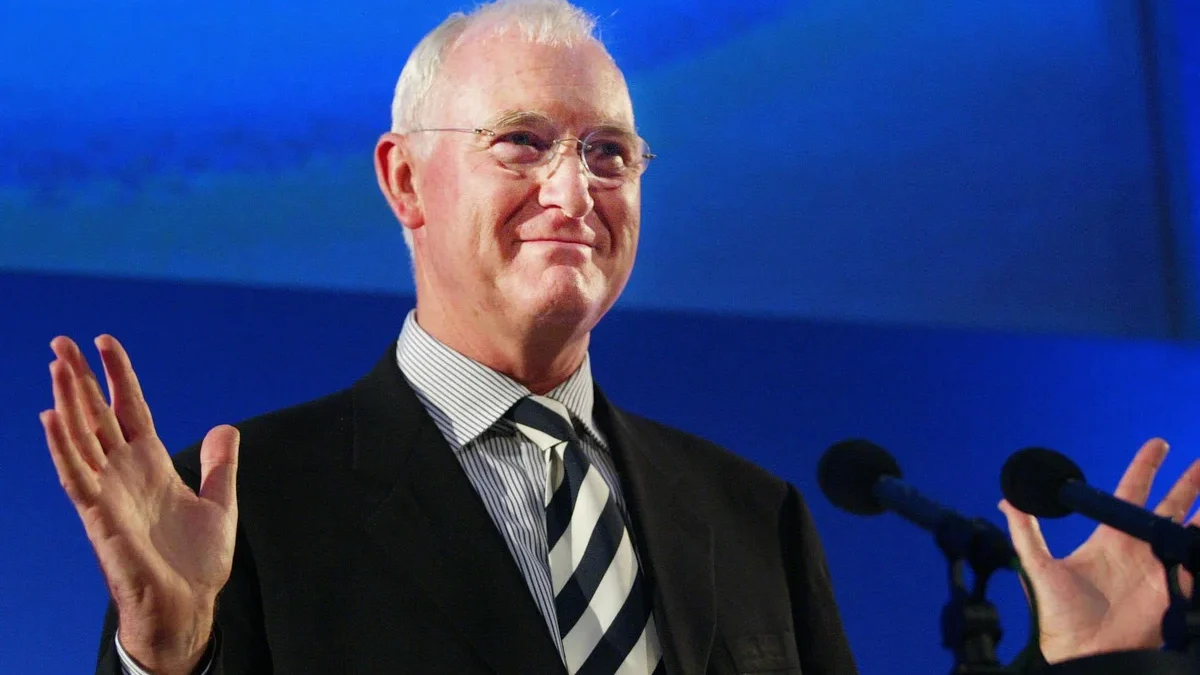
Former BBC director general issues stark – During a House of Lords debate on the Media Green Paper, Lord Birt sounded an alarm about the declining state of UK media. The crossbench peer, who once led the BBC from 1992 to 2000, warned that the nation’s media landscape is facing existential risks, likening the situation to a city engulfed in flames. His remarks came amid discussions on the government’s proposed reforms, which aim to redefine the role of public service broadcasting in an increasingly digital world.
Lord Birt emphasized that the global shift in media consumption is undermining two of Britain’s most enduring cultural institutions: its vibrant press and the public service broadcasting model that has sustained organizations like the BBC, ITV, and Channel 4 for generations. He argued that these entities, once the cornerstone of national discourse, are now at risk of being overshadowed by commercial interests and algorithm-driven platforms. ‘Rome is burning,’ he stated, ‘and we must act before it’s too late.’
“Two of the UK’s greatest, most respected, and historic achievements are threatened by the globalisation of media,” Lord Birt said. “A lively, challenging, and diverse press, which we’ve had for centuries, an unmatched tradition of public service broadcasting encompassed by Channel 4 and ITV, as well of course as the BBC, which we’ve had for almost a century.”
He further highlighted how these institutions have long served as the nation’s ‘national debating chamber,’ capturing its cultural essence and talent. ‘For over a century, we have actually, through those means, created a very effective national debating chamber and brilliantly captured our national culture, talent, and capability,’ he added. Lord Birt questioned whether the government’s current strategies are sufficient to reverse these trends, urging a more aggressive approach to safeguarding media independence.
Baroness Twycross, the culture minister, responded by acknowledging the need for vigilance but downplaying the urgency. She defended the government’s support for the BBC, stating it remains a vital source of news and content. ‘The government is fully behind the BBC, both at present time and as a future source of news and trusted news and content,’ she said. Twycross argued that the proposed changes, including a consultation period ending on August 31, would allow for transparent criteria to be established for determining which media outlets deserve priority on digital platforms.
“Through the Charter review process, a lot of these conversations are happening, and so we’re looking in particular at how we can ensure the funding model is sustainable by being fair and affordable for households,” Twycross explained. “And that’s one of the ways in which we’re clear, if we can get sustainable funding, if we can make sure we get the prominence regime on the internet as well as on the television screens, then we should go a long way to ensuring a strong future for our press and media.”
The Green Paper, titled Watch This Space: A Strategic Direction For UK Media, outlines a roadmap for modernizing the UK’s media infrastructure. Key proposals include requiring social media companies and video-sharing platforms to elevate content from trusted publishers—such as the BBC, ITV, Channel 4, and regional broadcasters STV and s4C—to prime positions in their feeds. This move, the government claims, is essential for combating misinformation, particularly during crises when public trust in information is paramount.
The paper also envisions a transition to internet-based television by 2034 or 2044, alongside the inclusion of on-demand rights for major sporting events in the Listed Events Regime. This would make access to the World Cup and Olympics free for audiences, aligning with the government’s goal of ensuring equitable media availability in the digital age.
However, the proposal has sparked concerns among free speech advocates. Lord Young of Acton, founder and director of the Free Speech Union, warned that the Green Paper could serve as a ‘Trojan horse’ for centralizing control over news production. ‘The green paper doesn’t simply propose that the prominence regime be confined to public service media, including public broadcasters,’ he stated. ‘It suggests that it should be extended also to news publishers. How are those news publishers going to be selected?’
“If some news publishers are going to be included in the prominence regime, given various privileges, social media companies will have to promote the content of those news publishers, how are those news publishers going to be selected?” Young asked. “And can the minister assure the House that this isn’t a Trojan horse for forcing some news publishers to bend the knee to a state-approved press regulator like Impress?”
Twycross addressed these concerns by affirming that the selection criteria for trusted news providers would be determined through an open process. ‘We will decide the criteria of a trustworthy news provider in an open and transparent manner, and with regard to protecting media freedom,’ she said. This response aims to reassure critics that the reforms are not a direct threat to editorial autonomy, though the debate over influence and control continues.
Supporters of the Green Paper argue that the prominence regime is a necessary measure to counteract the dominance of commercial platforms. By ensuring that public service broadcasters and reputable news outlets maintain visibility, the government believes it can foster a more informed public and preserve the integrity of national discourse. Yet, opponents caution that such interventions may inadvertently prioritize state-aligned media over independent voices, altering the balance of power in the media sector.
The proposed changes also raise questions about the long-term viability of the funding model. With rising costs and shifting audience habits, securing sustainable support for public service media has become a critical challenge. The Green Paper’s emphasis on affordability for households suggests a willingness to adapt to modern consumption patterns, but critics warn that this could lead to cuts in programming quality or diversity.
As the consultation period approaches its deadline, the debate over media freedom and regulation is intensifying. The Green Paper represents a significant step in redefining the UK’s media landscape, blending traditional broadcasting with digital innovation. Whether it will ignite a revival or accelerate the decline of public service media depends on how these policies are implemented and the extent to which they protect editorial independence from political interference.
Lord Birt’s warning, though dramatic, underscores a growing consensus that the media sector is at a crossroads. The government’s strategy seeks to modernize public broadcasting while addressing the challenges of misinformation and digital fragmentation. But as the discussion unfolds, the question remains: will these measures preserve the soul of British media, or will they become a catalyst for its transformation into something unrecognizable?