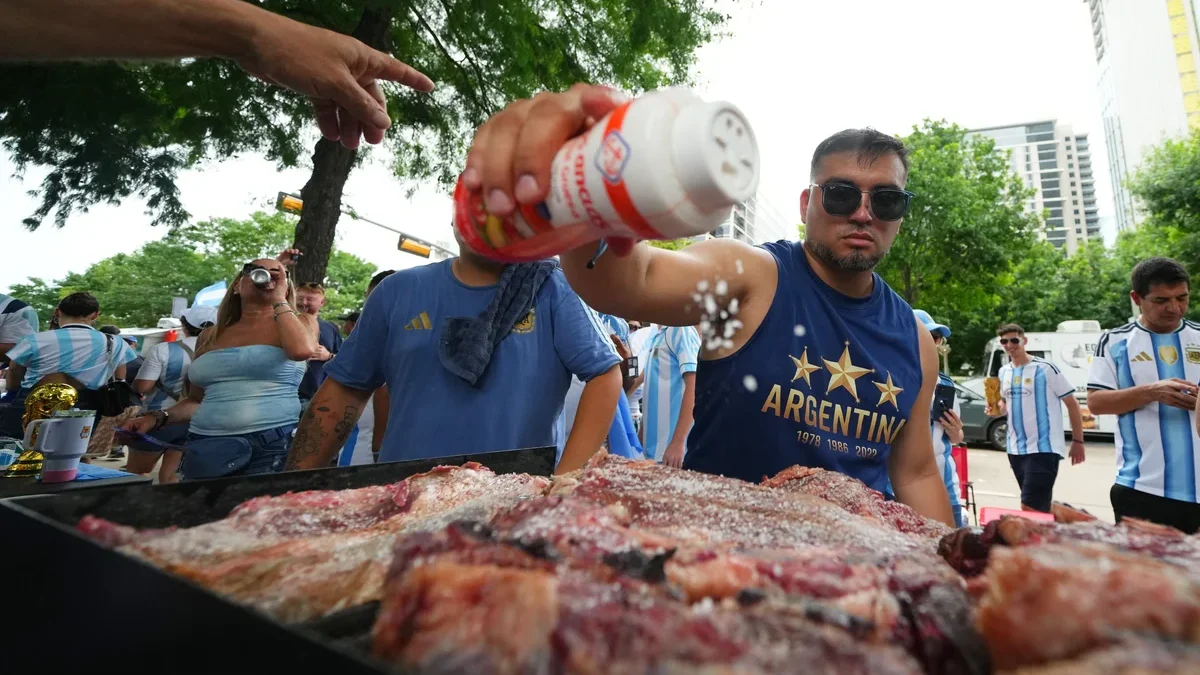
There’s a Beef About Beef at the World Cup, as Argentina Fans Pour Into Texas
There s a beef about beef – As the world’s attention turns to the FIFA World Cup, a unique cultural phenomenon has emerged in Texas. Argentina’s fervent supporters, drawn to the United States for the tournament, have inadvertently sparked a spirited debate that transcends sports. This isn’t merely about the performance of the national team or the brilliance of Lionel Messi, the tournament’s star attraction. Instead, it’s a discussion centered on the culinary identity of Argentina—specifically, its reputation for producing the finest, most flavorful beef.
A Global Rivalry in Cattle
The rivalry between Argentina and the U.S. in the realm of beef production is both intense and fact-based. According to the U.S. Department of Agriculture, Texas leads the nation in cattle output, while the U.S. as a whole holds the second position globally, just behind Brazil. Argentina, meanwhile, ranks sixth in global production, but its influence on the world’s steak culture remains undeniable. This contrast has created a curious scenario where fans of the Argentine team are now in the heart of the American cattle industry, comparing the quality of meat from their homeland to that of the Lone Star State.
Cooking styles and dietary traditions play a significant role in this debate. Carlos Eduardo Barahona, a 64-year-old Argentine chef based in Texas, passionately defends his country’s beef. “Argentine beef is simply unbeatable. The savory texture, the way the cut is handled—there’s no competing with it,” he asserts. Barahona, who has worked in restaurants across Argentina, Uruguay, and Texas, emphasizes the versatility of Argentine meat. “Whether you’re looking for the cheapest cuts or the most expensive, Argentina is always on top,” he adds.
“You can make an asado with the cheapest cut in our country and still enjoy it. Here, you can use the best meat, like tenderloin, and depending on its source, it can turn out tough, inedible, or tender. But our beef has a completely different flavor profile,” Barahona explains.
The differences in meat quality stem from distinct farming practices. Argentine cattle are primarily raised on open pastures, where they graze freely on grass. This slower, more natural growth process results in leaner meat with a rich, earthy flavor. In contrast, Texas ranchers rely heavily on grain-fed diets, which enhance marbling—those streaks of fat that baste the meat internally and contribute to its juiciness. The resulting texture and taste are sweeter and more tender, according to experts.
U.S. Beef: A Competitive Edge
When asked about the competition, Texas Agriculture Commissioner Sid Miller, a staunch advocate for American beef, counters with confidence. “There’s no better beef than U.S. beef, particularly Texas beef,” he says. Miller’s agency has long recognized the potential for cross-border collaboration. More than a decade ago, they established a marketing office to connect Texas cattle producers with ranchers in South America, especially in Argentina.
“I don’t want to disparage our friends in Argentina, but we have helped them improve,” Miller adds. “Their genetics were lacking. We do have them up to pretty high quality. We sold them a lot of semen, embryos, and breeding stock,” he explains.
Miller’s comments highlight a broader trend of technological and genetic exchange between the two nations. “Their herds have American genetics in them, so they should be good,” he concludes. This mutual influence has created a dynamic where American techniques are improving Argentine quality, yet the cultural pride of traditional Argentine beef remains intact.
Consumers’ Perspectives: A Matter of Taste
For many fans, the debate isn’t just about the meat itself—it’s about the preparation, the seasoning, and the rituals surrounding it. Gonzalo Herrera, an Argentina supporter in Arlington, Texas, recently visited a Walmart while watching Messi’s two-goal performance against Austria. “Honestly, I don’t see a massive difference,” he says, placing four T-bone steaks into his cart. “The key is knowing exactly which cuts to buy and finding the equivalent of what we eat in Argentina,” Herrera adds, noting the $45 price tag as a point of reflection.
At Corrientes 348 Argentinian Steakhouse in Dallas, the approach to cooking is rooted in simplicity. Assistant manager Emmanuel Tobon explains that the restaurant’s method relies on salt and mesquite charcoal to enhance the natural flavor of the meat. “There’s a big difference. Texans use a lot of pepper, they use butter, they use a little barbecue sauce,” Tobon says. “Argentines like to bring all the flavor of the steak by only using salt,” he adds, underscoring the cultural emphasis on preserving the meat’s inherent characteristics.
Despite the variations in preparation, the emotional connection to Argentine cuisine is palpable. As Argentina’s team competes in Dallas, fans gather at restaurants like Corrientes 348 to savor a taste of home. “They have been enjoying the Texas culture,” Tobon notes. “But it has been a great pleasure to have all of them, to make them feel like home,” he says, reflecting on the hospitality extended to visitors.
For Fernando Garcia Morillo, an Argentine from Buenos Aires now living near Miami, the debate is personal. While he acknowledges the quality of U.S. beef, he craves the traditions of his homeland. “I order just salt, no pepper, just plain,” Morillo says. “Sometimes they use a lot of sauce,” he adds with a wry smile, expressing his fondness for the unadorned, authentic flavor of Argentine steaks.
Even as the U.S. and Argentina engage in a friendly culinary rivalry, the significance of the World Cup brings a deeper layer to the discussion. For fans, the act of consuming steak becomes a symbolic gesture of loyalty to their country’s heritage. The debate isn’t about superiority; it’s about celebrating the unique qualities that define each nation’s approach to beef. Whether it’s the grass-fed, slow-matured meat of Argentina or the grain-fed, marbled cuts of Texas, the conversation continues, fueled by the shared passion for the game and the universal love for a good steak.
As the Albiceleste prepares for its next match in Dallas, the atmosphere in the city’s eateries and neighborhoods reflects the blend of cultures. The debate over beef remains a lighthearted yet meaningful part of the World Cup experience, where the pursuit of the perfect steak mirrors the pursuit of victory on the field. Ultimately, it’s a testament to how food can bridge continents, creating a unique intersection of culture, competition, and camaraderie during the global event.