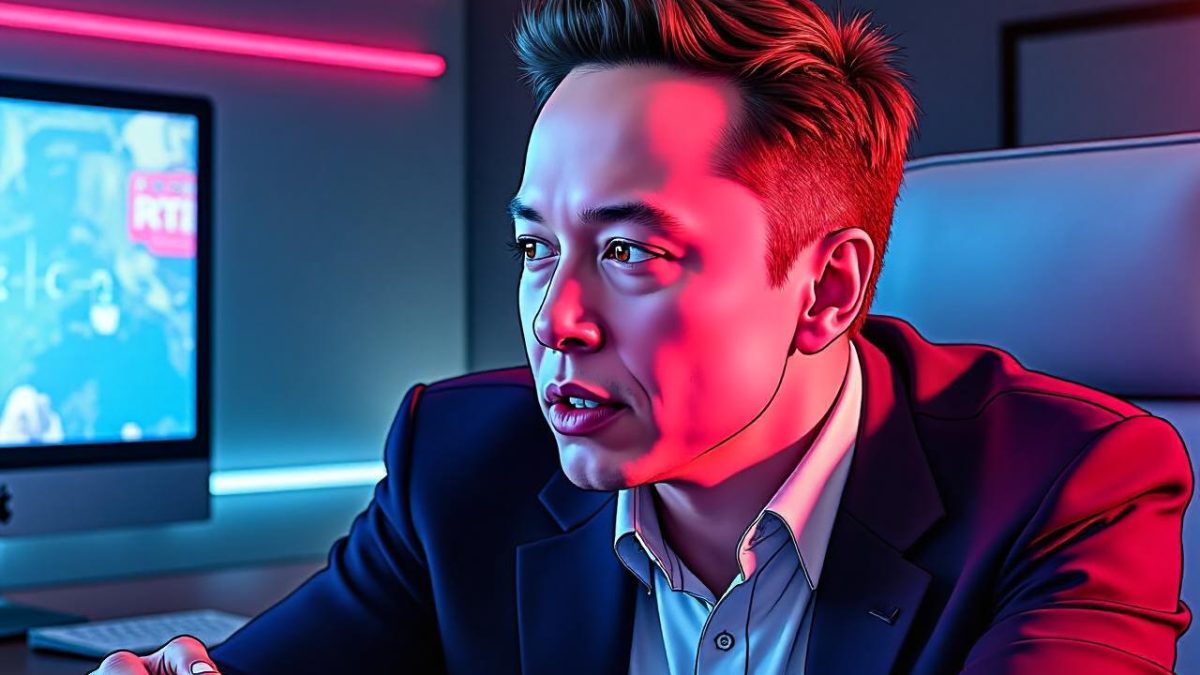
Elon Musk Just Pulled Off the Wildest IPO Wall Street Has Ever Seen
Elon Musk just pulled off the wildest – SpaceX, the aerospace company co-founded by Elon Musk, is set to debut on the Nasdaq this Friday, marking its entry into the public market with a valuation that has stunned financial analysts. The initial public offering (IPO) is poised to position the firm as the seventh-largest U.S.-listed company, surpassing industry titans in a manner that defies conventional market expectations. This unprecedented move has raised eyebrows across Wall Street, with many questioning whether the valuation of $1.77 trillion is justified by the company’s current financial performance or its future potential.
At the heart of the IPO is a record-breaking $75 billion in capital raised through the sale of 555.56 million shares. The pricing of $135 per share not only highlights the confidence in SpaceX’s mission but also reflects the immense optimism surrounding its long-term prospects. The company’s journey from a private startup to a publicly traded giant has been fueled by decades of innovation in rocket technology, satellite deployment, and artificial intelligence. This shift is expected to redefine the landscape of space exploration and global connectivity, as SpaceX aims to solidify its dominance in these sectors.
What sets this IPO apart is the unconventional approach Musk has taken in structuring the offering. Instead of following the traditional path, which involves a prolonged roadshow to gauge investor interest and negotiate terms, SpaceX opted for a streamlined process. The company announced its share price just after 3 p.m. EDT, while U.S. markets were still open, via a “free-writing prospectus” filed with the Securities and Exchange Commission. A press release followed shortly thereafter, creating a buzz that extended beyond the usual trading hours. This timing, which is typically reserved for companies aiming to minimize the impact of external factors on their share price, underscores Musk’s desire to control the narrative from the outset.
One of the most notable aspects of the offering is the allocation of 30% of shares to retail investors. This decision has sparked debate among financial experts, who argue that such a strategy prioritizes accessibility over traditional valuation benchmarks. “Retail investors are a big component of this,” noted Adam Sarhan, CEO of 50 Park Investments. “The pricing came in just about right—not too hot, not too cold. But the real test will be how the market digests this over the next several weeks. We need to see follow-through after the first day of trading.” Sarhan’s comments highlight the growing influence of individual investors in major market events, a trend that has been amplified by the rise of digital trading platforms and social media-driven stock enthusiasm.
Despite its lofty valuation, SpaceX faces scrutiny over its financial track record. The company reported losses last year and has yet to achieve consistent profitability, yet its market cap now exceeds that of well-established firms like JPMorgan Chase, Berkshire Hathaway, and Eli Lilly. It also rivals tech giants such as Meta Platforms and Tesla, a feat that has left many analysts in awe. Rick Meckler, a partner at Cherry Lane Investments, described the pricing as “uncharted territory.” “I’ve never seen the price announced before the normal process of price discovery based on orders,” he said. “There’s such an emphasis on retail, which is probably a little indifferent to the pricing. This could set a new standard for how IPOs are perceived and valued.”
Musk’s leadership has also shaped the company’s governance structure, ensuring he retains 82% of voting power post-IPO. This level of founder control is a significant departure from the typical dilution seen in public offerings, and it has raised questions about the balance between investor influence and Musk’s vision for the company. The decision to include SpaceX in major indices early further signals his confidence in the company’s long-term growth. These moves have been met with mixed reactions, as some view them as strategic victories while others see them as potential risks to shareholder trust.
SpaceX’s mission to make life multiplanetary has driven its innovations in space travel and satellite technology. Since its founding in 2002, the company has achieved milestones that once seemed impossible, such as reusable rocket systems and the development of Starlink, a global broadband network. The Starlink initiative, which currently serves millions of users across 164 countries, is a cornerstone of SpaceX’s revenue and a testament to its ability to scale operations rapidly. However, the company’s xAI venture, while ambitious, remains a point of contention among experts, who believe it may lag behind competitors like OpenAI and Anthropic in the AI race.
The IPO’s success has reignited interest in the U.S. market for high-growth startups, with Goldman Sachs forecasting that IPO proceeds could reach a record $160 billion by 2026. This projection is driven by a pipeline that includes not only SpaceX but also emerging players in artificial intelligence. The potential for such a surge has sparked discussions about the future of investing, as traditional models are being challenged by the bold valuations and unconventional strategies of tech pioneers. For now, the focus remains on how the market will respond to the initial excitement surrounding the listing.
SpaceX’s valuation of $1.77 trillion is based on a market opportunity it estimates at $28.5 trillion—a figure that encompasses everything from satellite internet to interplanetary colonization. The company’s space operations have contributed to over 80% of the mass launched into orbit in the past three years, a statistic that underscores its role in the aerospace industry. While its financials may not yet reflect this grand scale, the IPO has positioned SpaceX as a leader in a sector poised for exponential growth. Analysts suggest that the company’s ability to monetize its technological advancements, particularly through Starlink, could provide the stability needed to justify its current valuation.
As the IPO approaches, the spotlight is on how Wall Street will interpret Musk’s bold moves. The timing of the announcement, the emphasis on retail participation, and the founder’s continued dominance all contribute to a unique market scenario. This event is not just about capital raising—it’s a statement of confidence in the future of space exploration and the transformative power of private enterprise. Whether the market will embrace this vision or question its sustainability remains to be seen, but one thing is clear: SpaceX has redefined what it means to launch a company into the public sphere.