Messi’s GOAT Statue in India to Be Removed Over Safety Concerns
A Controversial Monument Faces Demolition Amid Structural Issues
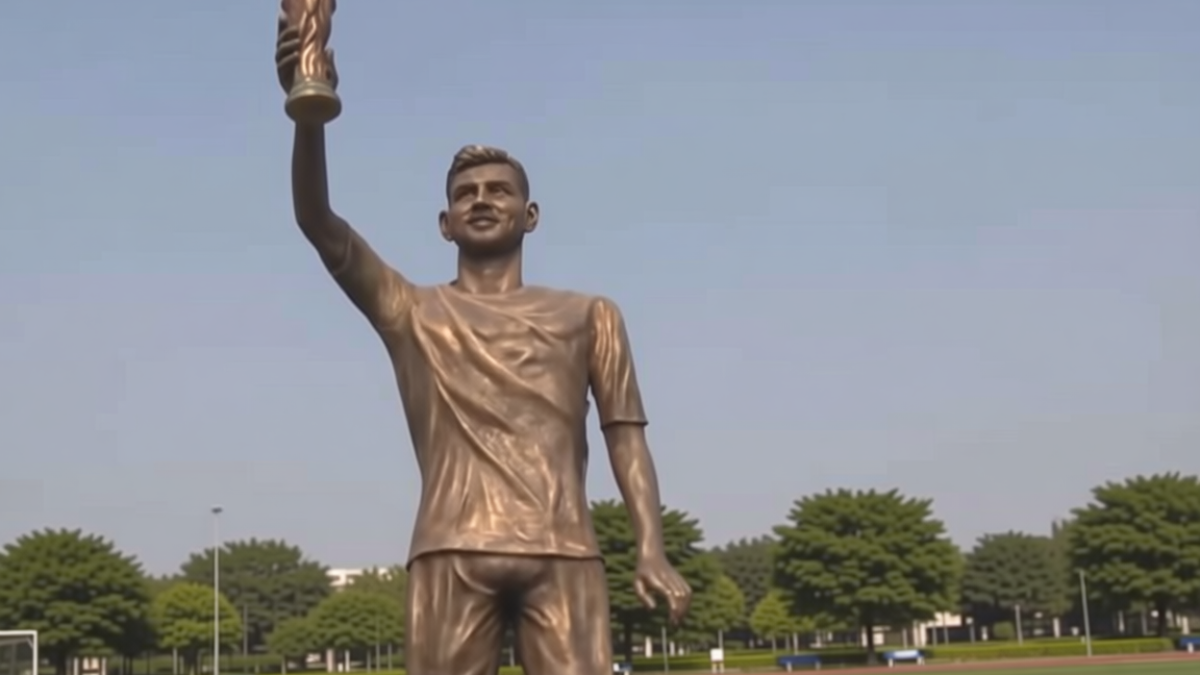
Messi s GOAT statue in India – The 70-foot statue of Lionel Messi, a towering tribute to the Argentine football icon, is set to be dismantled in Kolkata, less than six months after its unveiling during his “GOAT” Tour. The sculpture, which was installed next to a bustling thoroughfare in the city’s central district, has drawn attention not only for its grandeur but also for its shaky stability, prompting authorities to take action after concerns emerged about its safety.
The statue, crafted in golden hues, had already sparked debate over its likeness to Messi. Critics pointed out that the figure appeared to bear only a loose resemblance to the 38-year-old legend, particularly in its portrayal of him raising the World Cup trophy. Despite its artistic ambitions, the monument quickly became a focal point of public discussion, with some questioning its design and others praising it as a symbol of Messi’s global influence.
Officials have now confirmed that the statue is deemed unsafe following an inspection conducted by the West Bengal government’s Public Works Department. Engineers observed the sculpture swaying in strong winds, prompting them to secure it with ropes to prevent potential damage. However, these temporary measures were not sufficient to address the structural risks, leading to the decision to remove it entirely.
“The statue of the Argentinian football legend in Kolkata was found unsafe by engineers of the West Bengal government,” said Sharadwat Mukherjee, a state lawmaker. “We’re planning to remove it at the earliest opportunity, though the process has proven more complex than anticipated.”
The monument’s installation coincided with Messi’s visit to India in December, part of a promotional tour for his team, Inter Miami. During the event, Messi virtually unveiled the sculpture by pressing a remote control button on a video feed, appearing briefly to celebrate the project. The visit, however, ended in chaos when fans grew restless over the short duration of his appearance. Tensions escalated as spectators tore seats from the Salt Lake Stadium and hurled them onto the pitch, expressing frustration at the limited time they had to witness the star player in person.
Behind the statue’s creation stood a local football club, whose president, Sujit Bose, had previously been a member of the state legislature. Bose, who was involved in organizing the monument, has since been taken into custody on corruption charges. The controversy surrounding the statue now extends beyond its appearance and safety, implicating the club’s leadership and raising questions about the motivations behind such large-scale projects.
The statue’s placement near a high-traffic area has also raised logistical concerns. Authorities are reportedly evaluating the best time to dismantle it, considering the need to minimize disruption to city operations. While the exact timeline for its removal remains unclear, Mukherjee emphasized the urgency of the situation, noting that the structure’s instability poses a risk to pedestrians and vehicles in the vicinity.
Meantime, the statue has become a polarizing symbol in Kolkata. For some, it represents the city’s growing connection to global football culture, while for others, it highlights the growing debate over public spending and the importance of aesthetic and structural quality in urban installations. The removal process has sparked discussions about the balance between celebrating sports icons and ensuring infrastructure meets safety standards.
Officials have not yet disclosed the cost of the statue’s demolition, but the incident underscores the challenges of erecting large-scale monuments in a region prone to monsoon winds and seismic activity. The West Bengal government’s Public Works Department has confirmed that the inspection was thorough, and the decision to dismantle the statue was based on concrete evidence of structural vulnerabilities.
As the statue’s fate hangs in the balance, its removal has become a microcosm of broader conversations about public art, civic responsibility, and the role of sports in shaping cultural identity. While fans and football enthusiasts mourn the loss of a visible tribute to Messi, they also recognize the necessity of prioritizing safety over spectacle.
The controversy also echoes a pattern of public projects in India that have faced scrutiny for their design, cost, and utility. From previous incidents involving poorly constructed statues and infrastructure, the Messi statue’s removal serves as a reminder of the importance of meticulous planning. Yet, it also raises questions about the political and social factors that influence such decisions, particularly in a city with a deep-rooted passion for football.
With the statue’s dismantling imminent, its legacy will depend on how it is perceived in the days ahead. For now, the focus remains on the technical aspects of its removal, as engineers prepare to bring down the monument that once captured the imagination of thousands. The event may mark the end of a chapter in Kolkata’s cultural landscape, but it also opens the door for renewed debates about the future of public art in urban settings.
As the city adapts to the changes, the statue’s story will likely be remembered as a blend of admiration, controversy, and the practical realities of maintaining infrastructure. Whether it will be reassembled elsewhere or replaced with a more structurally sound design remains to be seen. For now, the golden figure stands as a testament to the fleeting nature of fame and the enduring challenges of public monumentry.