Fire Rages at Grand Canyon National Park After Nearly 150,000 Acres Burned Last Year
Fire rages at the Grand Canyon – A new wildfire is currently consuming the Grand Canyon National Park, with flames spreading through the region’s rugged landscape. This blaze, which has drawn urgent attention from park authorities, marks a significant resurgence of fire activity in an area still recovering from a devastating megafire that scorched nearly 150,000 acres exactly one year prior. The situation has raised concerns about the park’s resilience and the effectiveness of firefighting strategies in this challenging terrain.
Current Fire Dynamics and Management Challenges
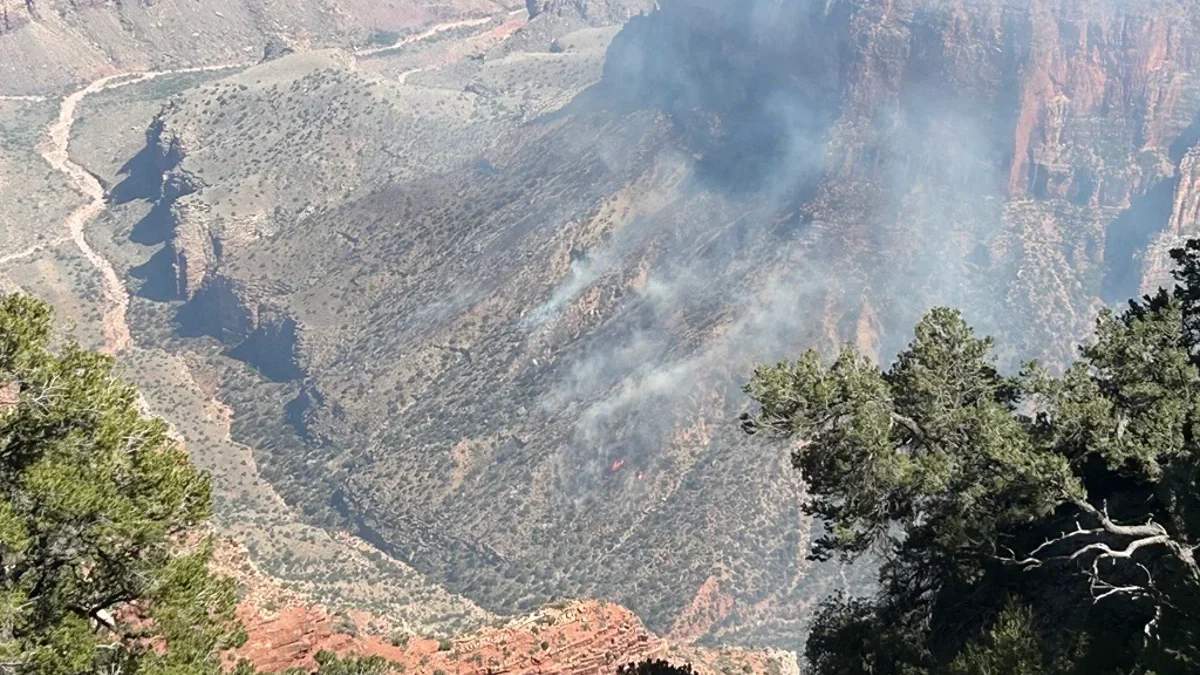
The ongoing fire, referred to as the Cliff Spring Fire, originated below the North Rim of the park and is now burning through a mix of grasslands, shrubs, and pine forests. As of Tuesday night, the blaze remained at zero percent containment, having consumed approximately 171 acres. Park officials highlighted the difficulties in accessing the fire’s location, which is characterized by steep and hard-to-reach slopes, necessitating aerial firefighting efforts to minimize risks to personnel.
“Resources assigned include one U.S. Wildland Fire Service engine, one cooperating engine, and a USWFS helicopter. Firefighters are currently using a direct extinguishment strategy through helicopter bucket drops,” the park officials stated.
These aerial tactics are crucial in limiting the spread of flames while ensuring the safety of ground crews. Despite the challenges posed by the terrain, officials remain vigilant, emphasizing that the fire’s behavior could shift rapidly due to changing weather conditions and operational demands.
Historical Context: The Dragon Bravo Fire’s Legacy
The Grand Canyon’s recent fire activity follows the aftermath of the Dragon Bravo Fire, which ravaged the area from July 4, 2025, through September 29, 2025. That megafire, sparked by lightning, escalated swiftly under favorable weather conditions, eventually burning over 149,399 acres and destroying key infrastructure, including the iconic Grand Canyon Lodge. The destruction of this century-old building underscored the severity of the event, which led to the closure of the North Rim for several months.
Reopening of the North Rim occurred on May 15, 2025, after a painstaking three-month containment effort. During this period, the Dragon Bravo Fire grew to become the largest wildfire in the United States the previous year and the seventh-largest in Arizona’s history. The incident highlighted the need for improved fire management practices, as well as the potential consequences of underpreparedness in the face of escalating natural disasters.
Warnings and Visitor Preparedness
Park leaders have issued advisories to visitors, urging them to stay alert to the presence of smoke and to anticipate rapidly evolving conditions. “Visitors may see smoke in the area as firefighters continue suppression efforts. Fire activity, weather, and operational needs can change rapidly, and visitors should be prepared for changing conditions,” the parks leader warned, emphasizing the unpredictable nature of wildfires in such a geographically diverse region.
While there are currently no trail or area closures, the park has temporarily suspended permit issuance for trips in the Walhalla Plateau region. This precaution aims to reduce human exposure to the fire’s proximity and streamline emergency response operations. The decision reflects a proactive approach to balancing public access with safety, particularly in areas where the blaze is most active.
Leadership Responses and Long-Term Implications
Earlier this year, Doug Burgum, the Secretary of the Interior and head of the National Park Service, acknowledged the role of mismanagement in allowing the Dragon Bravo Fire to spiral out of control. “In retrospect, an approach of suppression versus containment might have saved hundreds of millions of dollars of historic properties,” Burgum said in April, according to KJZZ. His remarks have sparked discussions about the need for better resource allocation and adaptive strategies to combat future wildfires.
The recurring nature of fire incidents in the Grand Canyon raises questions about the long-term impact on the ecosystem and the region’s cultural landmarks. Conservationists and environmentalists are calling for increased investment in fire prevention measures, such as controlled burns and improved early detection systems, to mitigate the risk of similar events. The park’s ability to recover from such disasters will depend on the effectiveness of these interventions and the collaboration between local, state, and federal agencies.
As the Cliff Spring Fire continues to burn, it serves as a reminder of the fragility of the Grand Canyon’s natural and human-made environments. The interplay of climate conditions, terrain, and resource management will shape the outcome of this blaze and inform future strategies for protecting one of the world’s most iconic landscapes. Visitors and residents alike are advised to remain informed and prepared, as the park’s efforts to contain the fire are ongoing and may require further adjustments in the days ahead.