ICE Database Claims Under Scrutiny as Evidence Emerges of Mass Surveillance
ICE denied having a database of protesters – The Department of Homeland Security (DHS) has long maintained that it does not maintain a centralized database of individuals it labels as “domestic terrorists” or potential threats to law enforcement. However, recent disclosures have cast doubt on this assertion, revealing internal communications and official documents that suggest a more extensive data collection system than previously admitted.
Internal Letter Sparks Debate Over Data Practices
In April, a letter from the parent agency of Immigration and Customs Enforcement (ICE) to Congress hinted at the existence of detailed records on protesters and legal observers. While the agency had previously dismissed such a database as a myth, the document described how ICE officers gather information to identify individuals reasonably suspected of supporting or participating in federal law violations. This data includes biographic details, biometric identifiers, and situational context, all intended to bolster safety measures and criminal investigations.
“Information collected during encounters is maintained consistent with applicable law and DHS and ICE policies, and is treated as an official government record.”
The letter, obtained by NPR, emphasized that while the agency supports constitutional rights, it does not operate a “separate, standalone database” of people who interacted with agents but were not arrested. Instead, data is retained as part of broader federal records, raising questions about its long-term use and potential for misuse.
Early Evidence of Database Activity
Months before the April letter, a January incident in Maine provided early evidence of the database’s existence. A video captured an ICE officer photographing the license plate of a protester who had been observing operations. The agent then told the bystander, “We have a nice little database and now you’re considered a domestic terrorist.” This exchange suggested that ICE was already categorizing individuals as threats, even without formal charges.
Similar tactics were reported in Minneapolis, where DHS issued a memo instructing agents to collect personal information from protesters and alleged agitators. The directive included gathering license plate numbers, a practice CNN highlighted as part of a broader effort to monitor individuals deemed suspicious. Agents across the country have since used cell phone-based facial recognition technology during operations, further expanding their surveillance capabilities.
Surveillance Beyond Data Collection
Reports from multiple cities indicate that surveillance extends beyond mere data gathering. Individuals who followed or filmed immigration agents have reportedly been photographed, had their license plates recorded, or faced agents driving past their homes in a deliberate manner. These actions, while not always tied to arrests, suggest a pattern of monitoring and tracking.
Agents have also been seen using high-powered, AI-enabled Meta smart glasses—equipped with facial recognition—to surveil protesters. This technology allows for real-time data capture, enhancing the efficiency of monitoring activities. Such tools, combined with traditional methods like license plate tracking, create a multi-layered system of observation.
Legal Challenges and Civil Liberties Concerns
As evidence mounts, individuals across the U.S. are challenging these practices in court. In Maine, a group of observers filed a lawsuit against federal agencies, alleging their rights were violated when agents recorded their faces and license plate numbers. The plaintiffs claim the data was used to threaten inclusion in a terror watchlist, a move they argue infringes on free speech and privacy.
One woman involved in the case reported receiving a threatening call from a DHS agent about a terror watchlist after her partner observed agents earlier in the day. She claims the couple was later detained for extended questioning at the Canadian border during a recent trip, linking their presence to the database’s expansion.
Broader Implications for Protesters
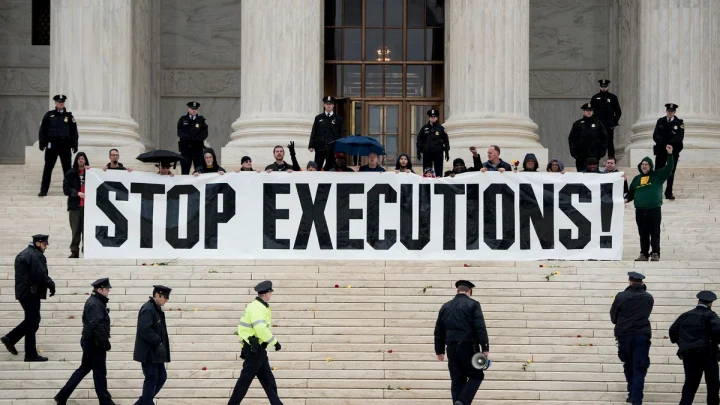
The inclusion of protected First Amendment activities—such as verbal criticism of agents and filming federal operations—into potential criminal records has intensified concerns about civil liberties. Top Trump administration officials have previously characterized such actions as indicative of domestic terrorism, suggesting a shift in how dissent is perceived and recorded.
This framing has allowed federal agencies to justify mass data collection under the guise of national security. While the April letter acknowledges the retention of information post-encounter, it does not clarify how this data is used or who has access to it. Critics argue that the lack of transparency leaves individuals vulnerable to arbitrary targeting.
Watchlists and the Definition of Domestic Terrorism
Two national security officials told The Independent journalist Ken Klippenstein that Homeland Security and the FBI maintain over a dozen shadowy watchlists to track protesters. These lists include groups like Antifa, which the administration has labeled as “domestic terrorists.” The criteria for inclusion remain vague, allowing for broad categorization of activists.
The use of these watchlists has raised alarms about the potential for political profiling. Protests, once protected under the First Amendment, are now seen as acts that could lead to federal surveillance. This perception has led to a chilling effect on public dissent, with some individuals hesitant to engage in protest activities due to fear of being monitored.
From Denial to Admission
The April letter marked a turning point in the agency’s stance on data collection, though it did not fully admit to a formal database. Instead, it framed the practice as part of standard operational procedures, citing the need to address officer safety and facility security. However, the admission that such information is stored as an official record underscores the permanence of the data, even when individuals are not arrested.
While the letter defends the agency’s actions, it leaves room for interpretation. The retention of biometric and biographic details—often without individuals’ consent—could enable long-term tracking. This practice, combined with the use of advanced surveillance tools, paints a picture of a system designed to monitor and categorize protesters under the label of domestic terrorism.
As the controversy grows, the debate centers on whether these measures are necessary for security or an overreach of power. The DHS’s acknowledgment of data retention, paired with its historical denial of a centralized database, highlights the evolving nature of surveillance in the modern political landscape. For now, the evidence suggests that the agency’s practices may blur the line between law enforcement and mass monitoring of citizens’ rights.