Driver in Fatal Bedford Train Crash Passed Red Signal Moments Before Collision
Investigation Unveils Key Details as Over 100 Injured in Tragic Incident
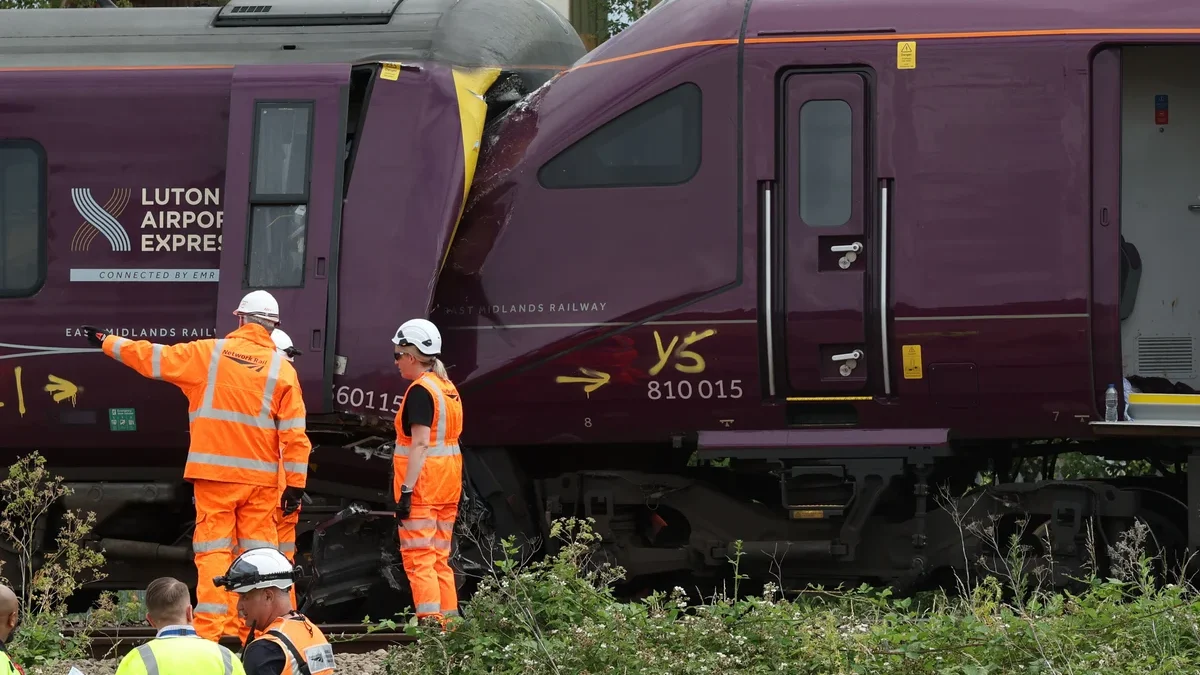
Driver in fatal Bedford train crash – A fatal train crash near Bedford claimed the life of Shaun Burton, a 60-year-old East Midlands Railway driver, according to authorities. The incident, which occurred on Friday evening, involved Burton’s train colliding with another on the same track, resulting in more than 100 people receiving medical attention. As of Monday, 53 individuals remained hospitalized, with eight in critical care, as reported by the British Transport Police.
The Rail Accident Investigation Branch (RAIB) released an interim report on Wednesday, confirming that Burton’s train had passed a red signal just before the collision. The report noted that the train was traveling at 49 mph at the moment of impact, while data from the onboard black box revealed the brakes were applied nine seconds prior to the crash. At that point, the speed was recorded at 76 mph. These findings have raised questions about the driver’s awareness of the signal and the role of the automatic warning system (AWS) equipment, which is designed to alert operators of potential hazards.
“It is not yet possible to say what indication the driver received,” the RAIB stated in its report, highlighting the need for further analysis. The AWS system, which is standard on many modern trains, was reportedly functioning at the time of the accident. However, the exact nature of the signal’s indication—and whether it was clear to the driver—remains under scrutiny. Investigators are examining whether the system malfunctioned or if the driver failed to respond appropriately to its warnings.
In a statement, East Midlands Railway’s managing director, Will Rogers, emphasized the company’s commitment to supporting the ongoing investigation. “We are fully committed to working as an industry to ensure the Rail Accident Investigation Branch can reach its conclusions,” he said. Rogers also expressed condolences to the families of those affected, noting the rarity of fatal accidents on Britain’s railways despite the sheer volume of daily journeys. “Independent comparisons continue to rank our network among the safest in Europe,” he added, underscoring the importance of maintaining public confidence in rail safety.
Rogers further stated that the company would await the final report before making additional comments. “Our focus remains on supporting those impacted by the incident while collaborating with relevant authorities and reviewing any recommendations from the investigation,” he explained. This approach aligns with the broader goal of addressing the root causes of the accident without premature speculation.
The tragedy has also prompted a heartfelt tribute from Shaun Burton’s family, as shared by the British Transport Police (BTP). “We are devastated by his loss. Our thoughts are also with those affected by this incident,” they said. Burton, who had worked in the transportation sector for years before becoming a train driver, was described as a dedicated professional. His career transition from buses and coaches to rail operations was a testament to his passion for public transport, according to Dave Calfe, general secretary of Aslef, the train drivers’ union.
Calfe reflected on the personal impact of the accident, stating, “We are all heartbroken by the death of Shaun Burton, which leaves a lasting mark on his family, friends, and colleagues.” He noted that Burton had joined the railway relatively late in life, beginning his role as a train driver seven years ago. “Shaun’s dedication to his work was evident, and his passing is a profound loss for the entire community,” Calfe added, highlighting the emotional toll of the incident.
Network Rail, the organization responsible for managing the UK’s rail infrastructure, classified the crash as a “tragic, isolated incident” on Sunday. The company swiftly launched a major operation to minimize disruptions to rail services, ensuring that the impact on passengers and commuters was as limited as possible. “This event, while deeply concerning, does not reflect the overall safety of the network,” a Network Rail spokesperson said, reinforcing their efforts to restore normal operations and address the situation comprehensively.
As the investigation continues, experts are urging caution in interpreting the findings. The RAIB’s report has already sparked discussions about human error, technology reliability, and the need for improved safety protocols. “Given the complexity of the issues being examined, it is vital that the independent investigation proceeds without interference,” Rogers reiterated. He stressed that the final report would provide clarity on whether the accident was due to a combination of factors or a singular cause.
The crash has also reignited debates about the safety of rail travel in the UK. While the industry boasts an impressive safety record, with fatal accidents occurring infrequently compared to the billions of journeys made annually, the incident underscores the importance of vigilance. “Even the most advanced systems rely on human operators to function effectively,” said one rail safety analyst, calling for a review of training procedures and emergency response measures.
Meanwhile, the families of the injured passengers are receiving support from both the railway company and local authorities. Efforts are being made to provide psychological counseling and financial assistance to those affected. “The community is coming together to offer help and solidarity during this difficult time,” a spokesperson for the British Transport Police noted. This collective response aims to ease the burden on victims and their loved ones while keeping the focus on the investigation.
The RAIB is expected to release its final report in the coming weeks, which will detail the full sequence of events leading up to the collision. Until then, the incident serves as a stark reminder of the challenges faced by rail operators in maintaining safety. “Every accident is a learning opportunity,” Rogers said, pledging to implement any necessary changes to prevent similar incidents in the future. The railway industry remains hopeful that the investigation will lead to actionable improvements, ensuring that the legacy of Shaun Burton’s tragic loss contributes to a safer future for all passengers.
As the investigation unfolds, the public is being encouraged to remain patient and trust the process. “We understand the urgency of the situation, but it is crucial to allow the experts to do their work,” Rogers added. The RAIB’s thorough analysis is expected to shed light on the interplay between human factors and technological systems, providing a comprehensive understanding of what went wrong and how it can be prevented.
Shaun Burton’s life and career, which spanned decades in the transportation sector, will be remembered as a symbol of dedication and service. His death has left a void in the lives of many, but it has also galvanized the industry to reassess its safety standards. “The tragedy has reminded us of the human element behind every journey,” Calfe said. “It is our responsibility to ensure that no one else faces the same fate.”