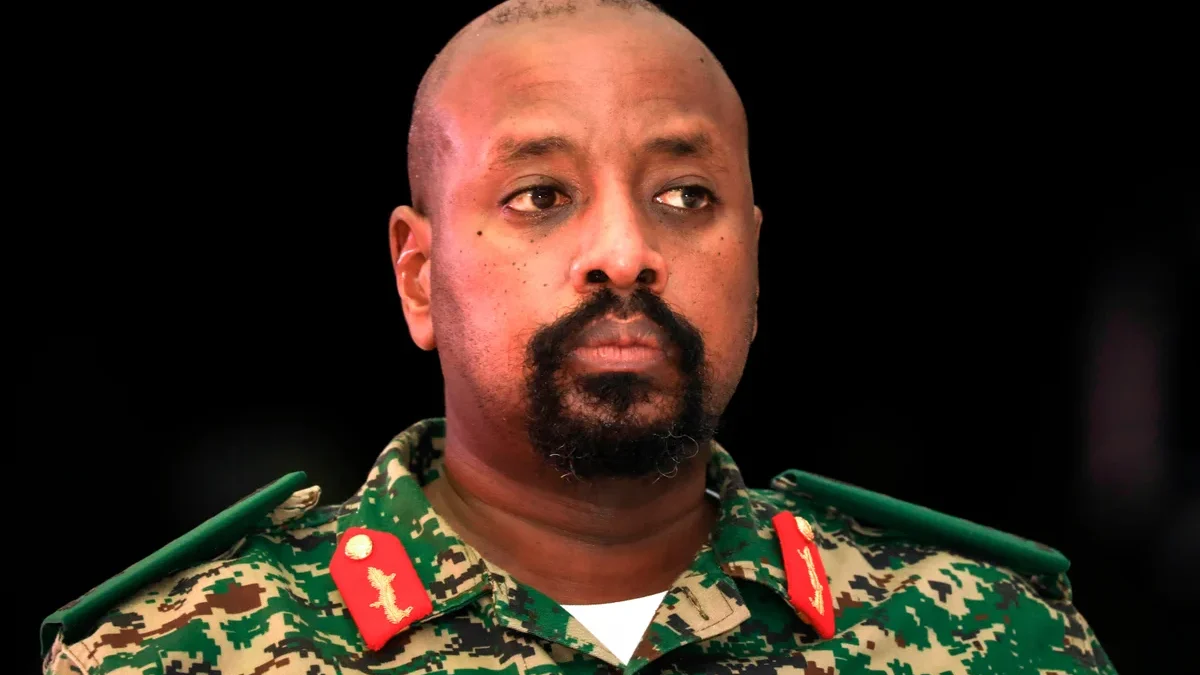
Uganda’s Military Chief Orders Closure of Major News Outlet
Ugandan army chief orders the closure – The Kampala headquarters of the Daily Monitor, a prominent Ugandan news organization, was abruptly shut down following an executive directive issued by the country’s military chief. The order, delivered by Gen. Muhoozi Kainerugaba, signals a growing consolidation of power under the armed forces, as he enforces strict control over media operations. In a statement, Kainerugaba emphasized that all outlets would be compelled to comply with his rulings, asserting his authority as the de facto leader of East Africa’s largest nation. This move has raised concerns about freedom of expression in Uganda, with critics accusing the military of stifling dissent through targeted actions.
A Family Dynasty and Military Ascendancy
Gen. Muhoozi Kainerugaba, the eldest son of President Yoweri Museveni, has held the position of Uganda’s top military commander since 2024. His recent authority has expanded significantly after Museveni’s re-election for a seventh term in office, a victory that has solidified his grip on power. Kainerugaba’s leadership has seen a series of directives aimed at reinforcing military influence across key sectors, including media. His father, Museveni, has ruled Uganda since 1986, a tenure marked by both stability and controversy. The closure of the Daily Monitor, part of the Nation Media Group, underscores how the military is increasingly shaping the nation’s narrative.
The Daily Monitor’s offices were surrounded by soldiers early Sunday, with the news organization’s closure announced shortly after. This outlet, along with other media platforms under the Nation Media Group, has been a vocal critic of government policies and a platform for investigative journalism. The group’s headquarters in Nairobi, Kenya’s capital, now face scrutiny as their operations in Uganda are targeted by Kainerugaba. His actions are part of a broader strategy to assert dominance, with the military chief stating that he has the legal power to shut down any media house at will.
“I have the power in Uganda to shut down ANY media house I want to,” Kainerugaba wrote on X, his preferred social media platform. “I have had this power since 2017. This power was given to me by my great father.”
Kainerugaba’s closure order extends beyond the Daily Monitor, impacting local broadcaster NTV, which is also affiliated with the Nation Media Group. The National Association of Broadcasters issued a statement condemning the action, noting that at least six publishing and broadcasting outlets have been targeted. The association warned that this move could disrupt the media landscape, leaving fewer voices to challenge government decisions.
A Path to Presidential Succession
Kainerugaba has positioned himself as a potential successor to his father, a role he claims to be preparing for. With Museveni now 81 years old and reliant on his son’s military backing, the prospect of a power transition appears more tangible. The military chief’s actions, including the closure of media outlets, are seen by some as a way to eliminate opposition and solidify his claim to the presidency.
Earlier this month, Kainerugaba demonstrated his resolve by taking legal action against a prominent attorney who had challenged his involvement in the alleged suppression of opposition leader Kizza Besigye. The attorney, Erias Lukwago, was detained and later charged with concealing treason, a move that has drawn accusations of political bias. Besigye, who has long been a critic of Museveni’s regime, has faced repeated harassment since 2024, when he was arrested on treason charges.
Museveni’s extended rule has left the ruling party with few rivals, creating a vacuum for potential successors. This lack of competition has allowed Kainerugaba to maneuver more freely, leveraging his father’s authority to enact policies that align with his vision for Uganda’s future. His associates describe him as a disciplined officer who prioritizes integrity over ostentation, though his recent actions have sparked debate about his true intentions.
Military Background and Political Ambitions
Kainerugaba’s career in the military began with training in the United States and Britain, where he developed expertise in strategic operations. Upon returning to Uganda, he took charge of the presidential guard, which has since evolved into a specialized unit of elite forces. This unit, now a key component of the military’s influence, is believed to have played a role in maintaining Museveni’s grip on power.
Beyond his military duties, Kainerugaba is the founder of the Patriotic League of Uganda, a political activist group that supports his father’s regime. The league includes influential figures such as the parliamentary speaker and senior government ministers, reflecting its widespread support within the political establishment. While some view the organization as a tool for consolidating authority, others argue it represents a grassroots movement for national unity.
The closure of the Daily Monitor and other outlets is part of a larger pattern of control over information, with Kainerugaba emphasizing the need for media compliance. Critics warn that such measures could lead to self-censorship, as journalists and editors may fear repercussions for publishing critical content. Meanwhile, supporters of the military chief argue that these actions are necessary to maintain order and prevent misinformation from undermining national stability.
Implications for Uganda’s Media Landscape
The Nation Media Group, which includes the Daily Monitor and NTV, has long been a cornerstone of Ugandan journalism. Its closure has left a significant gap in the media ecosystem, with many fearing the impact on public discourse. The group’s presence in Nairobi adds a regional dimension to its influence, as it operates across East Africa, providing a platform for cross-border reporting.
Kainerugaba’s directives have also prompted international reactions, with observers in Britain and Kenya noting the potential for a broader crackdown on press freedom. The European Union has expressed concern about the erosion of democratic norms, while local human rights organizations urge immediate investigations into the closures.
As the situation unfolds, the question remains: will Kainerugaba’s actions pave the way for a smooth transition of power, or will they ignite further tensions within Uganda’s political and media sectors? The answers may depend on how the military and the ruling party navigate the balance between authority and public trust.
Reflections on Power and Legacy
Museveni’s legacy as a long-standing leader is intertwined with the military’s role in his governance. By empowering his son, he has ensured a continuity of influence that extends beyond his own tenure. Kainerugaba’s actions, while controversial, reflect the broader trend of military intervention in Ugandan politics, a dynamic that has shaped the nation’s trajectory for decades.
Despite the closures, Kainerugaba’s vision for Uganda includes a focus on anti-corruption measures and a centralized leadership model. His associates highlight these goals, though critics argue that the tactics used to achieve them may come at the cost of media independence. As the country watches the unfolding developments, the interplay between the military and civil society will remain central to Uganda’s political future.
The Independent is a media organization that covers global news, including developments in East Africa. For updates on this story and others, subscribers can stay informed through our website or email newsletters.