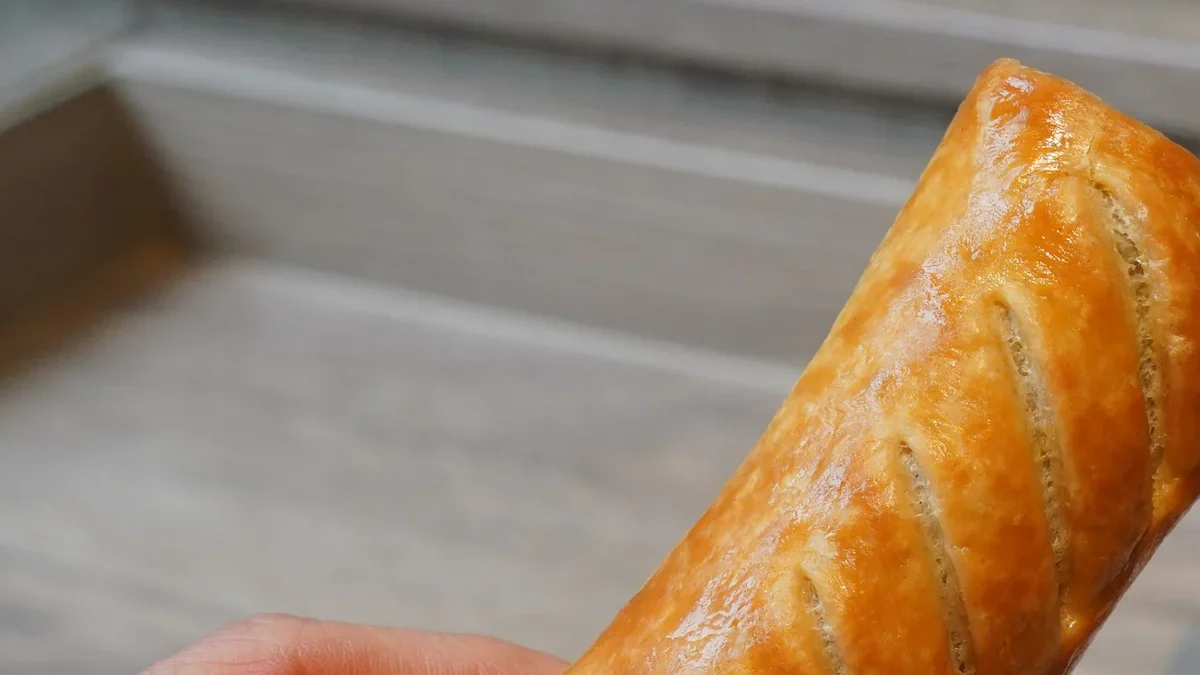
Scientists are developing a method to reduce saturated fat in Britain’s iconic sausage roll
Scientists are working on a way – Researchers at Heriot-Watt University in Edinburgh are pioneering a groundbreaking approach to enhance the nutritional profile of a beloved British staple without sacrificing its signature flaky texture. The project, part of a broader effort to reformulate traditional baked goods, targets one of the most commonly consumed snacks in the UK: the sausage roll. With millions of these pastries sold weekly, the team aims to address the growing health concerns associated with their high saturated fat content.
The health impact of a weekly staple
Approximately 10-15 million sausage rolls are sold each week in the UK, yet a single serving can surpass 60% of an adult’s recommended daily saturated fat intake. This has raised questions about the long-term effects of regular consumption, particularly for individuals prioritizing heart health. The sausage roll’s flaky pastry, while a key factor in its popularity, is traditionally made with solid fats like butter or lard, which contribute significantly to its richness and texture.
“We want to lower the level of saturated fat while keeping the taste and texture that people love,” said Professor Stephen Euston of Heriot-Watt’s School of Engineering and Physical Sciences. “The challenge lies in maintaining the structural integrity required for that distinct flaky effect.”
Replacing solid fats with liquid alternatives
The team’s innovation hinges on a technique called oleogelation, which converts liquid oils—such as sunflower or rapeseed—into a “solid-like fat” that mimics the properties of traditional fats. This process allows the oils to maintain their stability at high temperatures, preventing them from melting during the pastry’s production. By doing so, the researchers hope to retain the layered, crisp structure that defines the sausage roll’s appeal.
Professor Euston explained that the fat in laminated pastries serves a dual purpose: it not only adds flavor but also acts as a crucial structural element. When the dough is folded and baked, the fat separates the layers, creating the characteristic flakiness. Liquid oils, however, lack this structural rigidity, which is why they can’t simply replace solid fats without altering the final product. The solution, the team believes, lies in the science of oleogelation.
Potential benefits beyond health
While the primary focus is on improving public health, the project also offers advantages for the food industry. Traditional laminated pastries often require repeated chilling during production to prevent the fat from melting as the dough is folded. This step is time-consuming and energy-intensive. By using oleogels, the researchers aim to streamline the process, potentially reducing energy use and production costs.
Professor Euston highlighted that the new method could be applied to a range of pastries, from croissants to Danish treats, and even sweet or savory turnovers. “Reducing the saturated fat content of these ubiquitous snacks could have a very positive impact on the nation’s health and waistlines,” he noted. The study’s success could lead to widespread changes in the way these foods are made, making them more accessible and healthier for consumers.
Collaboration and funding for real-world testing
The 10-month initiative, supported by the UK Research and Innovation Engineering and Physical Sciences Research Council (UKRI EPSRC), brings together academic expertise and industry partners. Heriot-Watt University is working closely with New Food Innovation and AB Mauri to refine the technology and ensure its scalability. The goal is to transition the research from the lab to the kitchen, where it will be tested with real consumers to evaluate its sensory and functional performance.
Dr. Andrew Bourne, UKRI EPSRC’s executive director for innovation and partnerships, emphasized the project’s potential to bridge the gap between scientific discovery and everyday use. “By taking innovative food science out of the lab into the kitchen and testing it with everyday consumers, it has the potential to make the nation’s favorite snacks healthier and make a genuine difference to our health and wellbeing,” he stated. The funding also aims to support sustainable practices, such as sourcing oils from UK-grown crops, to minimize environmental impact.
Broader applications in food science
Although the project is centered on pastries, the researchers are also exploring how oleogelation could be applied to other food products. One promising avenue is vegan cheese alternatives, where saturated fats are often used to achieve a creamy texture. If successful, this technology might reduce reliance on animal-based fats, offering a healthier and more eco-friendly option for plant-based dairy.
Professor Euston added that the team is keen to understand how this method affects other baked goods. “The same principles that work for sausage rolls could be adapted for croissants, Danish pastries, and even some sweet treats,” he said. The broader implications of this research could extend beyond the UK, influencing global food production and dietary habits.
Challenges and future steps
Despite the promising results, the team acknowledges hurdles in achieving the perfect balance between health and taste. The process requires precise control over the texture and stability of the oleogel, ensuring it behaves like traditional fats during baking. Early trials have shown encouraging outcomes, but further testing is needed to confirm that the final product meets consumer expectations.
Another key consideration is the choice of oils. The researchers are prioritizing UK-grown options to reduce the carbon footprint associated with importing fats. This decision aligns with the growing demand for locally sourced and environmentally conscious food products. However, the team must also ensure the oils’ performance in different production environments, from small bakeries to large-scale manufacturing facilities.
As the project progresses, the team plans to collaborate with food manufacturers to integrate the technology into existing processes. This includes experimenting with varying fat ratios and baking conditions to optimize the outcome. The ultimate aim is to create a sausage roll that retains its popularity while contributing to a healthier diet for the British public.
Consumer feedback will play a vital role in the development phase. By involving real people in taste tests, the researchers can gather insights on how to refine the product’s flavor and mouthfeel. This iterative approach ensures that the final version of the pastry is not only nutritious but also enjoyable, maintaining the cultural and culinary significance of the snack.
With the potential to transform a staple of British cuisine, this research represents a significant step toward addressing dietary challenges. If widely adopted, the modified sausage roll could serve as a model for healthier snacking, demonstrating how scientific innovation can align with tradition. As the project moves forward, it may pave the way for broader changes in the food industry, redefining what it means to enjoy a treat without compromising health.