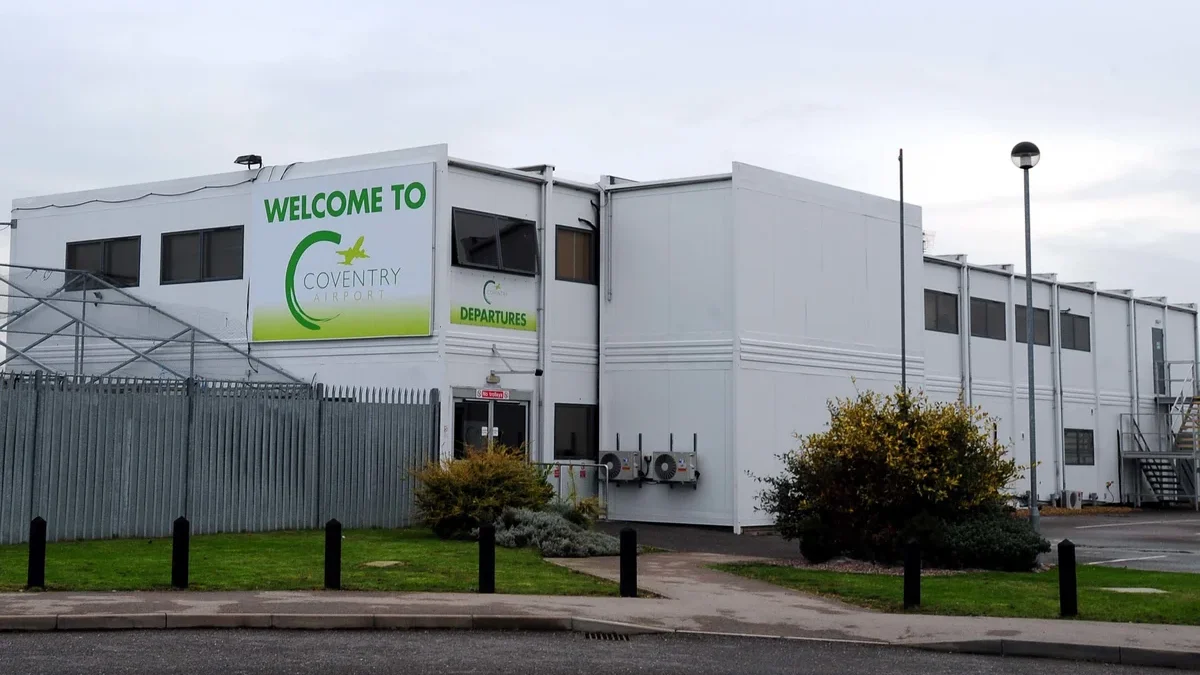
UK Airport to Close for Good After Almost 90 Years
UK airport to close for good – Coventry Airport, a longstanding aviation hub in Baginton, Warwickshire, has announced its permanent closure following nearly nine decades of operation. The site, which opened in 1936, will cease all commercial flights on 11 June 2026, marking the end of an era for the region’s air transport infrastructure. This decision comes as part of a larger redevelopment plan that will transform the area into the Greenpower Park industrial complex.
A Lasting Legacy in Aviation
The airport has served as a vital link for local communities and businesses, hosting a range of activities from passenger travel to general aviation. While passenger services halted in 2008, the site continued to support training programs, private charters, and critical air ambulance operations. Its role as a general aerodrome has been essential for smaller aircraft and regional connectivity, even as larger commercial airlines shifted focus to other hubs.
Before its closure, the airport saw a poignant farewell moment when it hosted the final commercial flight. British pop group Take That made a special appearance on the tarmac last Friday, flying into Coventry as part of their Circus Live tour. This marked the last scheduled passenger journey for the site, a symbolic end to its era as a commercial airport. The group’s visit was captured in a heartfelt photo with the ground crew, as highlighted by Coventry Airport’s social media.
“Those nice gentlemen from ‘Take That’ flew into Coventry Airport this evening and when they found out that they were our last ever passengers on our last booked commercial flight prior to closing, they insisted on a photograph with the ground crew to mark the occasion,”
The closure is the result of a planned redevelopment that has been in the works since 2022. The Greenpower Park project, a battery manufacturing facility and industrial development, received initial planning approval for the land and airspace surrounding the airport. This initiative aims to repurpose the site for modern economic purposes, aligning with broader regional goals for growth and innovation.
Government Support and Future Projects
The redevelopment has received significant backing, with the West Midlands Combined Authority (WMCA) providing a £23 million funding boost to the joint venture between Coventry City Council and Coventry Airport in January 2025. This investment underscores the government’s commitment to transforming the area into a key part of the West Midlands Investment Zone, a strategic initiative designed to stimulate manufacturing and job creation across three sites: the Coventry and Warwick Gigapark, Birmingham Knowledge Quarter, and Wolverhampton Green Innovation Corridor.
As part of this ambitious plan, Greenpower Park will play a central role in the region’s industrial revival. The project is expected to generate over 30,000 jobs and attract up to £5.5 billion in private investment once the development is fully realized. These figures highlight the potential economic impact of the transition from a small airport to a high-tech industrial site.
Coventry Airport’s owners, the Rigby Group, emphasized that the closure is the next logical step in a long-term vision for the site. “This procedural submission, first envisaged when local planning approval for Green Power Park was granted in 2022, enables the next phase of infrastructure work for the site to proceed,”
“said a spokesperson from the UK Civil Aviation Authority (CAA).”
The airport’s closure also reflects a shift in the UK’s aviation landscape, where smaller regional airports are increasingly being repurposed to meet evolving economic demands. While Coventry’s role as a commercial airport will end, its legacy as a vital part of the region’s transportation network remains significant. The site’s history dates back to the 1930s, when it first served as a place for aircraft maintenance and training, eventually expanding into a passenger service in the late 20th century.
A Pop Culture Connection
Interestingly, Coventry Airport has also been a part of the country’s cultural history. In 1982, Pope John Paul II visited the city as part of his inaugural UK tour, landing by helicopter at the airport. This moment underscored the site’s importance beyond mere transportation, highlighting its role in national events and public engagement.
Before its current owners took over in 2004, the airport was operated by Tu, a company that launched Thomsonfly, a budget airline based in Coventry. Thomsonfly’s services included flights to Gdansk and Katowice, contributing to the region’s connectivity with Eastern Europe. The airport’s history as a hub for both commercial and charter flights has now come to an end, with redevelopment set to take precedence.
The transition from an aviation site to an industrial complex is part of a larger trend in the UK, where land previously used for air travel is being reimagined for economic development. Coventry Airport’s closure will free up resources and space, allowing for new infrastructure projects that align with the government’s vision for the West Midlands. The Greenpower Park site, once a small aerodrome, will now serve as a state-of-the-art battery manufacturing center, supporting the region’s move toward sustainable energy solutions.
As the final commercial flight takes place in June 2026, the site will be handed over for redevelopment. The CAA has confirmed that Coventry Aerodrome has formally notified the authority of its permanent shutdown, marking the end of a chapter in aviation history. The airport’s closure is not just a loss for transport but also a testament to the adaptability of infrastructure in response to changing priorities.
Legacy and New Beginnings
Despite its closure, Coventry Airport’s legacy will continue to influence the area’s development. The site’s history as a place of innovation, both in aviation and industry, will be remembered as it transitions into a new phase. The Greenpower Park project is expected to generate long-term benefits for the local economy, with its focus on advanced manufacturing and green technology positioning Coventry as a leader in sustainable industrial growth.
While the tarmac and runways will be replaced by factories and offices, the memories of the airport’s past will endure. From hosting passenger flights to serving as a landing spot for a Pope, Coventry Airport has been a part of countless stories. Its closure is a reminder of how places evolve with time, and how their roles in society can shift from one purpose to another.
For now, the airport remains active, with its final flight set to take place on 11 June 2026. This date marks a milestone in the region’s history, signaling the end of an era for aviation and the start of a new one for industry. The transition will be closely watched, as it represents a bold step in the UK’s efforts to modernize its infrastructure and support economic growth in the West Midlands.