Why fans at the World Cup have been warned not to touch Philadelphia’s Rocky statue
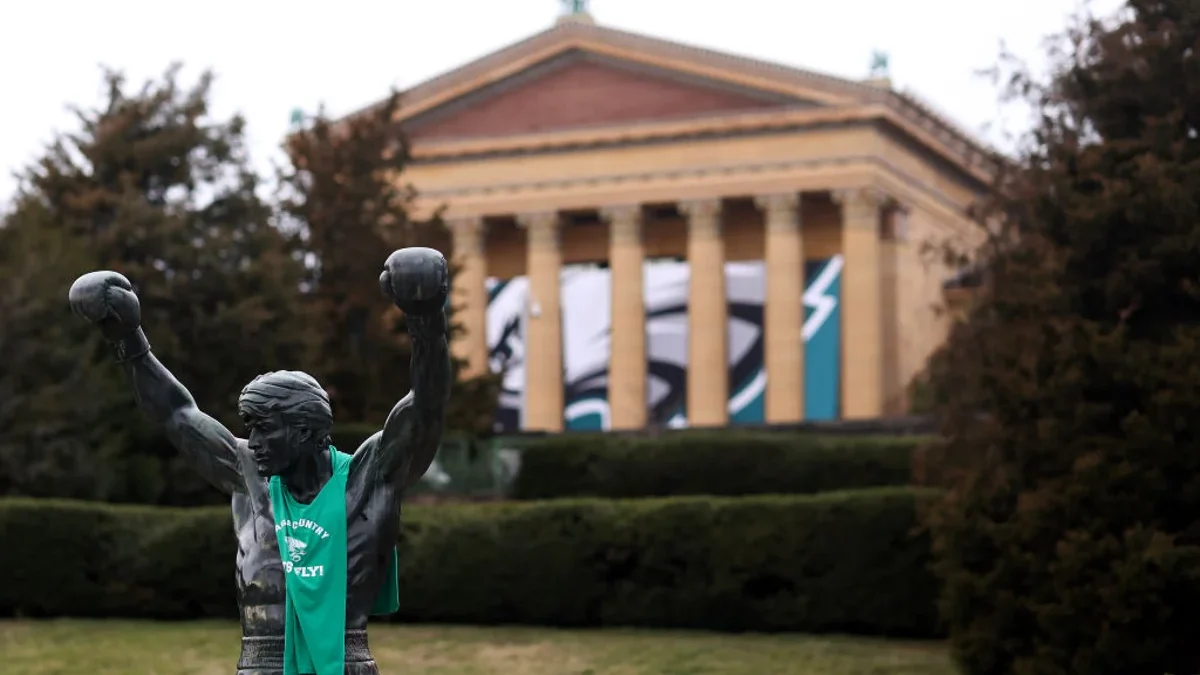
Why fans at the World Cup have – Philadelphia’s iconic Rocky Balboa statue, a symbol of resilience and local pride, has become the focal point of a curious sports superstition. The bronze figure, which has stood on the steps of the Art Museum since 1984, is now said to carry a jinx that affects teams when their supporters adorn it with their team’s colors. This belief has taken on new urgency as the World Cup approaches, prompting warnings to visiting fans to avoid interacting with the statue in ways that might trigger its legendary curse.
The Legend of the Rocky Curse
The superstition, rooted in Philadelphia’s rich sports history, claims that dressing the statue in a team’s uniform can lead to catastrophic outcomes. The latest warnings have been directed at French supporters, following a series of incidents where teams that had their fans dress Rocky in their colors suffered defeats. This tradition, while harmless in theory, has been interpreted as a harbinger of misfortune by locals and visitors alike.
One of the most recent examples involved Ecuadorian fans, who draped their team’s yellow jersey and flag on Rocky before a group opener against Ivory Coast. The gamble backfired spectacularly, as Ecuador lost the match, fueling speculation about the statue’s influence. The official France supporters’ group has since issued a formal statement advising fans to avoid this practice, emphasizing the need for caution in a city where sports folklore often shapes fan behavior.
“Don’t touch Rocky! To all French people in Philadelphia we urge you to exercise the utmost caution,” the supporters’ group Irresistibles Francais said in a statement ahead of their next group match against Iraq on Monday. “Under no circumstances should you put a Les Bleus shirt or scarf on the Rocky statue! Here, the local superstition is very clear: dressing Rocky in the colours of the opposition brings monumental bad luck and dooms the team to defeat (just ask NFL fans).”
The “Rocky curse” has been a recurring theme in Philadelphia’s sports culture for years. It gained notoriety in 2018 when New England Patriots fans placed a Tom Brady jersey on the statue, only to witness their team lose 41-33 to the Philadelphia Eagles in the Super Bowl. This incident, combined with earlier examples, solidified the belief that Rocky is a guardian of the city’s teams, with his attire serving as a silent predictor of fate.
While the origin of the curse remains unclear, its impact is undeniable. Some fans have taken the warning seriously, even going so far as to leave offerings at the statue’s base to appease its supposed wrath. One Ecuadorian supporter, after the team’s loss, attempted to reverse the curse by presenting a bowl of Encebollado, a traditional South American dish, at Rocky’s feet. Though this gesture was met with mixed reactions, it underscored the lengths to which fans will go to avoid what they perceive as a self-fulfilling prophecy.
Kevin Bethel, the Police Commissioner for the City of Philadelphia, has also weighed in on the phenomenon. “Apparently no one wants to put their shirt on Rocky now because that’s a jinx,” he told Reuters. “So we don’t have to worry about people climbing on and throwing their jersey on there unless they want to lose.” His remarks reflect the city’s growing awareness of the superstition, which has even become a topic of discussion among law enforcement and event organizers.
A Global Phenomenon with Local Roots
Though the World Cup has brought international attention to the curse, its history is deeply tied to Philadelphia’s own sporting narratives. The statue, a tribute to the Rocky Balboa character from the *Rocky* film series, has long been a mascot for local sports teams, especially those in the NFL. However, the superstition has transcended the city’s borders, with fans from around the world now heeding the warning before visiting.
Brazil fans were also cautioned about the curse ahead of their World Cup match against Haiti. Despite the admonition, the team went on to secure a 3-0 victory, which sparked debate about whether the superstition is a psychological effect or a genuine force. The contrasting outcomes of Ecuador and Brazil’s games highlight the unpredictable nature of the curse, adding to its mystique.
The phenomenon has sparked a broader conversation about the role of superstition in sports. While some dismiss it as folklore, others believe it reflects a deeper psychological connection between fans and their teams. The act of dressing Rocky in a team’s colors is not just a symbolic gesture but a ritual that fans feel could alter the course of their team’s performance. This belief has created a tension between tradition and modernity, with some fans adhering to the superstition and others challenging it.
Philadelphia’s sports culture is known for its fervor and loyalty, and the Rocky statue has become a central figure in that identity. From the Eagles to the Flyers, the city’s teams have been subject to local myths and traditions, and the curse of Rocky is no exception. Fans have long taken pride in their support, but the statue’s jinx has added an extra layer of anxiety to every match. The question remains: is it the statue that brings bad luck, or is it the fans’ collective belief in its power?
The curse’s influence extends beyond the World Cup, with reports of similar incidents in other sports events. For instance, during the NBA playoffs, a fan was seen draping a jersey on Rocky only for their team to falter in the next round. These anecdotes, though not all verified, contribute to the statue’s reputation as an unwitting oracle of sports outcomes. The Philadelphia Sports Museum has even begun collecting stories about the curse, treating it as a cultural artifact as much as a superstition.
As the World Cup continues, the warning to fans grows more urgent. The statue, once a mere icon of determination, now carries the weight of history and myth. Its presence at major sporting events has turned it into a global symbol of the unpredictable nature of sports and the power of collective belief. Whether or not the curse holds any real sway, its impact on fan behavior is a testament to the enduring influence of local traditions on international competition.
For the fans of France, the message is clear: the risk of touching Rocky is too great to ignore. The same applies to any team whose supporters might be tempted to add their colors to the statue. In Philadelphia, where sports folklore often plays as much a role as strategy, the warning serves as a reminder that even the smallest actions can carry profound consequences. As the World Cup progresses, the fate of the teams and their fans may very well be tied to the statue’s unwavering gaze, a silent witness to the hopes and fears of those who dare to interact with it.
The Rocky statue’s curse has become a defining element of Philadelphia’s sports identity, blending humor and history into a unique tradition. While the city’s teams have long been the focus of local legends, the statue’s role as a symbolic figure has elevated it to a near-mythological status. As fans from around the world visit the city, they are now not only greeted by the statue’s towering presence but also by the weight of its supposed influence. Whether this belief is rooted in reality or superstition, it has undeniably become a part of the World Cup’s cultural narrative, adding a new layer of intrigue to the global competition.