Asian Shares Trade Mixed Amid Concerns Over Iran Conflict
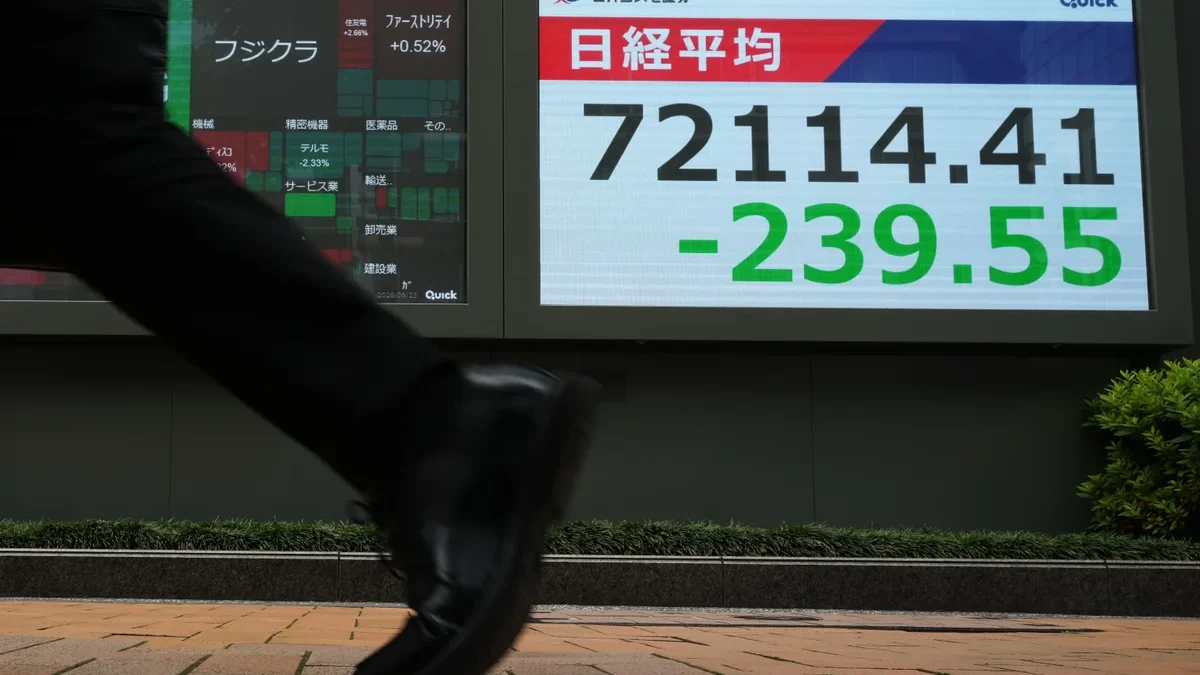
Asian shares are trading mixed amid – Asian equity markets exhibited a blend of gains and losses on Tuesday as investor sentiment remained cautious about the ongoing war in Iran. The initial trading session saw modest movements, with markets grappling with uncertainty over the potential for a resolution in the region. While some indices posted slight increases, others experienced declines, reflecting a split in market perceptions of the conflict’s impact on global economic stability.
Market Sentiment and Analyst Perspectives
Neil Newman, Managing Director and Head of Strategy at Astris Advisory Japan, noted the recent market performance, stating, “We’ve had eight days of strong markets. The market was up for about 12.5%, and now it has cooled off a little bit.” His remarks highlight the cooling trend after a period of enthusiasm, suggesting that investors are recalibrating their expectations in light of geopolitical risks.
“We’ve had eight days of strong markets. The market was up for about 12.5%, and now it has cooled off a little bit.”
Regional Index Movements
Across the region, the Australian S&P/ASX 200 recorded a marginal rise of less than 0.1%, closing at 8,822.10. Meanwhile, South Korea’s Kospi fell by 2.8% to 8,863.52, indicating growing apprehension about the war’s economic consequences. In Hong Kong, the Hang Seng Index declined slightly by 0.4% to 23,678.22, while the Shanghai Composite saw a modest increase of 0.2% to 4,170.58. These mixed results underscore the divergent views among regional markets.
Global Market Reactions
On Wall Street, investors navigated a day of fluctuating sentiment as tech stocks and oil prices influenced broader market trends. The S&P 500 dipped 0.4%, marking the end of its 11-week winning streak, while the Nasdaq Composite plummeted 1.3% amid pressure from Big Tech companies. The Dow Jones Industrial Average, however, gained 0.3% or 148 points, reaching 51,712.71. These movements reflect a broader market adjustment to shifting global conditions.
Oil Price Dynamics and Iran Talks
The oil market saw a decline in prices following weekend discussions between the U.S. and Iran. U.S. Vice President JD Vance emphasized that the talks had laid a “good foundation for a successful final deal,” signaling optimism about potential progress. Analysts suggest that any resolution could ease tensions in the Strait of Hormuz, a critical shipping route, and restore normal oil flow from the Persian Gulf. However, Iran’s military recently announced the closure of the strait, prompting some to question the stability of these negotiations.
“We created a good foundation for a successful final deal.”
Economic Indicators and Inflation Outlook
As global markets grappled with uncertainty, economic data provided additional context. The yield on the 10-year Treasury note climbed to 4.50% from 4.46%, driven by speculation that the Federal Reserve may raise interest rates this year to curb inflation. Rising oil prices, linked to the Iran conflict, have accelerated inflationary pressures, with economists projecting a 4.1% increase in U.S. consumer prices for May, up from 3.8% in April. This data reinforces concerns about the Fed’s monetary policy decisions.
Technological Sector Volatility
Within the tech sector, shares of major companies faced significant pressure. Alphabet, Amazon, and Broadcom all recorded substantial declines, with drops of 5%, 4.7%, and 4.5% respectively. This downturn followed a period of strong performance for SpaceX, which had seen a notable three-day surge after its debut on the U.S. stock market. The company’s stock price fell to $154.60, marking its third consecutive decline since the initial offering at $135 per share. Such volatility highlights the sector’s sensitivity to broader geopolitical and economic shifts.
Exchange Rate Fluctuations
Currency markets also experienced minor changes, with the U.S. dollar rising to 161.60 Japanese yen from 161.52. The euro, meanwhile, weakened to $1.1427 from $1.1431. These movements reflect investor sentiment toward the U.S. dollar as a safe-haven asset amid regional instability, while the euro’s decline may signal waning confidence in European economic prospects.
Broader Implications of the Iran Conflict
The war in Iran continues to ripple through global markets, affecting energy prices, trade routes, and investor confidence. With the Strait of Hormuz—a vital artery for oil exports—subject to periodic closures, the potential for supply disruptions remains a key concern. Analysts suggest that any successful diplomatic resolution could alleviate these pressures, but the current mixed performance in Asian and U.S. markets indicates that investors are still hesitant to commit fully.
Market Outlook and Key Takeaways
As the situation in Iran unfolds, market participants are closely monitoring developments for signs of stability. The mixed results in Asia, combined with Wall Street’s fluctuating performance, highlight the delicate balance between optimism and caution. While some indices show resilience, others reflect growing uncertainty, particularly in sectors heavily reliant on global trade and energy prices. The coming days will likely determine whether the current sentiment is a temporary lull or a more prolonged shift in market dynamics.
Contributors to this report include AP Business Writer Stan Choe in New York and AP Senior Producer Mayuko Ono in Tokyo. Their insights provide a comprehensive overview of the market’s response to the Iran conflict, emphasizing both immediate impacts and long-term economic implications.
For users encountering login issues, a simple refresh of the page or navigation to another section of the site can resolve the problem. This ensures continued access to real-time financial data and analysis as markets evolve in response to geopolitical developments.